10 Best Investments for Beginners in 2026: Safe, Simple Ways to Start Building Wealth
Starting to invest in 2026 feels exciting—and maybe a little overwhelming. The good news? You don’t need a fortune, expert knowledge, or perfect timing to begin building real wealth. The best investments for beginners are straightforward, low-cost, and designed to grow steadily over time through the power of compounding and smart diversification.
In this guide, we’ll rank the top 10 beginner-friendly options for 2026—from ultra-safe cash alternatives to growth-oriented choices—explaining what each is, why it suits new investors, potential returns/risks, and how to get started. Think of this as your roadmap: start small, stay consistent, and let time do the heavy lifting. Millions have built life-changing wealth this way—you can too.
Why These 10 Investments Are Ideal for Beginners in 2026
Beginner investments share key traits: low minimums, built-in diversification, minimal ongoing effort, and a focus on long-term growth over get-rich-quick schemes. In 2026, with markets offering solid opportunities (steady economic recovery, AI-driven innovation, and attractive yields on safer options), these stand out for accessibility and proven track records.
Key principle: Match your choices to your timeline and comfort with risk. Young beginners can lean toward growth; those closer to needing money prioritize safety. Always start with an emergency fund first (3–6 months’ expenses in cash equivalents).
The 10 Best Investments for Beginners Ranked (2026)
Ranked from safest/lowest potential return to higher-growth/higher-risk. Use a mix for balance.
1. High-Yield Savings Accounts (Safest Starter)
Online high-yield savings accounts pay competitive interest (often 4–5%+ in 2026) with FDIC insurance up to $250,000. Perfect for emergency funds or short-term goals.
Why for beginners: No market risk, instant access, beats regular savings.
Expected return: 4–5% APY.
Risk: Very low (inflation may outpace slightly).
How to start: Open at Ally, Capital One, or Marcus—transfer funds in minutes.
2. Certificates of Deposit (CDs) or CD Ladders
Lock money for 3–60 months for fixed rates (often higher than savings). Laddering (staggered maturities) gives flexibility.
Why for beginners: Guaranteed returns, FDIC-protected.
Expected return: 4–5%+ for 1–5 year terms.
Risk: Low, but early withdrawal penalties.
Tip: Great for money you’ll need in 1–5 years.
3. Government Bonds or Treasury ETFs
U.S. Treasuries (bills, notes, bonds) or ETFs like SGOV/TBIL are ultra-safe government-backed debt.
Why for beginners: Near-zero default risk, steady income.
Expected return: 3–5% depending on term.
Risk: Low (interest rate changes affect price).
Global note: Many countries offer similar (e.g., UK Gilts, German Bunds).
4. Robo-Advisors (Automated & Hands-Off)
Platforms like Fidelity Go, Wealthfront, or Betterment build/rebalance diversified portfolios of ETFs for you.
Why for beginners: Low fees (0–0.35%), automatic features, starts small.
Expected return: Market average minus tiny fees (historically 7–10% long-term).
Risk: Market-based (but diversified).
See our Best Robo-Advisors guide for details.
5. Index Funds & ETFs (The Beginner Gold Standard)
Low-cost funds tracking broad markets (e.g., S&P 500 via VOO, total market via VTI).
Why for beginners: Instant diversification, low fees (<0.05%), beat most active managers long-term.
Expected return: 7–10% historical average.
Risk: Medium (stock market volatility).
Learn more in our Index Funds and ETFs guide.
6. Target-Date Retirement Funds
All-in-one funds that auto-adjust from stocks to bonds as you near a target year (e.g., 2060 fund).
Why for beginners: Set-it-and-forget-it for retirement.
Expected return: Varies by glide path (higher early, safer later).
Risk: Medium to low over time.
7. Dividend Stocks or Dividend ETFs
Companies/ETFs paying regular dividends (e.g., SCHD ETF).
Why for beginners: Passive income + growth potential.
Expected return: 3–5% yield + capital appreciation.
Risk: Medium (company-specific).
8. Bond Funds or Corporate Bond ETFs
Funds holding investment-grade bonds for steady income.
Why for beginners: Lower volatility than stocks, diversification.
Expected return: 4–6%.
Risk: Low to medium (interest rate sensitivity).
9. Real Estate Investment Trusts (REITs) or REIT ETFs
Invest in property without buying houses (e.g., VNQ ETF).
Why for beginners: Real estate exposure, dividends.
Expected return: 6–9% total.
Risk: Medium (sensitive to rates/economy).
10. Growth Stocks or Sector ETFs (Higher Potential, Higher Risk)
ETFs in tech/AI (e.g., QQQ) or individual blue-chips for long-term growth.
Why for beginners: Exposure to innovation (if diversified).
Expected return: 10%+ potential.
Risk: Higher volatility—use sparingly (10–20% of portfolio).
Comparison Table: Risk vs. Return for Beginners 2026
| Rank | Investment | Risk Level | Expected Annual Return | Best For |
|---|---|---|---|---|
| 1 | High-Yield Savings | Very Low | 4–5% | Emergency fund |
| 2 | CDs | Very Low | 4–5%+ | Short-term goals |
| 3 | Gov’t Bonds/Treasuries | Low | 3–5% | Safety + income |
| 4 | Robo-Advisors | Low-Medium | 7–10% | Hands-off growth |
| 5 | Index Funds/ETFs | Medium | 7–10% | Long-term core |
| 6 | Target-Date Funds | Medium | Varies | Retirement set-it-forget-it |
| 7 | Dividend ETFs | Medium | 6–9% | Income + growth |
| 8 | Bond Funds | Low-Medium | 4–6% | Stability |
| 9 | REITs | Medium | 6–9% | Diversification |
| 10 | Growth/Sector ETFs | High | 10%+ | Ambitious long-term |
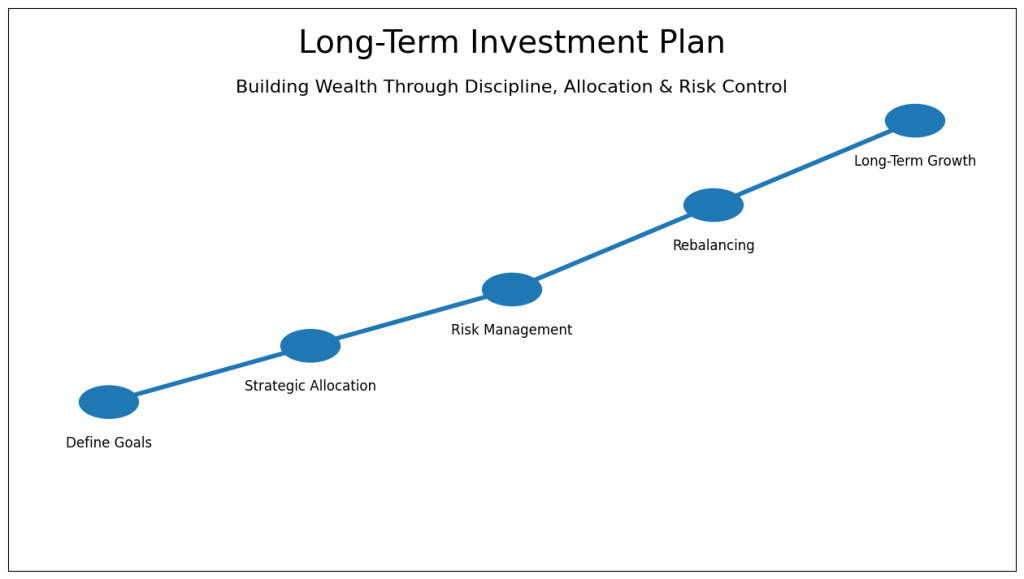
How to Get Started: Simple Action Plan
- Build emergency fund (1–3 above).
- Open brokerage (Fidelity, Vanguard—see brokerage guide).
- Choose 3–5 from list (e.g., robo + index + bonds).
- Automate contributions (dollar-cost average—see DCA guide).
- Rebalance yearly; review risk (see Risk & Return basics).
Common Beginner Mistakes to Avoid
- Chasing hot trends without diversification.
- Timing the market—consistency wins.
- Ignoring fees—low-cost is key.
- Panicking in downturns—markets recover.
FAQs: Best Investments for Beginners in 2026
What are the absolute safest investments for beginners in 2026?
High-yield savings, CDs, and Treasuries—FDIC/government-backed with no principal loss risk.
Should beginners invest in stocks or stick to funds?
Start with funds/ETFs for diversification—individual stocks come later if desired.
How much should a beginner invest in each option?
Start small ($50–$500/month); allocate 60–80% growth (index/robo), 20–40% safe (savings/bonds) if young.
Are index funds still one of the best investments in 2026?
Yes—low fees, broad exposure, and historical outperformance make them timeless.
What role do high-yield savings play for new investors?
Foundation: Emergency cash + short-term needs before risking in markets.
Can beginners use robo-advisors as their main investment?
Absolutely—many do, for automated diversification and rebalancing.
How do I diversify as a beginner without overcomplicating?
Use 2–4 ETFs/robo + safe cash; that’s enough for strong start.
Related Articles
- Index Funds and ETFs for Beginners: The Easiest Way to Start Investing
- Dollar-Cost Averaging vs. Lump Sum: Which Is Better for Beginners?
- Understanding Risk and Return: Investing Basics Every Beginner Needs
- How to Start Investing in 2026: A Complete Beginner’s Guide
Final Thoughts: Your Wealth-Building Journey Begins Today
Investing isn’t about being perfect—it’s about starting and staying in the game. In 2026, these 10 options give you everything needed for safe, simple growth. Picture your money working for you: compounding quietly, turning small habits into big freedom. Whether it’s retirement, a dream home, or financial independence, every dollar invested today is a vote for your future self.
Pick one or two from the list, open that account, and commit to consistent action. You’ve already taken the hardest step by learning—now go make it happen. Your future is brighter than you think!