Trading Psychology

Explore the mindset behind successful trading, including discipline, emotions, and decision-making under pressure.

trading psychology, emotional discipline trading, fear and greed trading, trader mindset, controlling emotions in trading, trading mistakes psychology, trading consistency
Trading Psychology

Emotional Control in Trading: How to Master Fear, Greed, and Decision-Making Under Pressure

Emotional Control in Trading: How to Master Fear, Greed, and Decision-Making Under Pressure Every trader enters the market believing that success depends on strategy. Indicators, patterns, entry techniques, and market structure dominate the early phase of a trader’s journey. But over time, a deeper truth begins to emerge—one that separates professionals from amateurs. Trading is […]
Emotional Control in Trading: How to Master Fear, Greed, and Decision-Making Under Pressure Read Post »

trading motivation vs discipline, how to build trading discipline, discipline in trading psychology, why traders lack discipline, trading habits discipline, consistency trading discipline
Trading Psychology

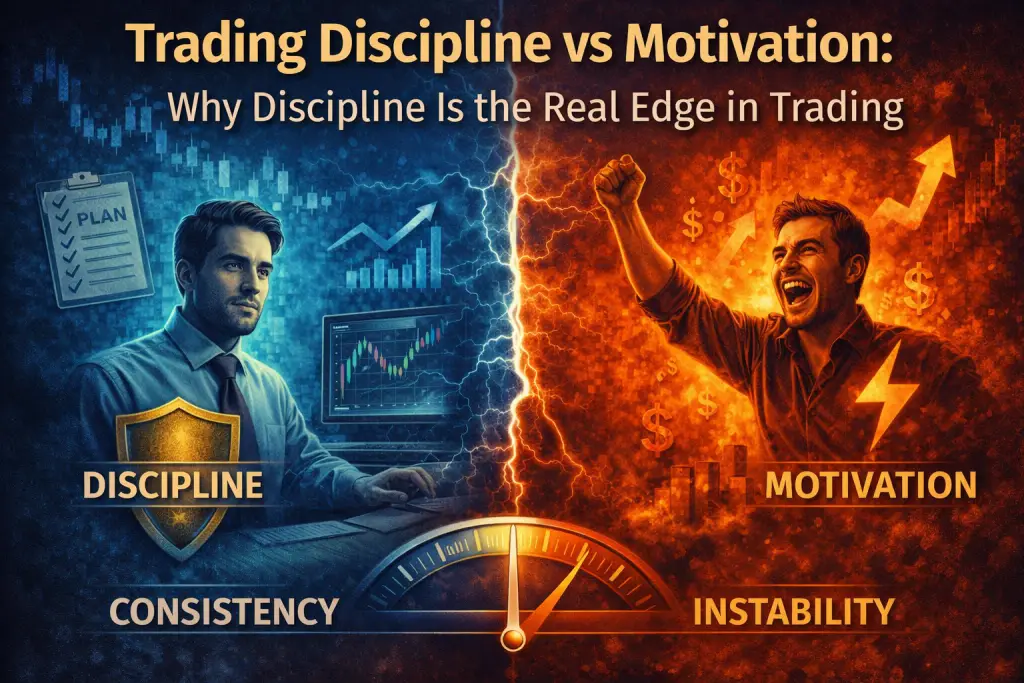
Trading Discipline vs Motivation: Why Discipline Is the Real Edge in Trading

Trading Discipline vs Motivation: Why Discipline Is the Real Edge in Trading In the world of trading, motivation is often glorified. Social media is filled with quotes about staying motivated, grinding harder, and chasing success. But when it comes to actual performance in financial markets, motivation is not what separates profitable traders from those who

Trading Discipline vs Motivation: Why Discipline Is the Real Edge in Trading Read Post »

overconfidence trading, trader psychology confidence, trading mistakes confidence, building confidence trading, trading mindset confidence, trading discipline confidence, emotional trading confidence
Trading Psychology

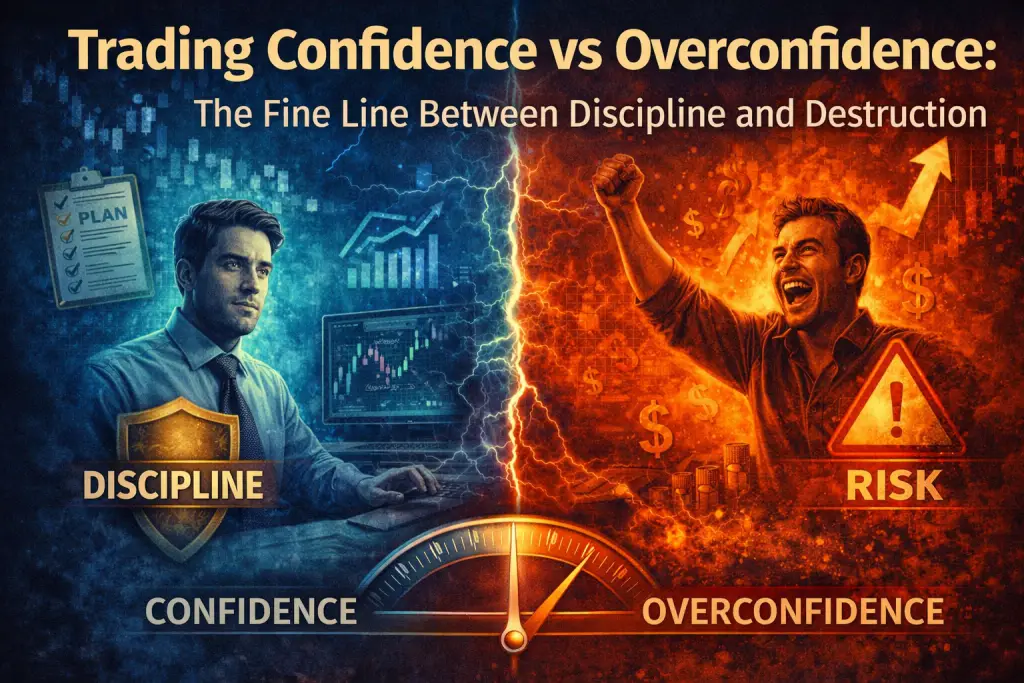
Trading Confidence vs Overconfidence: The Fine Line Between Discipline and Destruction

Trading Confidence vs Overconfidence: The Fine Line Between Discipline and Destruction Confidence is essential in trading. Without it, you hesitate. You doubt your decisions. You miss opportunities. But too much confidence creates a different problem. Overconfidence. And overconfidence is one of the fastest ways to destroy a trading account. This creates a dangerous balance. You

Trading Confidence vs Overconfidence: The Fine Line Between Discipline and Destruction Read Post »

fear of losing trading, accepting losses trading, trading risk psychology, loss aversion trading, why traders fear losses, trading mindset losses, handling losses trading
Trading Psychology

Trading Loss Psychology: Why Fear of Losing Makes You Lose More

Trading Loss Psychology: Why Fear of Losing Makes You Lose More Every trader says they understand losses. Very few actually accept them. This is one of the most dangerous gaps in trading psychology. Because trading is a game of probabilities. Losses are not just possible. They are guaranteed. And yet, most traders behave as if

Trading Loss Psychology: Why Fear of Losing Makes You Lose More Read Post »

patience in trading, waiting for setups trading, overtrading psychology, timing the market trading, trading discipline patience, how to avoid overtrading, trading mindset patience
Trading Psychology

Trading Patience: Why Waiting for the Right Setup Makes You More Profitable

Trading Patience: Why Waiting for the Right Setup Makes You More Profitable Most traders believe they need to trade more to make more money. This belief is one of the fastest ways to destroy an account. Because in trading, activity does not equal productivity. In fact, the opposite is often true. The more you trade

Trading Patience: Why Waiting for the Right Setup Makes You More Profitable Read Post »

execution discipline trading, how to follow trading plan, trading discipline under pressure, sticking to trading rules, trading mistakes execution, real time trading discipline, trader behavior control
Trading Psychology

Trading Execution Discipline: How to Follow Your Plan Under Pressure

Trading Execution Discipline: How to Follow Your Plan Under Pressure Most traders do not fail because of strategy. They fail at the moment of execution. This is where everything breaks down. The analysis is done. The setup is clear. The plan is defined. And yet, when the moment arrives to act, something changes. You hesitate.

Trading Execution Discipline: How to Follow Your Plan Under Pressure Read Post »

decision making in trading, how traders make decisions, trading under uncertainty, probabilistic thinking trading, trading psychology decision making, improve trading decisions, cognitive biases trading
Trading Psychology

Trading Decision Making: How Professionals Think in Uncertain Markets

Trading Decision Making: How Professionals Think in Uncertain Markets Every trade begins with a decision. It may look like a simple action—buy or sell, enter or stay out—but behind that action is a complex process of interpretation, judgment, and expectation. Most traders believe their results are determined by strategy. In reality, their results are determined

Trading Decision Making: How Professionals Think in Uncertain Markets Read Post »

rule-based trading system, systematic trading strategy, trading without emotions, trading system rules, mechanical trading strategy, algorithmic thinking trading, trading execution system, how to build trading system
Trading Psychology

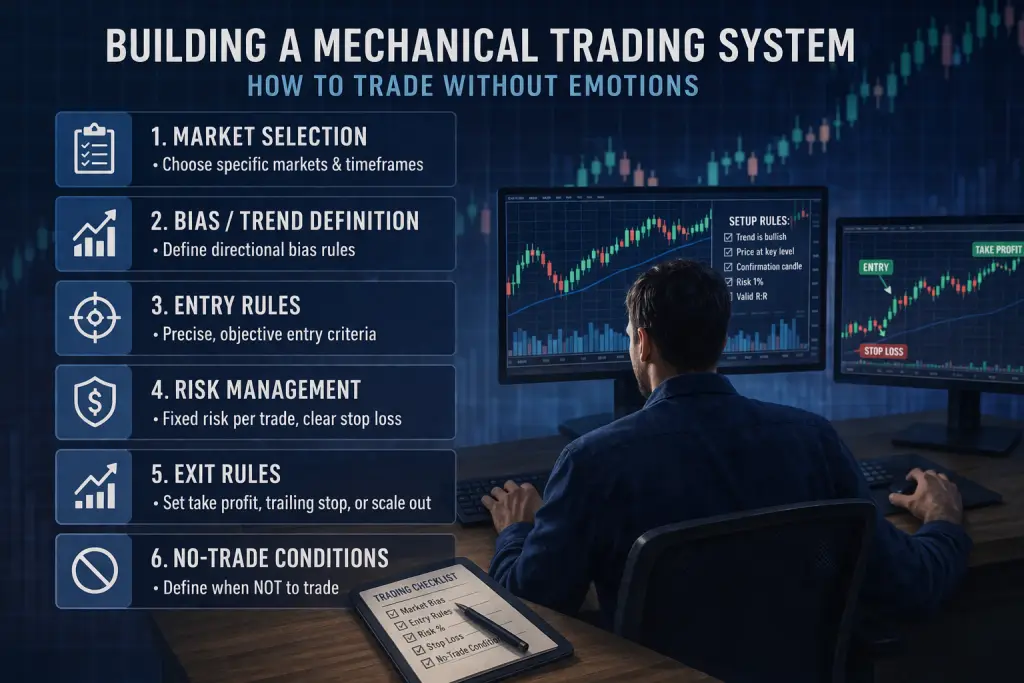
Building a Mechanical Trading System: How to Trade Without Emotions

Building a Mechanical Trading System: How to Trade Without Emotions At some point in every trader’s journey, one realization becomes unavoidable: Emotion is the problem. It does not matter how good your analysis is. It does not matter how strong your strategy appears. The moment emotions begin to influence your decisions, consistency begins to break

Building a Mechanical Trading System: How to Trade Without Emotions Read Post »

discipline gap trading, trading psychology discipline, why traders fail discipline, emotional trading mistakes, trading consistency, trader behavior psychology, trading habits, risk management discipline, revenge trading psychology, trading execution consistency
Trading Psychology

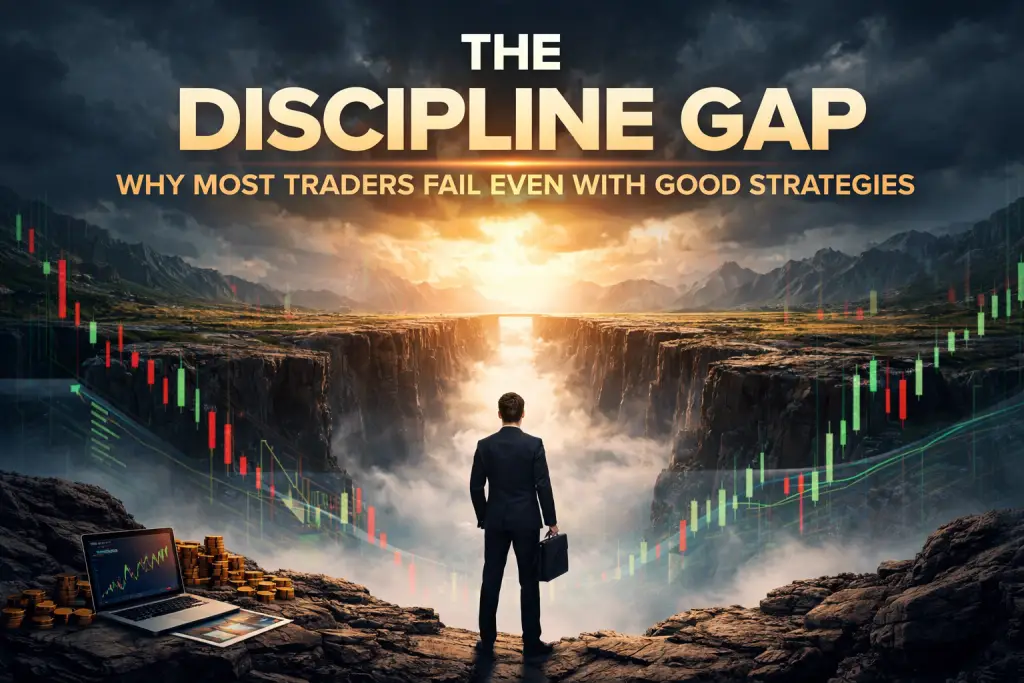
The Discipline Gap: Why Most Traders Fail Even With Good Strategies

The Discipline Gap: Why Most Traders Fail Even With Good Strategies There is a point in every trader’s journey where frustration begins to feel confusing. You have studied the markets. You understand entries. You recognize patterns. You have seen strategies work—sometimes even your own. Yet your results remain inconsistent. Some days feel sharp and controlled,

The Discipline Gap: Why Most Traders Fail Even With Good Strategies Read Post »

confirmation bias in trading
Trading Psychology

Confirmation Bias in Trading: Why Traders Only See What They Want to See

Confirmation Bias in Trading: Why Traders Only See What They Want to See Financial markets constantly provide new information. Price movements, economic reports, news events, and technical indicators all offer signals that traders can use to make informed decisions. However, human psychology often prevents traders from interpreting this information objectively. Instead of evaluating all available

Confirmation Bias in Trading: Why Traders Only See What They Want to See Read Post »

loss aversion in trading
Trading Psychology

Loss Aversion in Trading: Why the Fear of Losing Money Controls Trader Behavior

Loss Aversion in Trading: Why the Fear of Losing Money Controls Trader Behavior One of the most powerful psychological forces in financial markets is the fear of losing money. While every trader hopes to generate profits, the emotional impact of losses is often far stronger than the satisfaction gained from winning trades. This phenomenon is

Loss Aversion in Trading: Why the Fear of Losing Money Controls Trader Behavior Read Post »

recency bias in trading
Trading Psychology

Recency Bias in Trading: Why Traders Overreact to Recent Wins and Losses

Recency Bias in Trading: Why Traders Overreact to Recent Wins and Losses Financial markets are driven by uncertainty, probability, and constantly changing information. Yet despite this complexity, many traders unknowingly make decisions based on a very small portion of available data: the most recent events. This psychological tendency is known as recency bias, and it

Recency Bias in Trading: Why Traders Overreact to Recent Wins and Losses Read Post »

outcome bias in trading
Trading Psychology

Outcome Bias in Trading: Why Good Trades Sometimes Lose and Bad Trades Sometimes Win

Outcome Bias in Trading: Why Good Trades Sometimes Lose and Bad Trades Sometimes Win One of the most misunderstood aspects of trading performance is the relationship between decisions and outcomes. Many traders assume that a profitable trade means they made a good decision, while a losing trade means they made a bad one. This assumption

Outcome Bias in Trading: Why Good Trades Sometimes Lose and Bad Trades Sometimes Win Read Post »

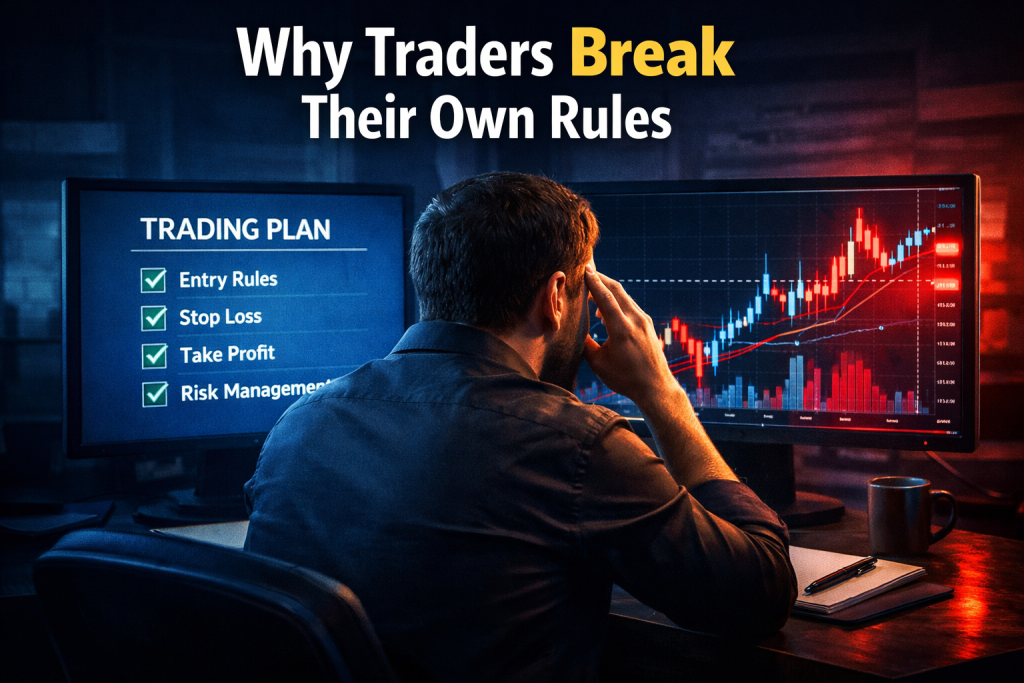
Why Traders Break Their Own Rules
Trading Psychology

Why Traders Break Their Own Rules (And How to Stop)

Why Traders Break Their Own Rules Many traders spend months developing trading strategies, learning technical analysis, and building detailed trading plans. Yet when real money is on the line, something surprising happens: they begin breaking their own rules. This is one of the most common and destructive problems in trading psychology. Traders may know exactly

Why Traders Break Their Own Rules (And How to Stop) Read Post »

decision fatigue trading
Trading Psychology

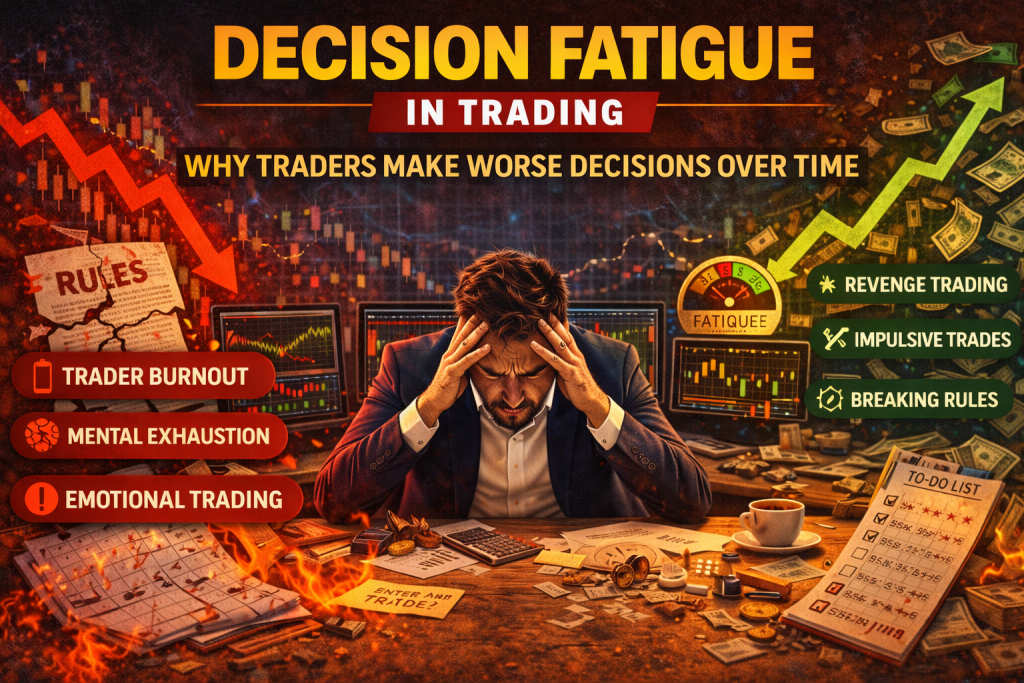
Decision Fatigue in Trading: Why Traders Make Worse Decisions Over Time

Decision Fatigue in Trading Many traders believe their biggest challenges are strategy, technical analysis, or market knowledge. However, one of the most overlooked threats to trading performance is something far more subtle: decision fatigue. Decision fatigue occurs when the quality of decisions deteriorates after a long session of mental effort. The human brain has limited

Decision Fatigue in Trading: Why Traders Make Worse Decisions Over Time Read Post »

gold as store of value for investors
Trading Psychology, Precious Metals

History of Gold as a Store of Value: Lessons for Investors

A store of value is an asset that maintains purchasing power over long periods, ideally across generations and through economic disruptions. Few assets have fulfilled this role as consistently as gold. For thousands of years, gold has been chosen not because it generates income, but because of its scarcity, durability, divisibility, portability, and universal acceptance.

History of Gold as a Store of Value: Lessons for Investors Read Post »

behavioral finance trading
Trading Psychology

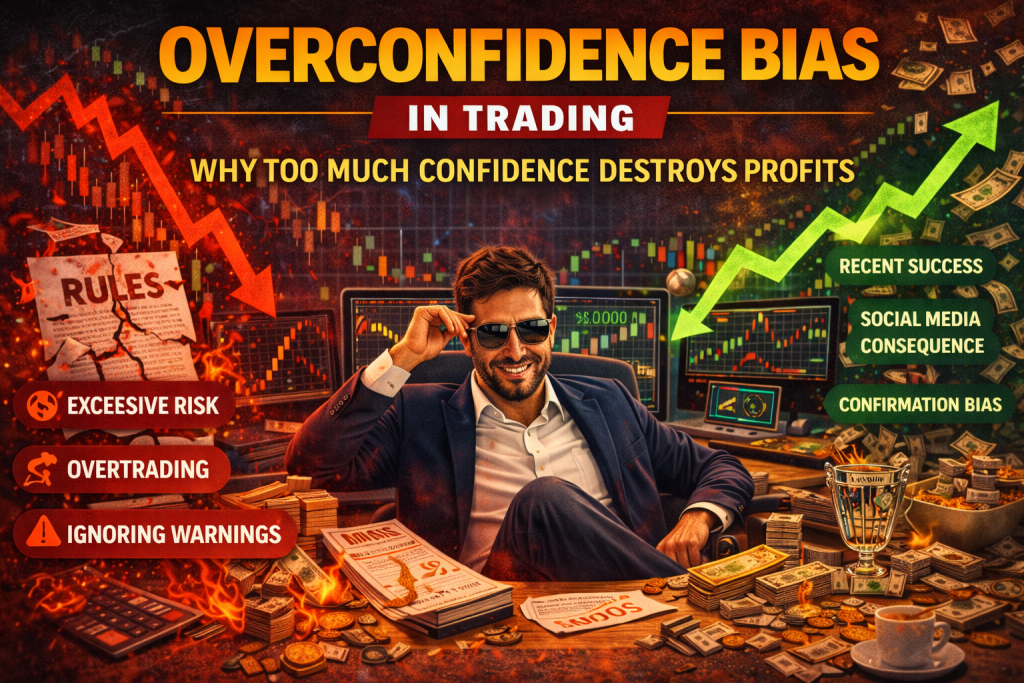
Overconfidence Bias in Trading: Why Too Much Confidence Destroys Profits

Overconfidence Bias in Trading: Why Too Much Confidence Destroys Profits Confidence is essential for success in financial markets. Without confidence, traders hesitate, miss opportunities, and struggle to execute their strategies. However, there is a fine line between healthy confidence and dangerous overconfidence. When traders cross that line, they fall victim to overconfidence bias, one of

Overconfidence Bias in Trading: Why Too Much Confidence Destroys Profits Read Post »

revenge trading
Trading Psychology

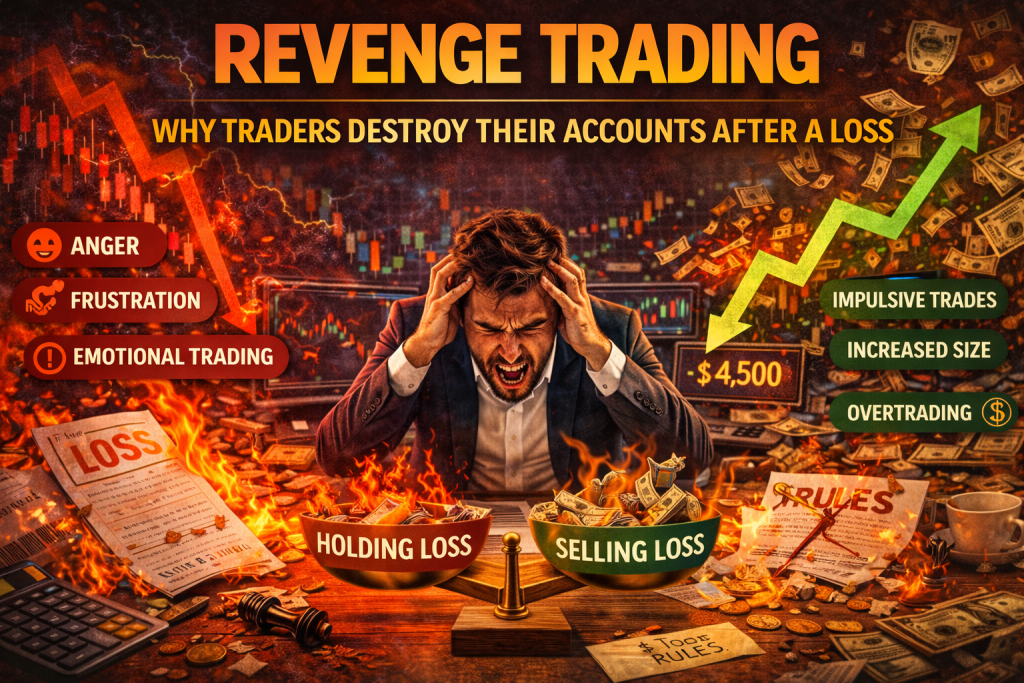
Revenge Trading: Why Traders Destroy Their Accounts After a Loss

Revenge Trading: Why Traders Destroy Their Accounts After a Loss One of the fastest ways traders destroy their trading accounts is through a behavior known as revenge trading. It is an emotional reaction that occurs after a loss, where traders immediately attempt to recover their money by placing new trades without proper analysis or discipline.

Revenge Trading: Why Traders Destroy Their Accounts After a Loss Read Post »

sunk cost fallacy trading
Trading Psychology

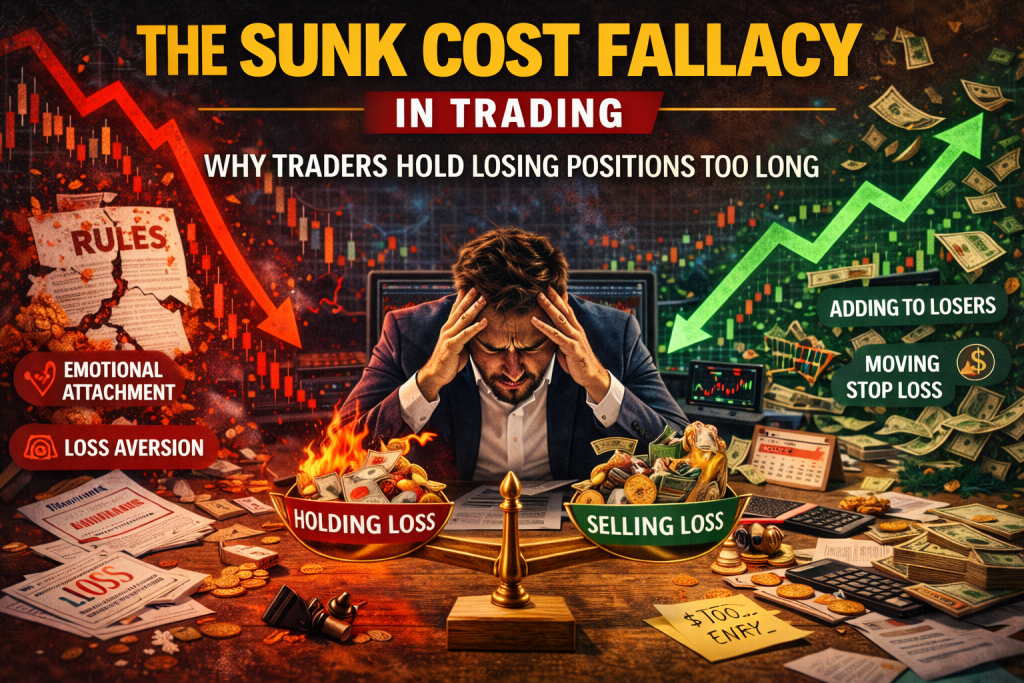
The Sunk Cost Fallacy in Trading: Why Traders Hold Losing Positions Too Long

The Sunk Cost Fallacy in Trading: Why Traders Hold Losing Positions Too Long One of the most destructive psychological biases in trading is the sunk cost fallacy. Every trader has experienced it: a trade begins to move against them, yet instead of exiting the position, they hold on—sometimes even adding more capital—hoping the market will

The Sunk Cost Fallacy in Trading: Why Traders Hold Losing Positions Too Long Read Post »

trading psychology discipline
Trading Psychology

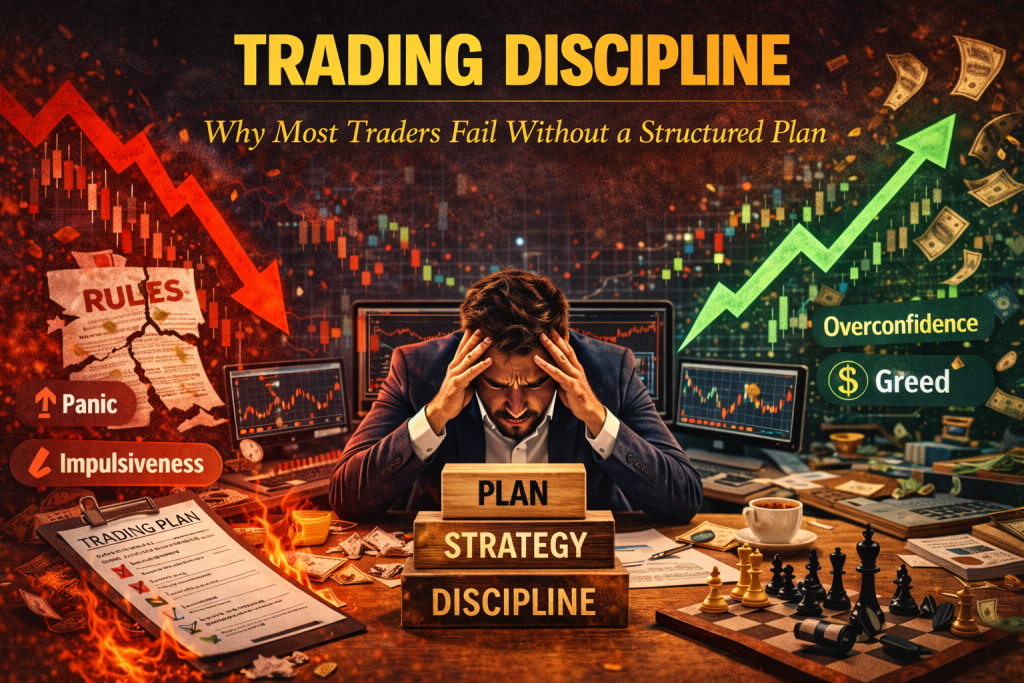
Trading Discipline: Why Most Traders Fail Without a Structured Plan

Trading Discipline: Why Most Traders Fail Without a Structured Plan Many traders enter the financial markets believing that success depends primarily on finding the perfect strategy. They spend countless hours searching for indicators, signals, and chart patterns that promise consistent profits. However, the reality of trading success is very different. While strategies are important, the

Trading Discipline: Why Most Traders Fail Without a Structured Plan Read Post »

trading losing streak psychology
Trading Psychology

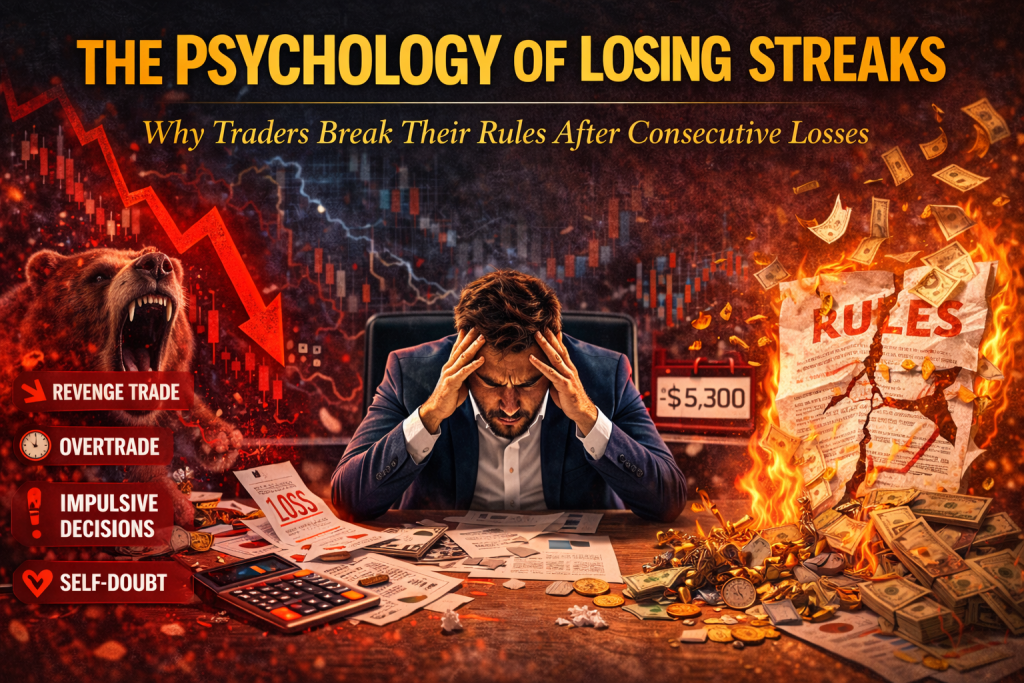
The Psychology of Losing Streaks: Why Traders Break Their Rules After Consecutive Losses

The Psychology of Losing Streaks: Why Traders Break Their Rules After Consecutive Losses Every trader eventually experiences a losing streak. Even the most successful traders in the world face periods where multiple trades fail in a row. While losses are a natural part of trading, the real danger does not come from the losses themselves—it

The Psychology of Losing Streaks: Why Traders Break Their Rules After Consecutive Losses Read Post »

fear and greed trading
Trading Psychology

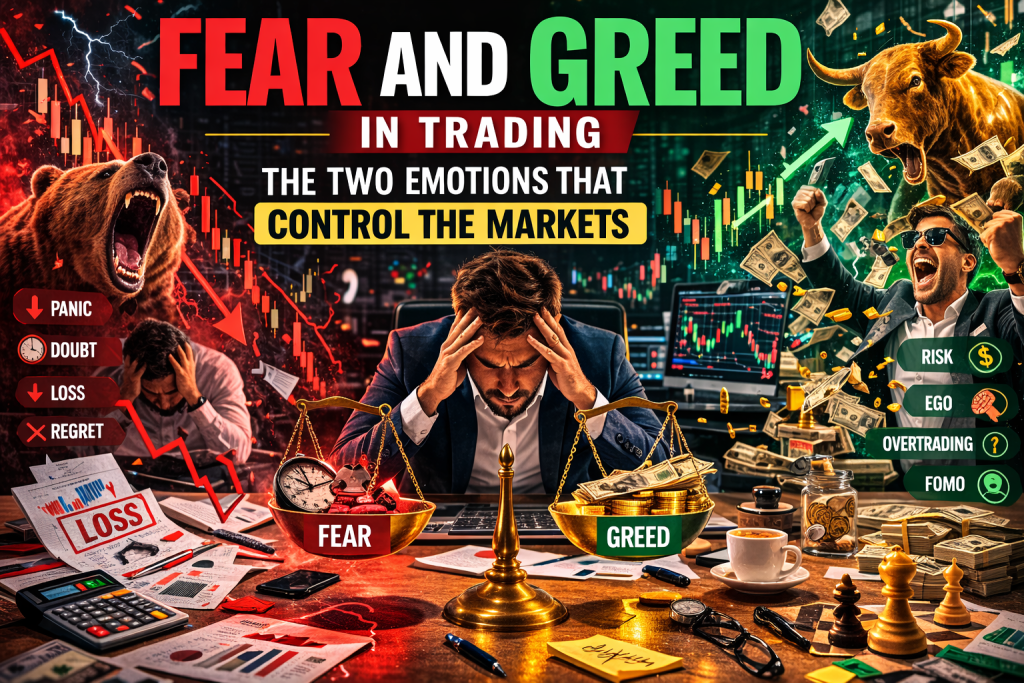
Fear and Greed in Trading: The Two Emotions That Control the Markets

Introduction Financial markets are often described as complex systems driven by data, economic indicators, and institutional strategies. While these factors certainly influence market behavior, one powerful force often dominates them all: human emotion. Two emotions in particular play a central role in shaping market movements—fear and greed. Fear and greed influence how traders react to

Fear and Greed in Trading: The Two Emotions That Control the Markets Read Post »

emotional trading
Trading Psychology

Revenge Trading: Why Traders Try to Win Back Losses and Lose Even More

Introduction Every trader eventually experiences losses. In financial markets, losses are not just possible—they are inevitable. Even the most profitable strategies in the world experience losing streaks. However, the biggest danger in trading is often not the loss itself, but the emotional reaction that follows it. Many traders respond to losses with a powerful psychological

Revenge Trading: Why Traders Try to Win Back Losses and Lose Even More Read Post »

overconfidence bias trading
Trading Psychology

The Overconfidence Trap: Why Winning Traders Suddenly Start Losing

Introduction Success in financial markets can be both rewarding and dangerous. Many traders experience a period of strong performance only to suddenly face unexpected losses shortly afterward. This phenomenon is not always the result of poor strategy or changing market conditions. Often, it is caused by a powerful psychological bias known as overconfidence. Overconfidence occurs

The Overconfidence Trap: Why Winning Traders Suddenly Start Losing Read Post »

behavioral finance trading
Trading Psychology

Loss Aversion: The Hidden Force Destroying Trader Performance

Introduction Financial markets are often described as rational systems driven by information, data, and economic fundamentals. In theory, traders and investors analyze available information, calculate probabilities, and make logical decisions that maximize expected returns. In reality, human psychology plays a far greater role than many people realize. One of the most powerful psychological forces influencing

Loss Aversion: The Hidden Force Destroying Trader Performance Read Post »

trading discipline
Trading Psychology

The Psychology of Trading: Why Emotions Decide Your Profits More Than Strategy

Introduction Many people believe trading success depends mainly on finding the perfect strategy. New traders spend months searching for the best indicators, the most accurate chart patterns, or the most profitable entry signals. However, experienced traders quickly discover a surprising truth: strategy is rarely the main problem. Two traders can use the exact same strategy

The Psychology of Trading: Why Emotions Decide Your Profits More Than Strategy Read Post »

Why Investors Aren’t Rational
Trading Psychology

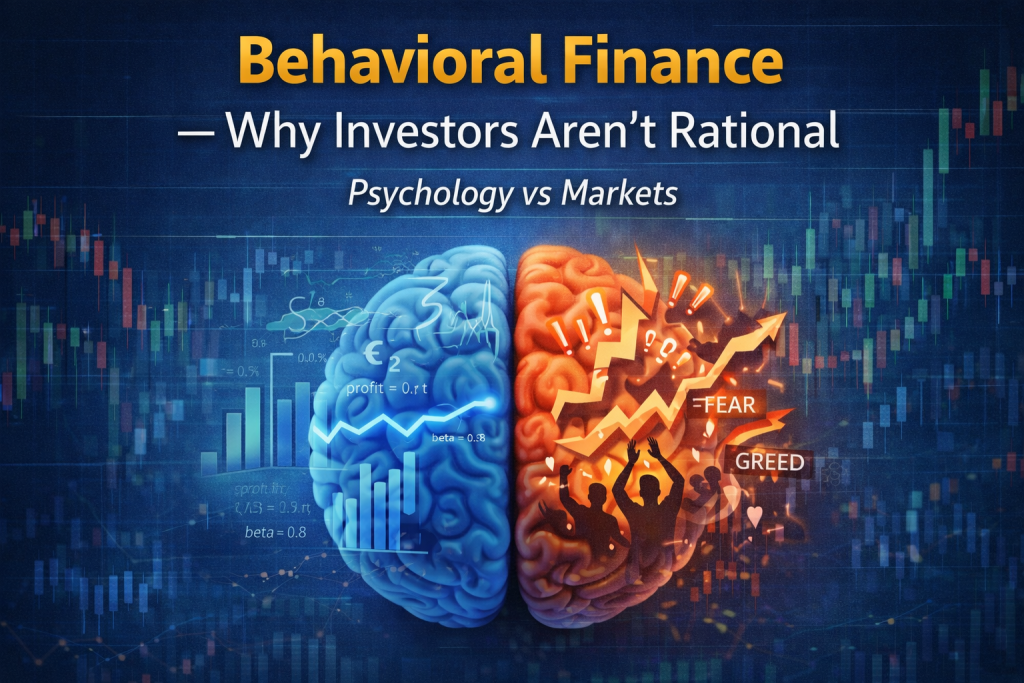
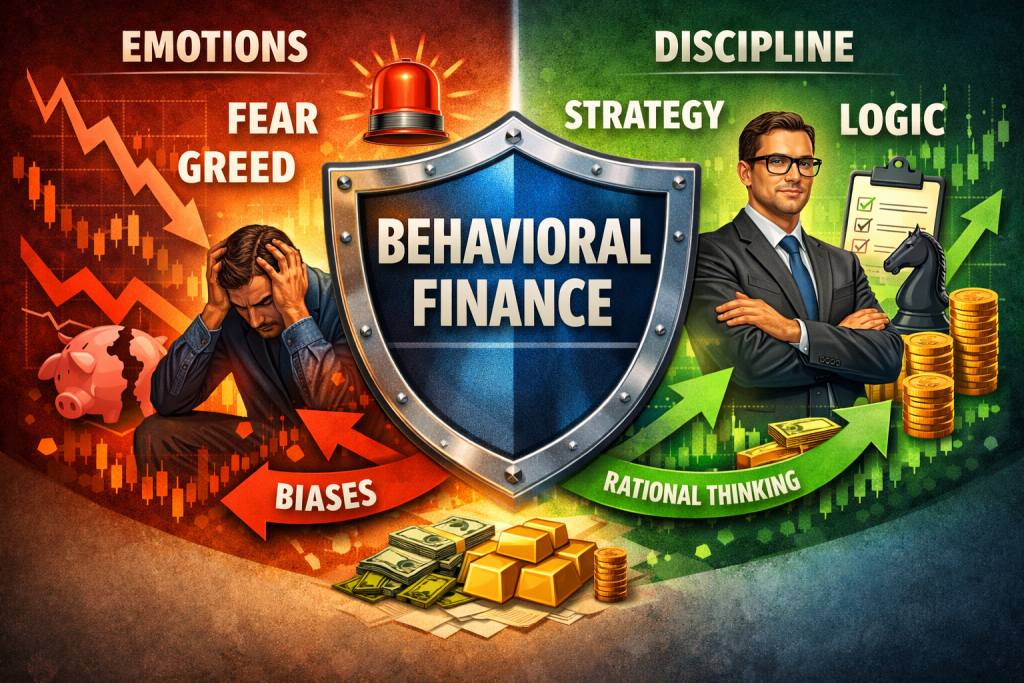
Behavioral Finance: Why Investors Aren’t Rational (And How It Affects Your Money)

For decades, traditional finance assumed something very simple: Investors are rational.Markets are efficient.Prices reflect all available information. This assumption shaped models like the Capital Asset Pricing Model (CAPM), Modern Portfolio Theory (MPT), and the Efficient Market Hypothesis (EMH). But real-world markets tell a different story. Investors panic during crashes.Bubbles inflate far beyond fundamentals.People hold losing

Behavioral Finance: Why Investors Aren’t Rational (And How It Affects Your Money) Read Post »

behavioral finance in investing
Trading Psychology

Behavioral Finance in Investing: Why Investors Make Emotional Mistakes (And How to Avoid Them)

Investing is often presented as a numbers game. Charts, economic data, earnings reports, and financial models appear to drive decisions. Yet beneath all the analysis lies something far more powerful: human psychology. Markets are not moved by spreadsheets alone — they are moved by people. And people are emotional. Behavioral finance studies how psychological biases

Behavioral Finance in Investing: Why Investors Make Emotional Mistakes (And How to Avoid Them) Read Post »

Scroll to Top