The Sunk Cost Fallacy in Trading: Why Traders Hold Losing Positions Too Long
One of the most destructive psychological biases in trading is the sunk cost fallacy. Every trader has experienced it: a trade begins to move against them, yet instead of exiting the position, they hold on—sometimes even adding more capital—hoping the market will eventually turn in their favor.
This behavior rarely ends well. What begins as a manageable loss can quickly spiral into a catastrophic drawdown.
The reason is not poor market analysis. In many cases, the real problem lies in human psychology. The sunk cost fallacy causes traders to focus on the money they have already invested rather than the future probability of success.
Understanding how this bias works—and how to overcome it—can dramatically improve long-term trading performance.
What Is the Sunk Cost Fallacy?
The sunk cost fallacy is a cognitive bias that occurs when individuals continue investing in a losing decision because they have already committed resources to it.
In trading, those resources typically include:
- Money invested in a position
- Time spent analyzing the trade
- Emotional attachment to the idea
- Personal pride in the original decision
Instead of evaluating whether the trade still makes sense, traders become psychologically anchored to what they have already spent.
This creates a dangerous mindset: “I’ve already lost this much. I can’t exit now.”
Ironically, this thinking often leads to even larger losses.
Why the Human Brain Falls Into This Trap
The sunk cost fallacy is deeply rooted in human psychology. Our brains evolved to avoid wasting resources. Thousands of years ago, abandoning a project after investing effort could mean losing valuable survival resources.
However, financial markets operate differently. In trading, past investments should have zero influence on future decisions.
The market does not care:
- What price you entered
- How much money you’ve lost
- How confident you felt about the trade
The only question that matters is simple:
“Does this trade still have a statistical edge?”
If the answer is no, exiting the position is the rational choice.
How the Sunk Cost Fallacy Appears in Trading
This psychological bias shows up in several common trading behaviors.
Refusing to Close Losing Trades
Many traders hold onto losing positions long after their strategy signals an exit. They hope the market will reverse so they can avoid realizing a loss.
Averaging Down Excessively
Some traders repeatedly add to losing positions to lower their average entry price. While averaging down can sometimes be part of a strategy, emotional averaging is extremely dangerous.
Moving Stop Losses
Another common behavior is moving a stop loss further away when the market approaches it. This turns a small planned loss into a potentially large one.
Holding Positions for Months or Years
Long-term investors sometimes keep poor investments simply because they paid more for them in the past.
This behavior locks capital in underperforming assets instead of redeploying it into better opportunities.
Real-World Example of the Sunk Cost Fallacy
Imagine a trader buys a stock at $100 per share. Shortly afterward, the stock falls to $80.
At this point, the trader faces a decision:
- Exit the position and accept a $20 loss
- Hold the trade and hope it recovers
Instead of evaluating whether the stock still has strong fundamentals or technical support, the trader focuses on the original purchase price.
They think:
“I can’t sell now. I’ll wait until it returns to $100.”
But the market may never return to that level. In some cases, the stock may fall to $60, $40, or even lower.
The longer the trader waits, the worse the outcome becomes.
The Relationship Between Loss Aversion and the Sunk Cost Fallacy
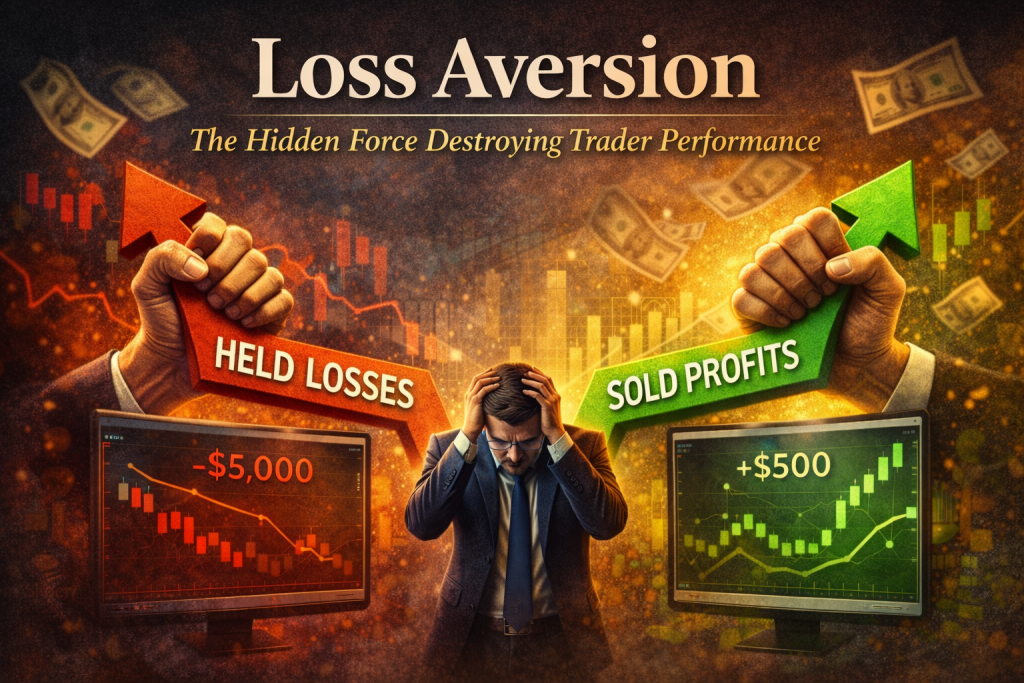
The sunk cost fallacy is closely related to another powerful bias known as loss aversion.
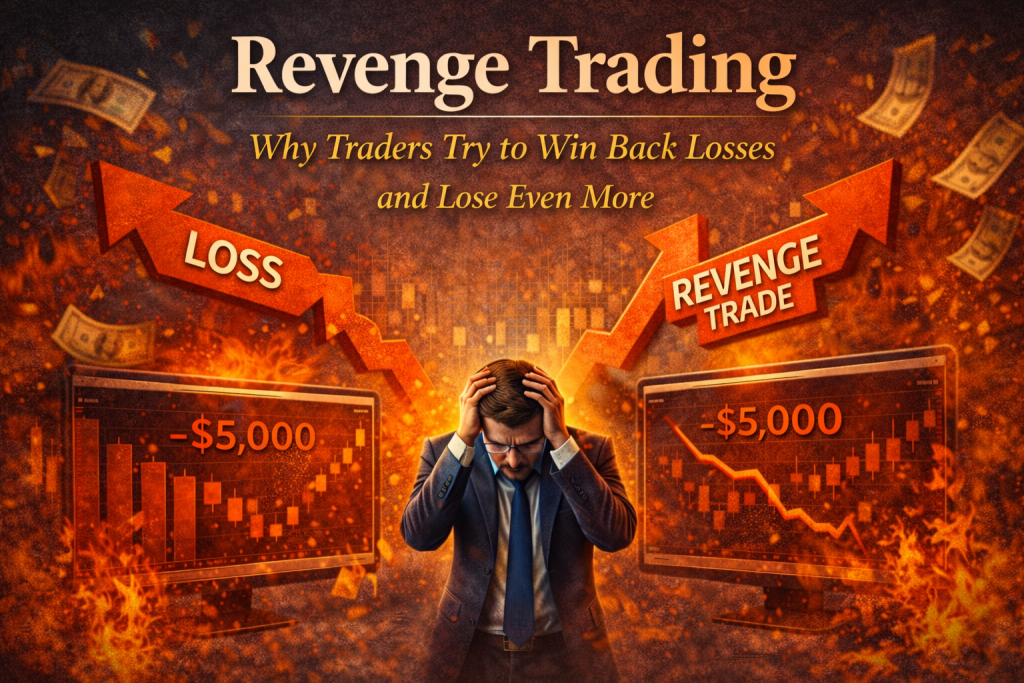
Humans feel the pain of losses more strongly than the pleasure of equivalent gains. Because of this, traders often avoid realizing losses even when doing so is the rational decision.
If you haven’t already read our deep dive on this topic, you may find this helpful:
Loss Aversion in Trading: Why the Fear of Losing Destroys Trader Performance
Together, these psychological forces can seriously damage trading discipline.
Why Professional Traders Cut Losses Quickly
Professional traders understand a critical principle:
Losses are a normal cost of doing business.
Even the best strategies in the world produce losing trades. The difference between professionals and amateurs lies in how they manage those losses.
Professionals focus on:
- Risk management
- Statistical edge
- Position sizing
- Consistency
They exit trades when their strategy says to exit—regardless of emotions.
How to Avoid the Sunk Cost Fallacy in Trading
Use Pre-Defined Stop Losses
A stop loss removes emotional decision-making from the exit process.
Before entering a trade, determine the exact price level where the idea becomes invalid.
Follow a Written Trading Plan
Traders with structured plans are far less likely to fall into psychological traps.
If you haven’t already developed one, you may want to read:
Trading Discipline: Why Most Traders Fail Without a Structured Plan
Focus on Probabilities, Not Outcomes
Each individual trade is just one event in a large series of trades.
Successful traders think in terms of probabilities rather than individual outcomes.
Keep a Trading Journal
Recording every trade—including the reason for entry and exit—helps traders identify patterns of emotional decision-making.
The Opportunity Cost of Holding Losing Trades
Another hidden cost of the sunk cost fallacy is opportunity cost.
Capital tied up in losing trades cannot be used for better opportunities elsewhere.
Great traders constantly reallocate capital toward the highest-probability setups.
Holding onto weak positions prevents this process from happening.
How Algorithmic Traders Avoid This Bias
Algorithmic trading systems follow predefined rules without emotion. When a trade reaches its exit condition, the system automatically closes the position.
This mechanical process eliminates psychological biases such as:
- Loss aversion
- Sunk cost fallacy
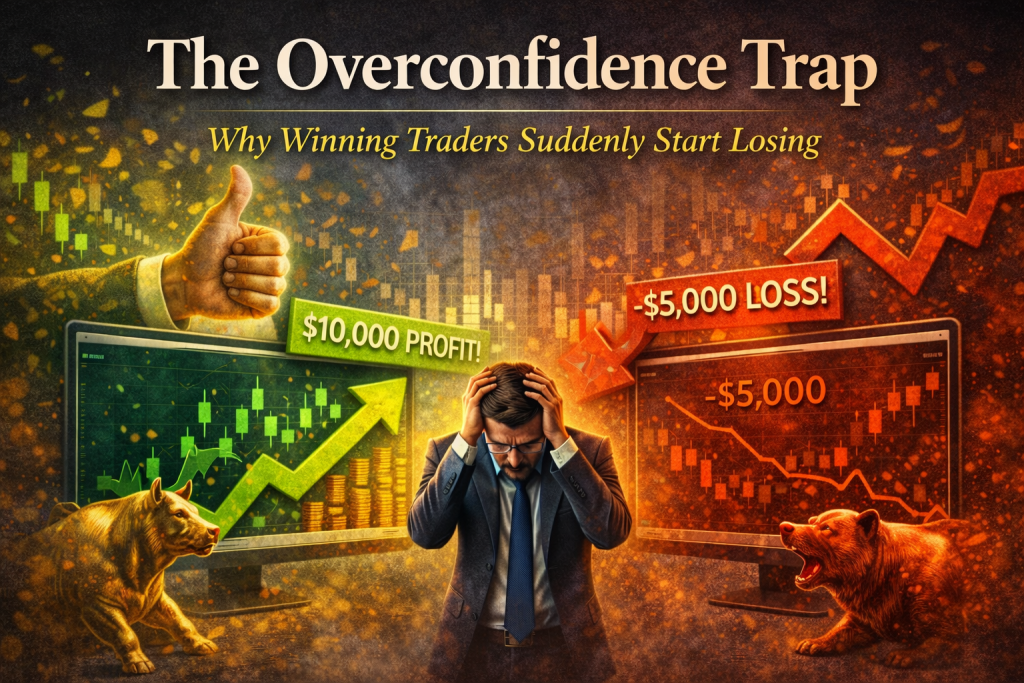
- Overconfidence
- Emotional attachment to trades
While discretionary traders cannot eliminate emotions entirely, they can design systems that minimize their influence.
Related Articles
- Loss Aversion in Trading: Why the Fear of Losing Destroys Trader Performance
- Trading Discipline: Why Most Traders Fail Without a Structured Plan
- The Psychology of Trading: Why Emotions Control Market Decisions
- Overconfidence Bias in Trading: Why Too Much Confidence Destroys Profits
Frequently Asked Questions
What is the sunk cost fallacy in trading?
The sunk cost fallacy occurs when traders continue holding losing positions because they have already invested money or effort into the trade.
Why do traders hold losing trades?
Traders often hold losing trades due to psychological biases such as loss aversion, emotional attachment, and the sunk cost fallacy.
How can traders avoid the sunk cost fallacy?
Using stop losses, following a structured trading plan, and focusing on probabilities rather than individual outcomes can help traders avoid this bias.
Do professional traders experience this bias?
Yes, but experienced traders develop systems and risk management rules that prevent emotions from influencing their decisions.