
Introduction
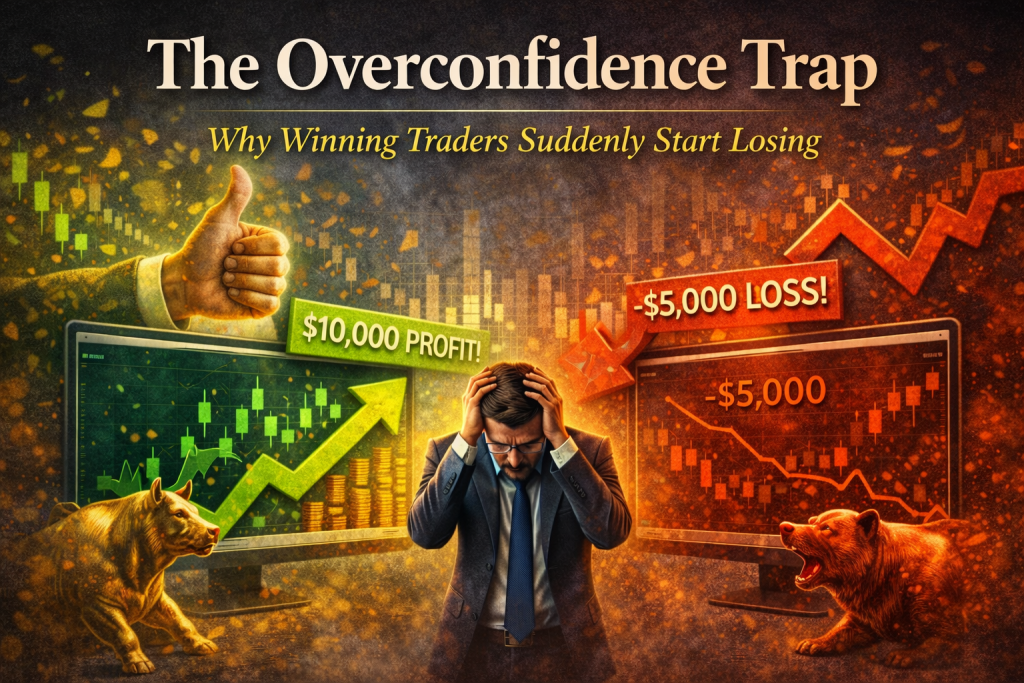
Every trader eventually experiences losses. In financial markets, losses are not just possible—they are inevitable. Even the most profitable strategies in the world experience losing streaks.
However, the biggest danger in trading is often not the loss itself, but the emotional reaction that follows it.
Many traders respond to losses with a powerful psychological impulse known as revenge trading. Instead of stepping back and analyzing what went wrong, they attempt to win back their losses immediately by entering new trades impulsively.
This emotional reaction frequently leads to even larger losses, creating a destructive cycle that can quickly wipe out an entire trading account.
Revenge trading is one of the most common psychological mistakes traders make. It is driven by frustration, ego, and the human desire to avoid accepting failure.
Understanding how revenge trading works—and how to prevent it—is essential for anyone who wants to survive and succeed in the markets.
What Is Revenge Trading?
Revenge trading occurs when a trader enters new positions primarily to recover previous losses rather than to follow a well-defined trading strategy.
Instead of waiting for a high-quality trading setup, the trader becomes emotionally driven by the need to “get the money back.”
Common characteristics of revenge trading include:
- Entering trades immediately after a loss
- Increasing position size to recover losses faster
- Ignoring normal trading rules
- Trading without a clear setup
- Taking excessive risks
In these moments, the trader is no longer thinking objectively. The goal shifts from executing a strategy to recovering losses at all costs.
Unfortunately, this mindset almost always leads to worse outcomes.
Why Traders Fall Into the Revenge Trading Trap
Revenge trading occurs because of several powerful psychological forces that influence human decision-making.
Loss Aversion
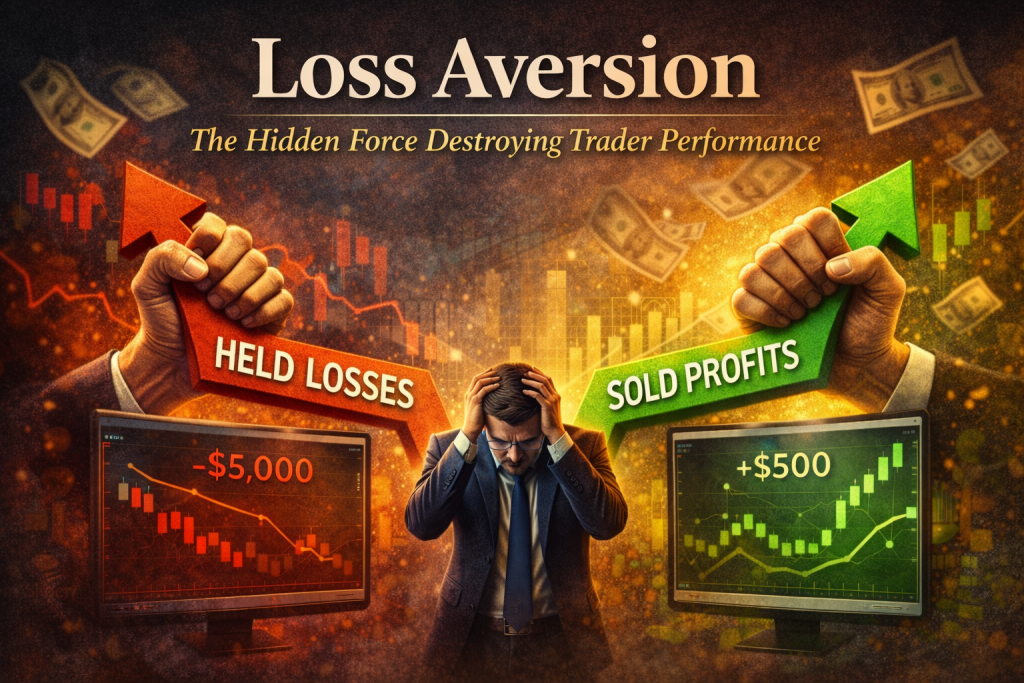
One of the strongest behavioral biases in finance is loss aversion.
Loss aversion describes the tendency for people to feel the pain of losses more intensely than the pleasure of gains.
Research by behavioral economists such as Daniel Kahneman shows that losing money often feels twice as painful as the satisfaction gained from winning the same amount.
This emotional imbalance pushes traders to recover losses immediately rather than accept them.
Ego and the Need to Be Right
Trading can also trigger ego-related reactions.
Many traders subconsciously believe that losing a trade means they were wrong or incompetent.
Instead of accepting the loss as part of the probabilistic nature of trading, they attempt to prove themselves right by quickly entering another trade.
This emotional need to restore confidence often leads to impulsive decisions.
Emotional Stress and Frustration
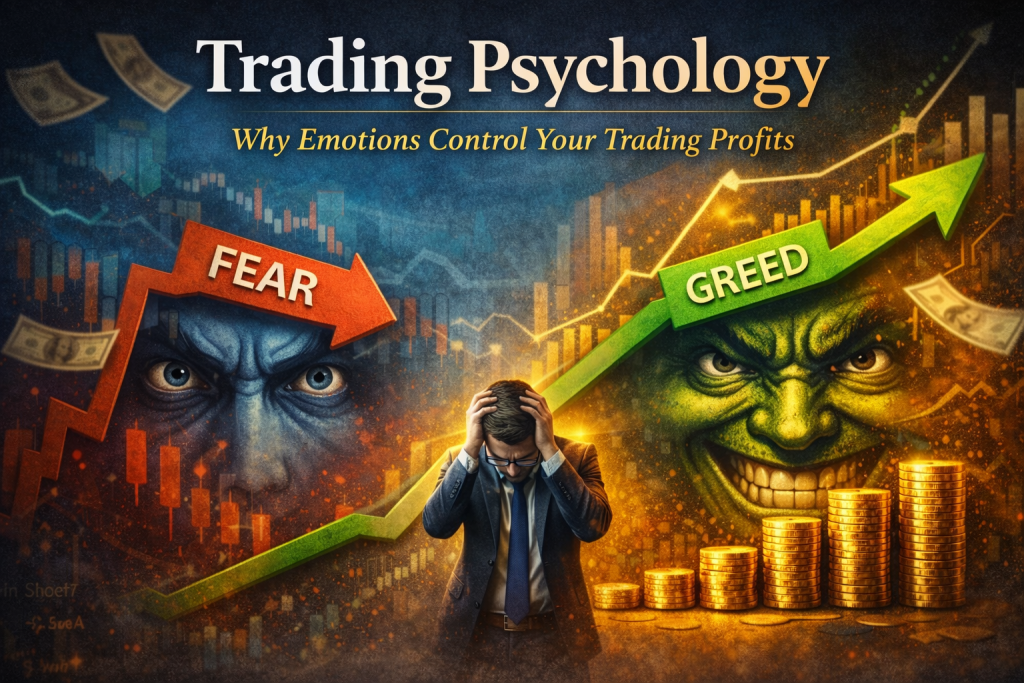
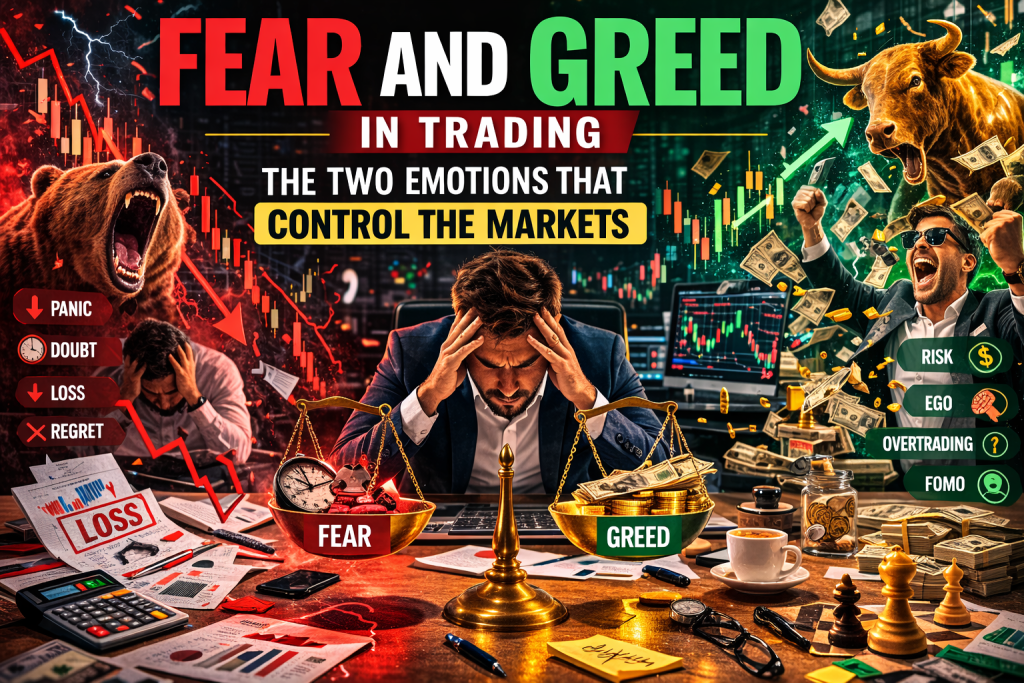
After a losing trade, traders often experience strong emotional reactions such as:
- Frustration
- Anger
- Anxiety
- Fear
- Self-doubt
These emotions can cloud judgment and reduce the ability to think rationally.
As a result, traders may abandon their strategy and begin making impulsive trades based on emotion rather than logic.
The Dangerous Cycle of Revenge Trading
Revenge trading rarely happens only once. Instead, it often becomes a repeating cycle.
The typical pattern looks like this:
- A trader experiences a losing trade.
- The trader feels frustrated or angry.
- The trader enters a new trade impulsively to recover losses.
- The second trade loses due to poor decision-making.
- The trader becomes even more emotional.
- The trader takes another impulsive trade with larger risk.
This cycle can continue until the trader experiences a devastating drawdown.
Many trading accounts have been destroyed in a single day because of revenge trading.
How Revenge Trading Damages Trading Performance
Revenge trading causes several destructive effects on trading performance.
Ignoring the Trading Plan
Most successful traders operate with structured trading plans that define:
- Entry conditions
- Exit rules
- Stop-loss placement
- Position sizing
Revenge trading causes traders to abandon these rules.
When discipline disappears, trading results become unpredictable.
Excessive Risk-Taking
Traders attempting to recover losses quickly often increase their position sizes dramatically.
This behavior exposes the account to much larger risks than originally intended.
A few impulsive trades can easily erase weeks or months of profits.
Emotional Exhaustion
Trading under emotional stress is mentally exhausting.
As emotional pressure builds, traders become less capable of making clear decisions.
Eventually, the trader may begin making increasingly irrational trades.
Signs That You Are Revenge Trading
Many traders are unaware when they begin revenge trading.
Some warning signs include:
- Feeling angry after a losing trade
- Immediately looking for another trade
- Increasing lot size after a loss
- Ignoring trading rules
- Trading outside your strategy
- Feeling desperate to recover losses
Recognizing these warning signs early is essential.
The sooner a trader identifies revenge trading behavior, the easier it becomes to stop the cycle.
Professional Techniques to Prevent Revenge Trading
Successful traders use several techniques to prevent revenge trading.
Implement a Cooling-Off Rule
Many professional traders implement a mandatory break after a losing trade.
For example:
- No new trades for 30 minutes
- No trading for the rest of the day after reaching a loss limit
- A short walk or break away from the trading screen
These rules help reset emotional balance.
Set a Maximum Daily Loss Limit
A daily loss limit prevents emotional trading from escalating.
Once the limit is reached, trading stops for the day.
This rule protects the account from catastrophic losses caused by emotional decisions.
Keep a Trading Journal
A trading journal helps traders analyze their behavior objectively.
Recording the reason for each trade forces traders to think logically before entering positions.
Over time, journaling reveals emotional patterns such as revenge trading.
Focus on Process, Not Outcomes
Professional traders focus on executing their strategy rather than on individual trade outcomes.
Even the best strategies produce losing trades.
By focusing on process instead of results, traders avoid emotional reactions to short-term losses.
Accepting Losses as Part of Trading
One of the most important lessons traders must learn is that losses are unavoidable.
Markets operate on probability, not certainty.
Even a highly profitable strategy may lose 40–50% of its trades.
Professional traders understand this reality.
Instead of trying to avoid losses entirely, they focus on controlling risk and maintaining discipline.
Building Emotional Discipline in Trading
Emotional discipline is a critical skill for long-term trading success.
Traders can develop discipline by:
- Following strict risk management rules
- Maintaining consistent position sizes
- Taking breaks after emotional trades
- Practicing patience and self-awareness
- Continuously reviewing trading performance
Over time, disciplined traders learn to remain calm during both winning and losing periods.
Conclusion
Revenge trading is one of the most destructive psychological behaviors in financial markets.
It occurs when traders allow frustration and emotional stress to override disciplined decision-making.
Instead of following a structured strategy, the trader becomes focused on recovering losses as quickly as possible.
Unfortunately, this mindset often leads to even greater losses.
The most successful traders understand that losses are a natural part of trading. They accept them calmly, review their performance objectively, and wait patiently for the next high-quality opportunity.
In the long run, emotional discipline—not short-term revenge—determines trading success.
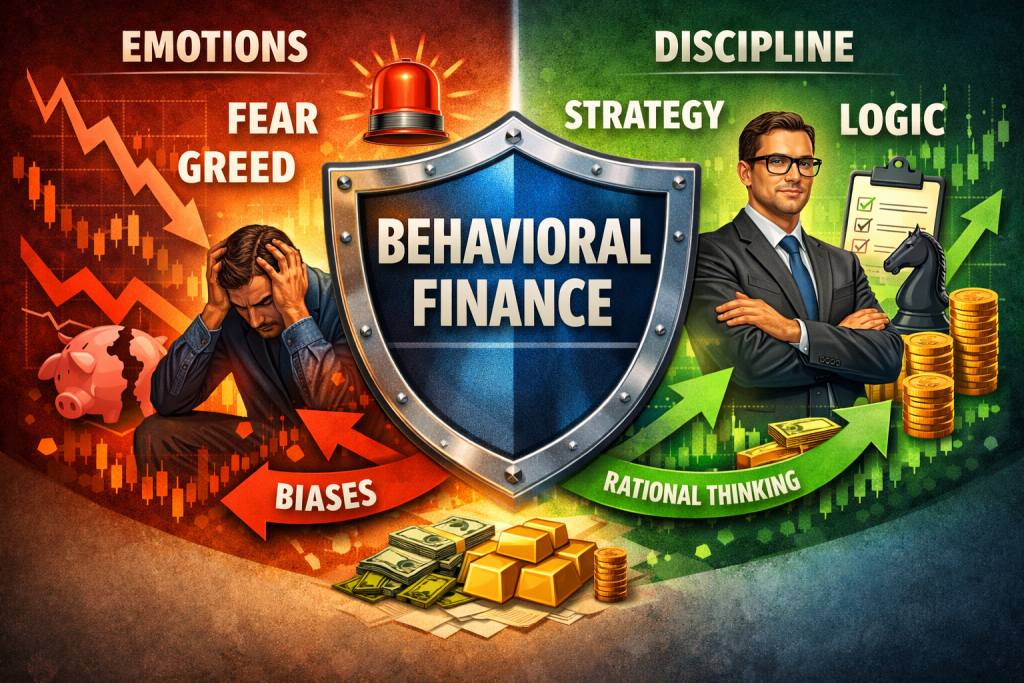
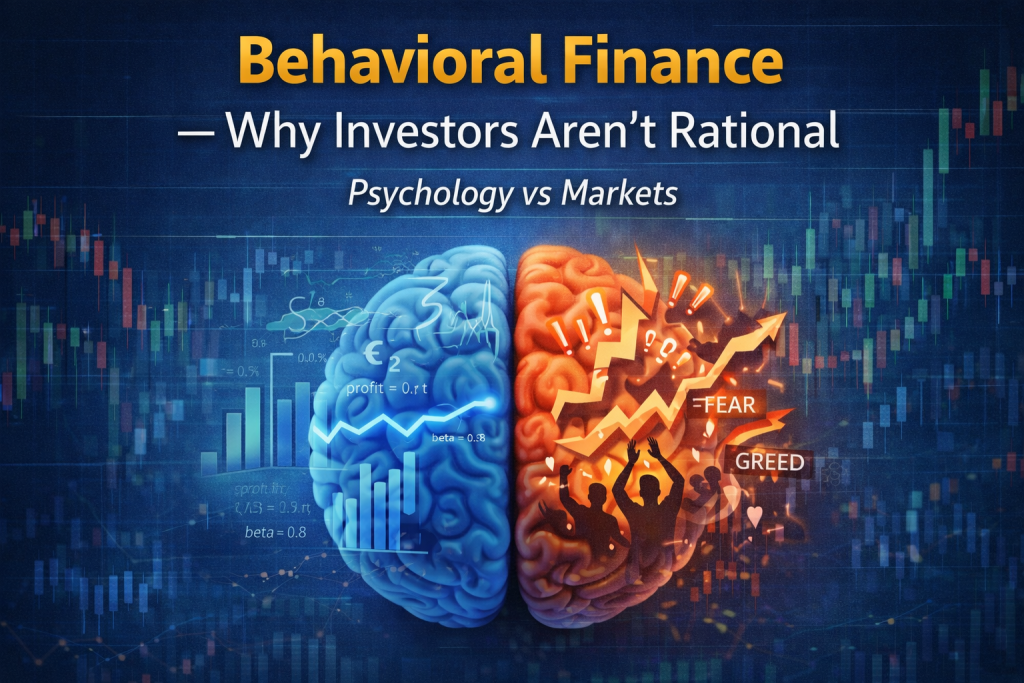
– Behavioral Finance: Why Investors Aren’t Always Rational
– Modern Portfolio Theory Explained
– Momentum Investing: Why Winning Stocks Often Keep Winning
– Market Anomalies: When Financial Markets Behave Irrationally
Frequently Asked Questions
What is revenge trading?
Revenge trading occurs when a trader enters new trades impulsively to recover previous losses rather than following a structured trading strategy.
Why is revenge trading dangerous?
It leads to emotional decision-making, excessive risk-taking, and the abandonment of trading rules.
How can traders stop revenge trading?
Traders can stop revenge trading by implementing cooling-off periods, setting daily loss limits, and maintaining strict risk management.
Do professional traders experience revenge trading?
Yes, but experienced traders use strict discipline and structured rules to prevent emotional decisions.
Is it possible to recover from revenge trading losses?
Yes. Traders can recover by stopping emotional trading, analyzing mistakes, and returning to disciplined strategy execution.
Pingback: Trading Patience: Why Waiting For The Right Setup Makes You More Profitable — The Capital Process