
Top 10 Trading Mistakes That Keep Traders Losing Money (And How to Fix Them)
Every trader enters the market with one clear expectation: to grow capital consistently over time.
It does not matter whether the market is forex, crypto, indices, or commodities. The underlying objective remains the same—identify opportunities, manage risk, and extract profit.
Yet the reality most traders encounter is very different.
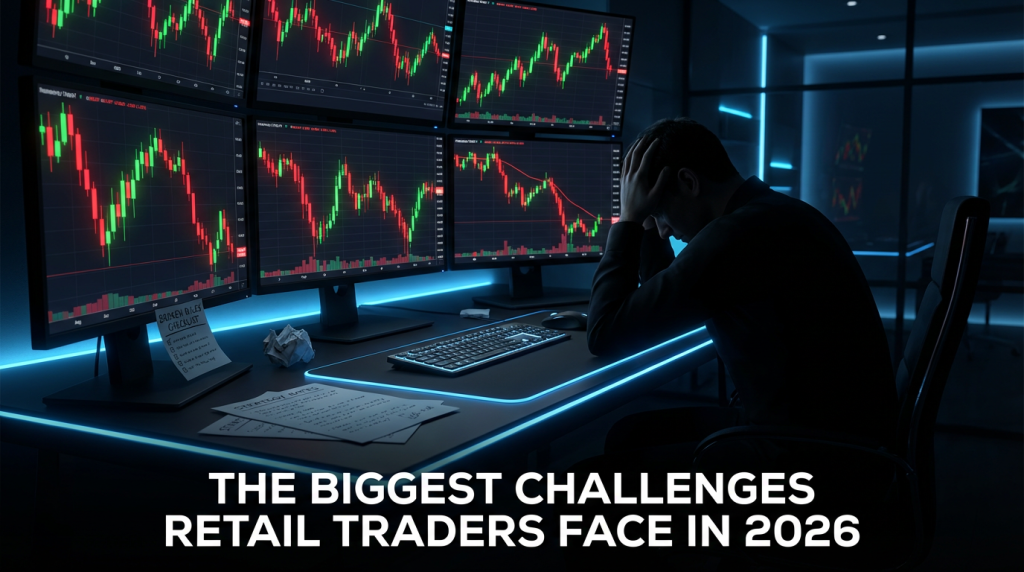
Losses accumulate. Confidence fluctuates. Performance becomes inconsistent. Some periods feel promising, while others feel chaotic and uncontrollable. Over time, many traders begin to question whether consistent profitability is even achievable.
This is where a critical misunderstanding begins.
Most traders assume their problem is strategy.
They believe they need better entries, more indicators, or more advanced systems. They search for new methods, refine setups, and constantly adjust their approach.
But what many fail to realize is this:
Most trading losses are not caused by poor strategies. They are caused by repeated behavioral mistakes.
These mistakes are subtle. They are often justified in the moment. And because they feel logical at the time, they are rarely recognized as the real problem.
This is exactly why even traders with solid systems struggle to achieve consistency—something closely tied to what we explored in the discipline gap in trading.
In this article, we will break down the most common trading mistakes that keep traders losing money and, more importantly, how to correct them with structured, practical solutions.
The Nature of Trading Mistakes
Before examining individual mistakes, it is important to understand their nature.
Trading mistakes are not random events. They are patterns of behavior repeated over time. They are driven by emotional responses to uncertainty, risk, and outcome variability.
Unlike technical errors, which can be fixed through knowledge, behavioral mistakes require awareness and structured correction.
This is why traders often repeat the same errors even after recognizing them. Awareness alone is not enough. There must be systems in place to enforce discipline.
1. Trading Without a Defined Strategy
This is one of the most fundamental mistakes in trading.
Many traders operate with vague ideas rather than clearly defined systems. They rely on general concepts such as “support and resistance” or “trend direction” without specific rules for execution.
This creates inconsistency because each trade is based on subjective interpretation rather than objective criteria.
For example, a trader might identify a “buy zone” but have no defined confirmation signal. One day they enter early. Another day they wait. Another day they skip entirely. The result is unpredictable performance.
How to fix it:
Develop a structured trading system with clearly defined rules:
- Specific entry conditions
- Defined stop loss placement
- Predefined take profit or management rules
- Clear invalidation criteria
Every trade should be explainable based on your system—not your emotions.
2. Ignoring Risk Management
Risk management is the foundation of long-term trading survival.
Yet many traders treat it as secondary.
They focus on potential profit rather than potential loss. They increase position sizes after wins, reduce discipline after losses, and fail to maintain consistent exposure.
This leads to unstable equity curves and significant drawdowns.
As explained in risk management strategies for consistent profitability, preserving capital is more important than maximizing short-term gains.
Example:
A trader risks 10% on a single trade and loses. To recover, they take another trade with increased risk. Within a few trades, the account is severely damaged.
How to fix it:
- Risk a fixed percentage per trade (1–2%)
- Never increase risk based on emotion
- Focus on consistency rather than recovery
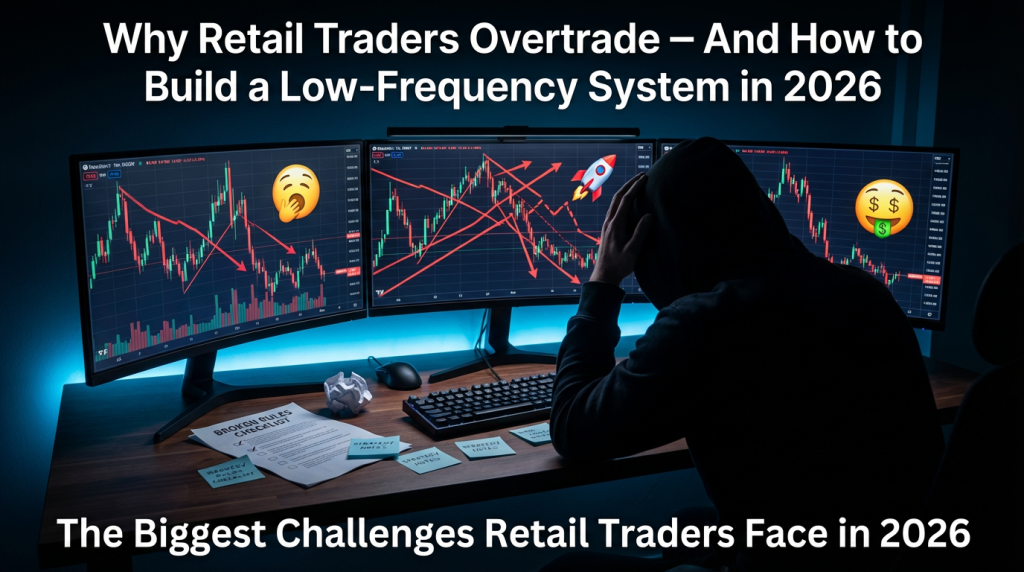
3. Overtrading
Overtrading is driven by the need to be constantly active in the market.
Many traders feel uncomfortable sitting out. They equate activity with productivity, believing that more trades will lead to more opportunities.
In reality, overtrading reduces trade quality and increases emotional fatigue.
Example:
A trader takes five low-quality trades in a session instead of waiting for one high-probability setup.
How to fix it:
- Define a maximum number of trades per day
- Trade only when your setup is present
- Accept inactivity as part of the process
4. Emotional Trading
Emotional decision-making is one of the most destructive forces in trading.
Fear leads to hesitation. Greed leads to overexposure. Frustration leads to revenge trading. Hope leads to holding losing positions.
These emotional responses are part of human behavior under uncertainty, as discussed in this overview of trading psychology.
Example:
A trader closes a winning trade early due to fear, only to watch price reach the original target.
How to fix it:
- Use predefined rules for entry and exit
- Implement a pre-trade checklist
- Step away after emotional trades
5. Moving Stop Losses
Moving stop losses is often an attempt to avoid accepting losses.
This behavior increases risk beyond planned levels and can lead to significant account damage.
Example:
A trader moves their stop loss further away, turning a controlled loss into a large one.
How to fix it:
- Accept losses as part of the system
- Never adjust stop loss without structural justification
- Respect predefined risk limits
6. Closing Winning Trades Too Early
Many traders secure small profits quickly but fail to allow trades to reach their full potential.
This disrupts the risk-reward balance and reduces overall profitability.
Example:
A trader exits at 1:1 reward instead of allowing a 1:3 setup to develop.
How to fix it:
- Follow your predefined targets
- Use partial profits instead of full exits
- Trust your system
7. Revenge Trading
Revenge trading occurs when traders attempt to recover losses immediately.
This leads to impulsive decisions and increased risk exposure.
Example:
After a loss, a trader doubles position size to recover quickly.
How to fix it:
- Set daily loss limits
- Stop trading after consecutive losses
- Reset emotionally before continuing
8. Chasing the Market
Entering trades late due to fear of missing out results in poor entries.
Example:
A trader enters after a strong move instead of waiting for a pullback.
How to fix it:
- Accept missed opportunities
- Wait for new setups
- Maintain discipline
9. Lack of Patience
Patience is required for both entries and exits.
Without it, traders take suboptimal trades and exit prematurely.
How to fix it:
- Focus on high-quality setups
- Allow trades to develop
- Understand that waiting is part of trading
10. Not Reviewing Trades
Without review, improvement is impossible.
Many traders repeat the same mistakes because they do not analyze their performance.
How to fix it:
- Maintain a trading journal
- Track both results and behavior
- Identify recurring mistakes
The Compounding Effect of Mistakes
Trading mistakes do not operate in isolation.
They compound.
A trader who overtrades is more likely to experience emotional stress. Emotional stress leads to poor risk decisions. Poor risk decisions lead to larger losses. Larger losses lead to revenge trading.
This cycle continues until it is consciously broken.
Building a Structured Approach
Correcting trading mistakes requires structure.
This includes:
- A clear trading system
- Defined risk management rules
- Behavior tracking
- Emotional control mechanisms
Consistency is built through repetition of correct actions, not occasional success.
Conclusion
Trading mistakes are the silent factor behind most losses.
They are not always obvious, but they are always impactful.
By identifying and correcting these mistakes, traders can move from inconsistency to structured performance.
Because in trading, success is not determined by how much you know.
It is determined by how consistently you apply it.

Pingback: Trading Patience: Why Waiting For The Right Setup Makes You More Profitable — The Capital Process
Pingback: Building A Mechanical Trading System: How To Trade Without Emotions — The Capital Process
Pingback: Why Most Traders Are Inconsistent (And How To Build Real Trading Consistency) — The Capital Process