
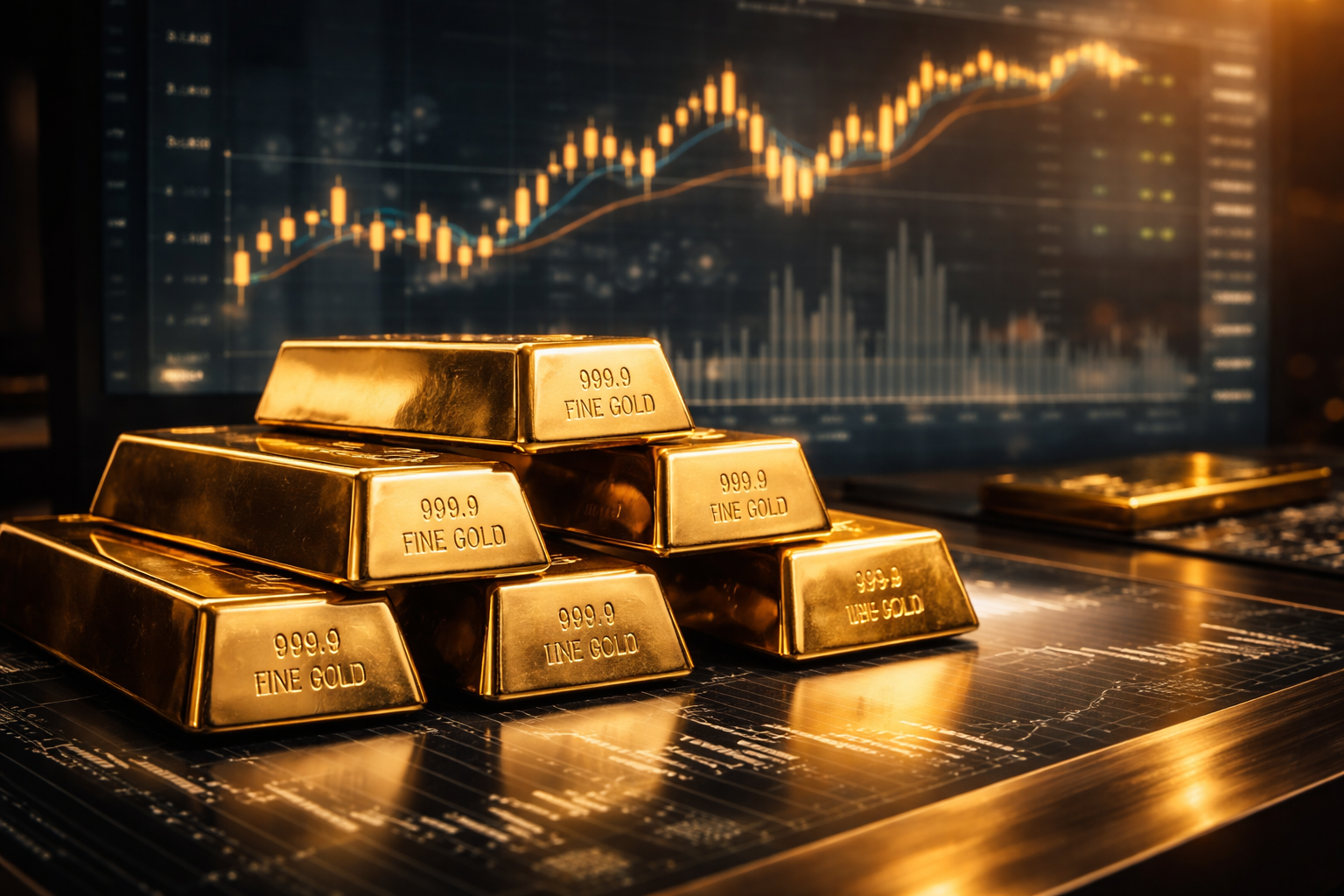
Complete Guide to Gold & Precious Metals Investing (2026)
1. Introduction to Precious Metals Investing
In every financial era—whether defined by expansion, crisis, or structural transition—there exists a class of assets that transcends monetary regimes, geopolitical systems, and economic cycles. Precious metals, particularly gold, occupy this position.
Gold is not simply another commodity. It is not traded purely for industrial demand, nor is it valued based on corporate earnings or technological adoption. Gold is a monetary asset—one that operates at the intersection of macroeconomics, central bank policy, currency stability, and global risk sentiment.
For serious investors and analysts, understanding gold is less about price speculation and more about interpreting macroeconomic conditions. Gold reflects the underlying health of the financial system. When trust in fiat currencies weakens, when inflation accelerates beyond policy control, or when geopolitical tensions threaten global stability, gold becomes a primary destination for capital preservation.
This is why gold is deeply connected to disciplines such as risk management and trading psychology. Investors do not allocate to gold because of excitement—they allocate to gold because of uncertainty.
As we move into 2026, the macroeconomic landscape is defined by persistent inflation pressures, elevated global debt levels, shifting monetary policies, and increasing fragmentation of the global financial system. These dynamics position gold not just as a defensive asset, but as a strategic component of modern portfolio construction.
This guide provides a comprehensive, institutional-level breakdown of gold and precious metals investing—covering everything from historical foundations to forward-looking macro strategies.
2. What Are Precious Metals?
Precious metals are rare, naturally occurring elements that possess intrinsic economic value due to their scarcity, durability, and physical properties. Unlike fiat currencies, which derive value from government backing and monetary policy, precious metals derive value from physical constraints and universal acceptance.
The four primary precious metals in financial markets are gold, silver, platinum, and palladium. Each plays a distinct role in the global economy, with varying levels of investment demand and industrial usage.
| Metal | Primary Role | Market Characteristics | Investment Significance |
|---|---|---|---|
| Gold | Monetary asset, store of value | Low supply growth, high liquidity | Primary hedge asset |
| Silver | Hybrid (monetary + industrial) | Higher volatility | Tactical opportunity asset |
| Platinum | Industrial (automotive) | Supply constraints | Cyclical exposure |
| Palladium | Industrial (catalysts) | Highly volatile | Niche allocation |
Among these, gold stands apart. It is the only precious metal held extensively by central banks and treated as a reserve asset. This distinction elevates gold beyond commodities—it positions it within the monetary framework itself.
3. Why Gold Has Been a Store of Value for Centuries
Gold’s role as a store of value is not theoretical—it is historically validated across civilizations, economic systems, and crises. From ancient empires to modern central banks, gold has maintained purchasing power in ways that fiat currencies have not.
Scarcity and Supply Constraints
Unlike fiat currencies, which can be expanded through monetary policy, gold supply is inherently limited. Annual gold production increases global supply by approximately 1–2%, making it resistant to sudden inflationary expansion.
Durability and Non-Corrosion
Gold does not degrade over time. It does not corrode, rust, or deteriorate. This permanence makes it an ideal long-term store of wealth.
Universal Acceptance
Gold is globally recognized and accepted. It transcends national borders, political systems, and currencies. In times of crisis, gold remains liquid when other assets may become impaired.
Monetary History
For centuries, gold functioned as the foundation of monetary systems. Even after the collapse of the Bretton Woods system in 1971, gold retained its status as a reserve asset.
The key insight here is that gold does not depend on trust in institutions. It is itself a form of trust.
4. The Role of Gold in Modern Financial Systems
Despite the transition to fiat currency systems, gold continues to play a critical role in global finance. Central banks, sovereign institutions, and large asset managers maintain significant gold reserves as part of their strategic allocation.
According to data from the World Gold Council, central bank gold purchases have increased significantly in recent years, reflecting a shift toward diversification away from traditional reserve currencies.
Gold as a Reserve Asset
Central banks hold gold as part of their foreign exchange reserves. This provides:
- Protection against currency devaluation
- Diversification away from USD exposure
- Stability during financial crises
Gold and Monetary Policy
Gold acts as a counterbalance to monetary expansion. When central banks increase money supply through quantitative easing or fiscal stimulus, gold often appreciates as a hedge against currency debasement.
Gold and Financial Stability
During periods of systemic risk—such as financial crises, geopolitical conflicts, or banking instability—gold serves as a safe haven asset.
For traders, understanding these dynamics is essential. Gold is not just reacting to price—it is reacting to macro conditions. This is why macro alignment is critical in forex trading strategies.
5. Key Drivers of Gold Prices
Gold pricing is influenced by a complex interplay of macroeconomic variables. Unlike equities, which are driven by earnings, or bonds, which are driven by yields, gold responds primarily to monetary conditions and investor sentiment.
5.1 Inflation
Inflation represents one of the most fundamental drivers of gold prices. As inflation rises, the purchasing power of fiat currencies declines, prompting investors to seek assets that preserve value.
Gold has historically performed well during inflationary periods because its supply is limited and cannot be expanded in response to economic conditions.
However, inflation alone does not determine gold’s trajectory. What matters more is real inflation relative to interest rates.
5.2 Real Yields (The Most Critical Variable)
Real yields—defined as nominal interest rates minus inflation—are the single most important driver of gold prices.
When real yields are negative, holding cash or bonds results in a loss of purchasing power. In this environment, gold becomes more attractive despite offering no yield.
Conversely, when real yields rise, the opportunity cost of holding gold increases, often leading to downward pressure on prices.
| Real Yield Environment | Impact on Gold | Investor Behavior |
|---|---|---|
| Negative Real Yields | Bullish | Capital shifts into gold |
| Positive Real Yields | Bearish | Capital shifts into bonds |
5.3 Interest Rates
Interest rates influence gold indirectly through real yields. Higher interest rates increase the attractiveness of yield-bearing assets, reducing demand for gold.
However, the relationship is not linear. If interest rates rise but inflation rises faster, real yields may still remain negative—supporting gold prices.
5.4 US Dollar (DXY)
Gold is priced in US dollars, creating an inverse relationship between gold and the dollar index (DXY).
When the dollar strengthens, gold becomes more expensive for foreign investors, reducing demand. Conversely, a weaker dollar supports higher gold prices.
Monitoring the USD is therefore essential in gold trading, particularly in XAUUSD pairs.
5.5 Central Bank Demand
One of the most important structural shifts in recent years has been the increase in central bank gold purchases, particularly among emerging economies.
Countries are diversifying away from USD reserves, accumulating gold as a neutral asset that is not tied to any single currency system.
This trend reflects broader themes such as de-dollarization and geopolitical realignment.
5.6 Liquidity Cycles
Gold is highly sensitive to global liquidity conditions. When liquidity expands—through central bank stimulus or fiscal spending—gold tends to perform well.
Conversely, during liquidity tightening phases, gold may experience short-term pressure.
Understanding liquidity cycles is essential for timing gold allocations and managing exposure effectively.
6. Types of Gold Investments
Gold can be accessed through multiple investment vehicles, each with distinct characteristics, risk profiles, and strategic use cases. Institutional investors rarely rely on a single form of gold exposure; instead, they combine instruments based on liquidity needs, risk tolerance, and macro positioning.
6.1 Physical Gold
Physical gold includes bullion bars, coins, and in some cases jewelry. This form represents direct ownership and eliminates counterparty risk, making it the purest form of gold exposure.
However, physical gold introduces practical considerations:
- Storage and security costs
- Liquidity constraints compared to financial instruments
- Premiums above spot price during purchase
For long-term wealth preservation, particularly in environments of systemic uncertainty, physical gold remains unmatched.
6.2 Gold Exchange-Traded Funds (ETFs)
Gold ETFs provide exposure to gold prices without requiring physical ownership. These instruments track the price of gold and are traded on stock exchanges, offering high liquidity and ease of access.
One of the most widely recognized gold ETFs is SPDR Gold Shares (GLD), which is backed by physical gold reserves.
Advantages include:
- High liquidity
- Ease of trading
- No storage requirements
However, ETFs introduce counterparty and management risk, as investors rely on fund structures and custodians.
6.3 Gold Mining Stocks
Gold mining equities provide leveraged exposure to gold prices. When gold prices rise, mining companies often experience amplified profit growth due to operational leverage.
However, mining stocks are influenced by additional factors:
- Operational efficiency
- Geopolitical risks
- Cost structures (energy, labor)
This makes mining stocks more volatile than gold itself, positioning them as tactical rather than defensive investments.
6.4 Gold Trading (XAUUSD)
Active traders participate in gold markets through the XAUUSD pair in the forex market. This approach allows for both long and short exposure, enabling traders to capitalize on short-term price movements.
Platforms such as TradingView provide advanced charting tools, while brokers like Interactive Brokers and other regulated forex brokers offer execution infrastructure.
Gold trading requires a strong understanding of:
- Market structure
- Macroeconomic drivers
- Position sizing and execution
These principles are deeply connected to forex trading strategies and disciplined execution frameworks.
7. How to Invest in Gold (Global + Nigeria Perspective)
Access to gold markets has expanded significantly, enabling both global and Nigerian investors to participate through various channels.
7.1 Global Access
Global investors can access gold through:
- ETFs via international brokerage accounts
- Futures markets (COMEX)
- Digital gold platforms
- Physical bullion dealers
Institutional investors typically prefer ETFs and futures due to liquidity and scalability.
7.2 Nigeria Perspective
For Nigerian investors, access to gold is primarily achieved through:
- Forex brokers offering XAUUSD trading
- International brokerage accounts
- Local bullion dealers (limited liquidity)
Due to currency volatility and inflation pressures in emerging markets, gold plays a particularly important role as a hedge against local currency depreciation.
7.3 Best Platforms to Invest in Gold
When selecting platforms, investors should prioritize regulation, execution quality, and cost efficiency.
- Interactive Brokers – institutional-grade access to ETFs and futures
- TradingView – advanced charting and analysis
- Regulated forex brokers – access to XAUUSD trading
These platforms form the foundation for both long-term investing and active trading strategies.
8. Gold vs Other Assets
Gold’s role becomes clearer when compared to other major asset classes. Each asset class responds differently to macroeconomic conditions, making diversification essential.
| Asset Class | Primary Driver | Performance in Inflation | Volatility | Role in Portfolio |
|---|---|---|---|---|
| Gold | Macro, real yields | Strong | Moderate | Hedge, diversification |
| Stocks | Earnings growth | Mixed | Moderate-High | Growth |
| Crypto | Adoption, liquidity | Unproven | Very High | Speculative |
| Real Estate | Income, demand | Strong | Low | Income + hedge |
Gold’s key advantage lies in its independence from corporate earnings, technological adoption, and economic growth cycles. It performs best when confidence in traditional financial systems weakens.
9. Risks of Investing in Gold
Despite its strengths, gold is not without risks. A disciplined investor must understand these risks to allocate effectively.
- No Yield: Gold does not generate income, making it less attractive during high interest rate environments.
- Price Volatility: While less volatile than crypto, gold still experiences significant price swings.
- Opportunity Cost: Capital allocated to gold may underperform during strong equity bull markets.
- Liquidity Variations: Physical gold can be less liquid than financial instruments.
Effective risk management frameworks, as discussed in risk management strategies, are essential when integrating gold into a portfolio.
10. Portfolio Allocation Strategies
Institutional portfolio construction treats gold as a strategic allocation rather than a speculative asset.
10.1 Strategic Allocation
Long-term investors typically allocate between 5% and 15% of their portfolio to gold. This allocation acts as a hedge against macroeconomic risks.
10.2 Tactical Allocation
Active investors may increase gold exposure during:
- Periods of negative real yields
- Monetary easing cycles
- Geopolitical instability
10.3 Allocation Framework
| Investor Type | Gold Allocation | Strategy |
|---|---|---|
| Conservative | 10–15% | Capital preservation |
| Balanced | 5–10% | Diversification |
| Aggressive | 0–5% | Growth-focused |
11. Common Misconceptions About Gold
- “Gold always goes up”: Gold experiences long periods of consolidation and drawdowns.
- “Gold is only for crises”: Gold also performs in expansionary monetary environments.
- “Gold replaces equities”: Gold complements, not replaces, growth assets.
12. Future Outlook for Gold (2026 and Beyond)
The structural outlook for gold remains bullish, supported by several macroeconomic trends:
- Rising global debt levels
- Persistent inflation pressures
- Central bank diversification
- Geopolitical fragmentation
One of the most important themes is the gradual shift toward a multi-polar financial system. As countries diversify away from reliance on the US dollar, gold is likely to play an increasingly central role as a neutral reserve asset.
Additionally, real yield dynamics will continue to influence gold prices. If inflation remains elevated while interest rates stabilize or decline, gold could enter a sustained bullish cycle.
13. Conclusion
Gold is not simply an investment—it is a strategic asset that reflects the underlying structure of the global financial system.
For investors seeking long-term capital preservation, diversification, and protection against macroeconomic uncertainty, gold remains an essential component of portfolio construction.
In a world defined by uncertainty, gold provides stability. In a system driven by confidence, gold represents independence.
14. FAQ Section
Is gold a good investment in 2026?
Gold remains a strong investment in environments characterized by inflation, monetary expansion, and geopolitical uncertainty.
How can beginners invest in gold?
Beginners can start with gold ETFs or forex trading platforms that offer XAUUSD exposure.
What is the safest way to invest in gold?
Physical gold and regulated ETFs are generally considered the safest options.
How much gold should I hold in my portfolio?
Most investors allocate between 5% and 15%, depending on risk tolerance and macro conditions.
Does gold perform well during inflation?
Yes, gold typically performs well when inflation erodes the value of fiat currencies.
[…] This cross-market relevance is one reason structural literacy is so valuable. The concepts are portable. They can support broader analysis in areas such as Complete Guide to Gold & Precious Metals Investing (2026). […]
[…] Yes. The principles of structure apply across many liquid markets, including indices, stocks, and gold. For gold-specific macro context, see Complete Guide to Gold & Precious Metals Investing (2026). […]
[…] This pillar guide is designed to serve as a foundational resource for The Capital Process. It explains what forex trading strategies actually are, how the global currency market works, how professionals think about macro and price action, how traders build and test systems, and how risk management determines long-term survival. It also connects naturally with broader themes already central to this publication, including risk management, trading psychology, and broader cross-market thinking such as gold and macro exposure discussed in Complete Guide to Gold & Precious Metals Investing (2026). […]