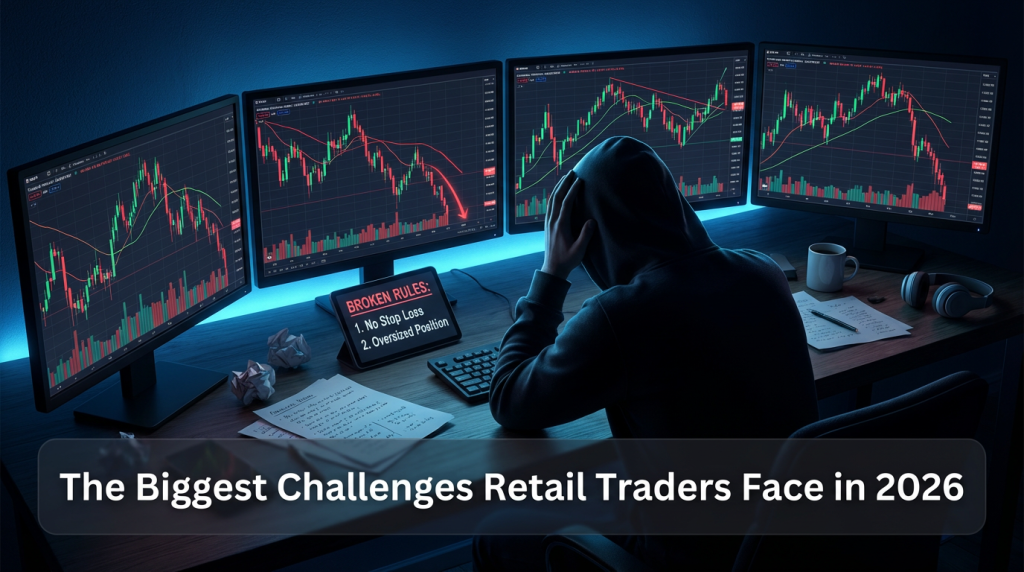
Why Retail Traders Overtrade – And How to Build a Low-Frequency, High-Quality System in 2026
Overtrading remains one of the most destructive habits in retail trading, quietly eroding accounts even when the underlying strategy has an edge. In 2026, with markets offering more noise than ever—constant news alerts, social media hype, AI-generated signals, and rapid volatility in assets like gold and equities—traders face amplified temptations to stay constantly active. The result? More trades, higher transaction costs, emotional fatigue, and diluted performance.
Statistics and broker reports continue to show that excessive trading correlates strongly with losses: the more trades taken outside a defined plan, the lower the long-term expectancy. This isn’t about lacking opportunities; it’s about failing to filter them ruthlessly. This article examines why retail traders overtrade in today’s environment, the psychological and behavioral drivers, why surface-level fixes rarely work, and—most importantly—how to build and commit to a low-frequency, high-quality trading system that prioritizes patience and selectivity over constant action.
The Challenge in Detail: Understanding Overtrading in 2026
Overtrading occurs when a trader executes more trades than their system justifies, often in pursuit of activity rather than edge. Signs include:
- Taking setups that don’t fully meet criteria (e.g., forcing entries in choppy, low-volatility periods).
- Increasing trade frequency after quiet sessions or small losses to “make something happen.”
- Trading outside planned hours or markets due to boredom or FOMO during trending moves (common in 2026’s gold surges or equity momentum plays).
- Accumulating commissions/spreads that eat into any potential profits.
- Emotional exhaustion from screen time, leading to poorer decisions later in the day/week.
In 2026, overtrading is fueled by structural factors: zero-commission brokers make small trades feel “free,” social platforms amplify FOMO with real-time wins shared, and 24/7 access creates the illusion that constant monitoring equals productivity. Yet the data is clear—quality compounds far better than quantity. Traders who average 2–5 high-conviction setups per week often outperform those taking 20+ mediocre ones, even if win rates appear similar on paper.
Psychological & Behavioral Roots
Overtrading is rarely a technical problem; it’s emotional leakage. Key drivers include:
- Boredom and the need for stimulation: Trading screens become addictive dopamine sources. Quiet markets trigger restlessness, pushing traders to invent reasons to act.
- Fear of missing out (FOMO) and greed: Seeing moves in gold or stocks without participation creates anxiety, especially when others post wins online.
- Revenge or recovery impulses after losses: “I need to make it back now” leads to lower-quality entries.
- Overconfidence after wins: A few good trades inflate ego, convincing traders they can “handle” more volume.
These tie directly into broader human tendencies amplified by modern trading tools. The brain craves action in uncertain environments, and 2026’s information overload (endless charts, alerts, communities) makes waiting feel like laziness rather than skill.
Why Most “Fixes” Fail
Common attempts to curb overtrading often backfire because they don’t address the root system gap:
| Common Fix | Why It Fails | Long-Term Result |
|---|---|---|
| “Just be more disciplined” | Willpower depletes under stress; no structural support | Breaks during volatile or boring periods |
| Switch to higher timeframes temporarily | Doesn’t fix the underlying urge for activity | Return to old habits on lower TFs |
| Use trading bots/automation | Shifts overtrading to parameter tweaking | Still emotional interference in overrides |
| Motivational reminders / apps | Temporary; ignores habit formation | Fades after initial motivation drops |
These feel helpful but treat symptoms. Lasting change requires redesigning the process to make inactivity the default comfortable state.
Core Solution: Building a Low-Frequency, High-Quality System
A low-frequency system emphasizes waiting for high-probability alignments over constant participation. The goal: fewer trades (often 1–5 per week/month), but each with superior edge through strict filters.
Step 1: Redefine Success
Shift mindset: Waiting is active skill. Quality setups > volume. Track “non-trades” as wins (avoided bad entries preserve capital).
Step 2: Establish Hard Limits
- Daily/weekly trade cap: e.g., max 3 trades per day, 10 per week—hit limit, platform off.
- Max screen time: e.g., 2–3 hours focused analysis, no endless scrolling.
- Risk-based halt: Stop after -2R daily or -5R weekly.
Step 3: Build Strict Filters (High-Quality Criteria)
Create a scorecard for setups (score 1–10):
- Multi-timeframe alignment (higher TF bias matches entry TF).
- Clear structure (support/resistance, trend channel, POI).
- Confluence (e.g., volume spike, news catalyst, indicator confirmation).
- Reward:risk ≥ 2:1.
- No low-probability conditions (e.g., news hour chop, low volume).
Only enter if score ≥ 8. This forces patience.
Step 4: Pre-Market Preparation & Post-Market Review
Plan ahead: Mark key levels/alerts for 1–2 markets. Use set-and-forget where possible (e.g., limit orders at levels).
Journal every potential setup (taken or not): Why passed? Emotional state? Builds awareness of boredom/FOMO triggers.
Step 5: Refine Through Data
After 50–100 tracked opportunities: Calculate “opportunity expectancy” (quality of passed vs taken). Adjust filters only if data shows clear improvement potential.
This system makes overtrading structurally difficult—inaction becomes the norm because low-quality trades are filtered out by design.
Practical Implementation
Sample daily routine for a swing/low-frequency trader:
- Pre-market (30–60 min): Review higher TF bias, mark 3–5 key levels, set alerts.
- During session: Monitor alerts only; checklist every potential trigger.
- If no setup: Close platform—read, exercise, non-trading activity.
- Post-market: Log missed/taken setups, note urges (boredom? FOMO?).
- Weekly: Review metrics—trades taken, average score, avoided losses.
Red flags: Urge to lower scorecard threshold, extending screen time “just in case,” trading after cap hit. Address by shrinking size or enforced break.
Gold Example / Variation
Gold’s 2026 volatility (frequent sharp moves on macro news) tempts overtrading during quiet build-ups or fakeouts. Apply low-frequency: Wait for strong daily bias (e.g., above 50-day MA), pullback to structure, confluence (e.g., volume + COT data). Avoid intraday noise. See parallels in gold as a crisis hedge—rules prevent chasing every spike. Compare to gold vs stocks for when to reduce frequency during correlated moves.
Conclusion & Next Steps
Overtrading isn’t about too many opportunities—it’s about too few filters. In 2026, the edge lies in selectivity: building a system where waiting feels productive. Start by implementing one hard limit (e.g., daily trade cap) and scorecard this week. Track urges without judgment—data will guide refinement.
Less is more. Embrace the wait—it’s where real capital grows.
Frequently Asked Questions
How do I handle boredom without overtrading?
Boredom is the biggest trigger—replace screen time with non-trading activities (reading, exercise, planning next week). Use alerts for levels instead of constant watching. Over time, patience becomes rewarding as avoided losses compound.
What if high-quality setups are rare?
That’s normal and desirable. Low-frequency means accepting 1–3 setups per week/month. Use the wait to study markets, journal, or refine filters. Forced trades in poor conditions destroy edge faster than missing moves.
Can this work for day traders?
Yes, but adapt: Focus on 1–2 sessions (e.g., London open), strict filters (multi-TF + volume), and hard daily cap (3–5 trades max). Many “day” traders succeed with fewer, better intraday setups.
How do I know if my scorecard is too strict?
Track 50–100 opportunities. If pass rate is 80%+ but taken trades show positive expectancy, it’s working. If no trades for weeks and expectancy flatlines, slightly loosen one filter (e.g., reward:risk) and retest.
What about FOMO during big moves I miss?
FOMO fades with proof: Journal missed moves that would have failed (fakeouts common). Celebrate avoided losses equally. Over time, data shows most “big moves” had poor entry timing anyway.
Should I automate alerts or use bots?
Alerts yes (for levels/news)—reduces screen time. Full bots no early on—they bypass behavioral work needed for long-term adherence. Build manual discipline first.