Understanding Market Cycles: How Smart Investors Read Economic Signals
Financial markets do not move randomly. Over time, they follow recognizable patterns influenced by economic growth, interest rates, inflation, business activity, and investor behavior. These patterns are known as market cycles.
Understanding market cycles helps investors make better decisions about when to protect capital, when to take calculated risks, and how to position investments for changing economic conditions.
For beginners, learning how cycles work provides clarity and confidence. Instead of reacting emotionally to market headlines, investors can interpret economic signals and respond strategically.
What Are Market Cycles?
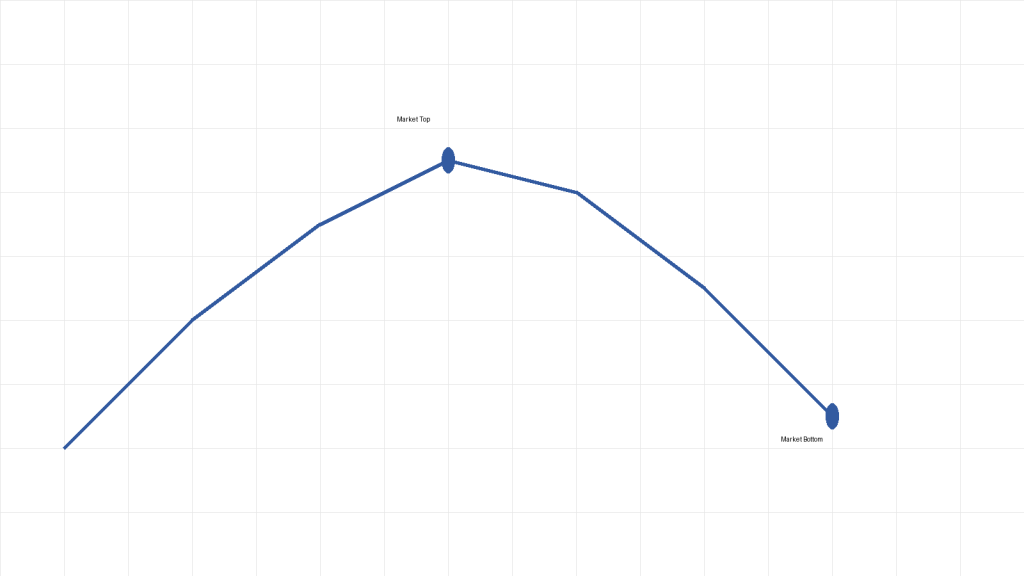
A market cycle refers to the natural rise and fall of economic activity and asset prices over time. These cycles are driven by expansion, peak growth, contraction, and recovery.
Although each cycle varies in length and intensity, the sequence tends to repeat.
Markets move in cycles because economies expand, overheat, slow down, and eventually recover. Investor sentiment follows these phases, often shifting from optimism to fear and back again.
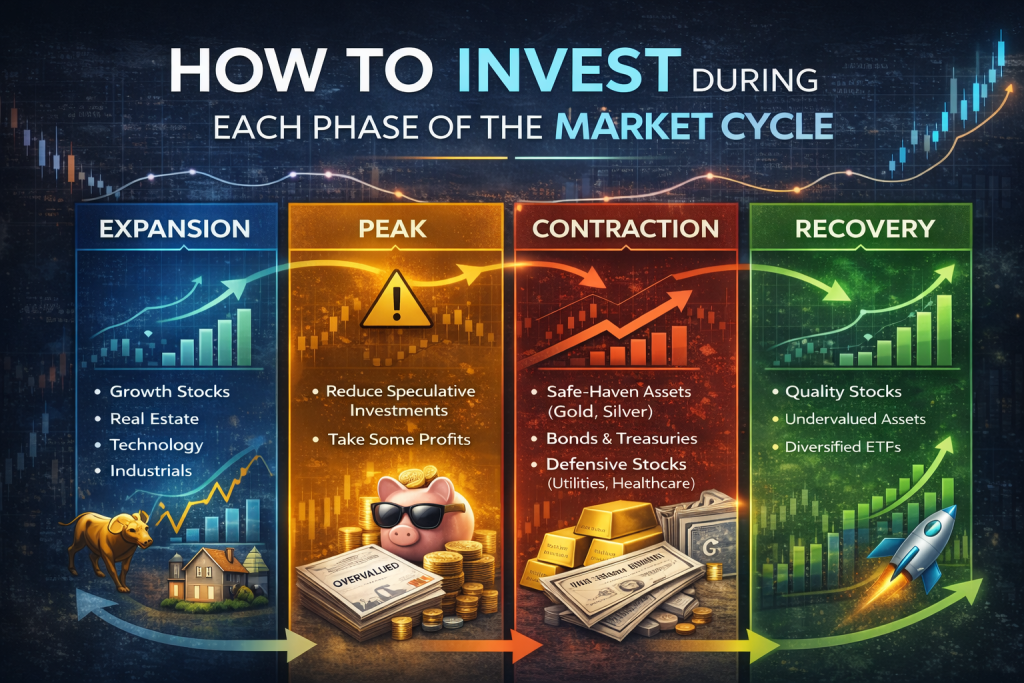
The Four Main Phases of a Market Cycle
Expansion Phase
The expansion phase begins after an economic slowdown or recession. Business activity increases, employment improves, consumer spending rises, and corporate profits grow.
Interest rates are often low during early expansion, encouraging borrowing and investment.
During this phase:
Stock markets tend to rise
Business confidence improves
New investment opportunities emerge
Peak Phase
The peak phase represents the height of economic growth. Demand is strong, employment is high, and companies operate at full capacity.
However, inflationary pressure may begin to rise as demand outpaces supply.
Central banks may increase interest rates to prevent the economy from overheating.
During this phase:
Markets may become overvalued
Risk-taking increases
Asset bubbles can form
Contraction Phase
The contraction phase begins when economic growth slows. Rising interest rates, declining consumer spending, or external shocks can trigger this phase.
Corporate profits shrink, hiring slows, and financial markets become volatile.
During contraction:
Stock markets often decline
Investors become risk-averse
Defensive assets gain attention
Trough (Recovery) Phase
The trough marks the bottom of the cycle. Economic activity stabilizes and begins to recover.
Central banks may reduce interest rates to stimulate growth, and investor confidence gradually returns.
During recovery:
Markets begin to stabilize
Long-term investment opportunities appear
Early investors position for the next expansion
Why Market Cycles Exist
Market cycles are influenced by multiple factors:
Interest rates and monetary policy
Inflation and price stability
Consumer confidence and spending
Business investment and productivity
Global economic conditions
Geoeconomic and geopolitical events
Central banks play a significant role by adjusting interest rates and controlling money supply to maintain economic stability.
Understanding these drivers helps investors anticipate changes rather than react to them.
Key Economic Indicators Smart Investors Watch
Investors rely on economic indicators to understand where the economy may be heading.
Inflation Rate
Inflation measures how quickly prices are rising. Moderate inflation signals growth, while high inflation may reduce purchasing power and prompt interest rate increases.
Interest Rates
Interest rates influence borrowing, spending, and investment. Rising rates slow economic activity, while lower rates encourage growth.
Employment Data
Employment levels reflect economic health. Strong job growth signals expansion, while rising unemployment may indicate slowdown.
Gross Domestic Product (GDP)
GDP measures the value of goods and services produced in an economy. Growing GDP suggests expansion, while declining GDP signals contraction.
Consumer Confidence
Consumer sentiment affects spending behavior. High confidence supports economic growth, while low confidence reduces consumption.
How Different Assets Perform Across Market Cycles
Different investments perform better during certain phases of the cycle.
During Expansion
Equities often perform well
Real estate demand increases
Industrial commodities may rise
During Peak Conditions
Growth may slow
Volatilities increase
Investors begin rotating into defensive sectors
During Contraction
Stocks may decline
Bonds often gain appeal
Gold and safe-haven assets attract demand
During Recovery
Equities rebound
Risk appetite improves
New growth opportunities emerge
Understanding asset behavior helps investors balance risk and opportunity.
Investor Psychology and Market Behavior
Market cycles are not driven solely by economics. Human behavior plays a major role.
During rising markets, optimism grows and investors take more risks. When markets decline, fear can trigger panic selling.
Common emotional patterns include:
Overconfidence during market highs
Fear during downturns
Herd behavior following trends
Impatience during slow recoveries
Successful investors maintain discipline and avoid emotional decision-making.
Common Mistakes Beginners Make
Ignoring economic signals
Trying to time the market perfectly
Panic selling during downturns
Overinvesting during market peaks
Failing to diversify assets
Understanding cycles helps investors avoid these mistakes.
How Beginners Can Invest Through Market Cycles
Focus on long-term objectives
Diversify across asset classes
Avoid emotional decision-making
Invest consistently over time
Maintain a balanced portfolio
Rather than attempting to predict exact turning points, investors benefit from staying consistent and disciplined.
Why Understanding Market Cycles Matters
Recognizing economic cycles helps investors:
Protect capital during downturns
Identify opportunities during recoveries
Reduce emotional decision-making
Build resilient long-term portfolios
Market cycles are inevitable. Investors who understand them are better equipped to navigate uncertainty and make strategic decisions.
Final Thoughts
Financial markets move in cycles shaped by economic forces, policy decisions, and human behavior. While no cycle repeats exactly, recognizable patterns provide valuable insights.
By learning to interpret economic signals and understanding how different assets perform across cycles, investors can make informed decisions rather than reacting to short-term market noise.
Patience, discipline, and a long-term perspective remain the foundation of successful investing in any market environment.