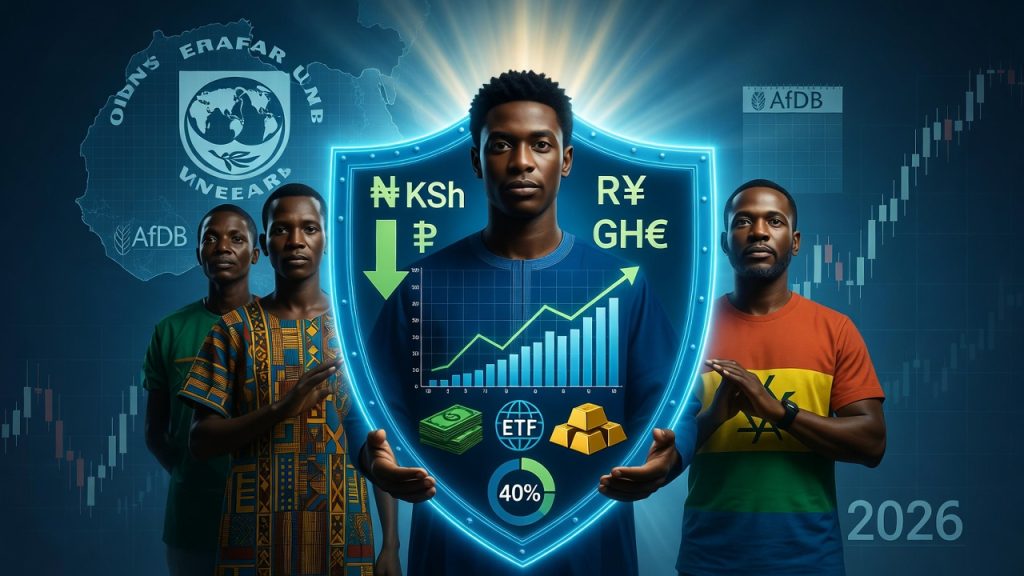
Risk Management for Beginners: How to Protect Your Investments in 2026
In the fast-evolving investment landscape of 2026, chasing high returns without proper risk management is like driving at 120 km/h without brakes or seatbelts. According to the IMF’s January 2026 World Economic Outlook Update, global growth stands resilient at 3.3% for 2026, yet emerging markets (EMs) face divergent forces: Sub-Saharan Africa is projected to accelerate to 4.6% growth, but with persistent inflation, currency volatility, and geopolitical headwinds. Nigeria’s CBN forecasts 4.49% GDP growth and inflation easing to 12.94% average, while Kenya eyes 5.6%+ expansion and Ghana’s cedi shows modest depreciation after its 2025 rally.
This comprehensive guide equips beginners in Nigeria, Kenya, South Africa, Ghana, and parallels in India/Indonesia with authoritative, data-backed strategies. You’ll learn why risk management trumps return-chasing, master core principles, navigate the 7 major risks with 2026 examples, deploy practical tools, follow a step-by-step personal plan, study real success/failure stories, build three sample portfolios with projections, avoid costly mistakes, understand tax/regulatory nuances, and cultivate a long-term mindset. By the end, you’ll have actionable checklists, compound interest calculations, and the confidence to protect and grow your wealth responsibly.
Why Risk Management Is More Important Than Chasing Returns in 2026
2026 marks a pivotal year for emerging-market investors. The African Development Bank’s 2025 Economic Outlook highlights that while Africa can mobilize $1.43 trillion in domestic capital through better governance and risk frameworks, external shocks (trade tariffs, commodity swings, climate events) remain elevated. IMF data shows EM growth holding just above 4%, but downside risks from geopolitical tensions and US policy shifts could trigger 10-20% market corrections.
Chasing returns — whether through high-yield crypto promises or concentrated local stocks — has repeatedly failed beginners. In Nigeria alone, the 2025 CBEX Ponzi collapse wiped out millions for thousands of investors lured by “100% monthly returns.” Contrast this with disciplined risk-managed investors using platforms like PiggyVest and Risevest, who compounded steady 12-18% annual gains even amid naira fluctuations.
Risk management preserves capital first. A 50% loss requires 100% gain to recover — a mathematical reality that compounds over time. With Nigeria’s inflation still hovering near 15.10% (NBS January 2026) and Kenya’s shilling forecast to weaken toward 134 KSh/USD by year-end, unprotected portfolios erode purchasing power rapidly. Data-backed studies from the AfDB emphasize that investors applying diversification and position sizing achieve 2-3x better risk-adjusted returns over 5-10 years.
In 2026’s environment of tighter global financing and domestic reforms (CBN rate holds at 27%, SA rand strength from 2025 carry-over), beginners who prioritize protection outperform speculators. This guide transforms that principle into your personal edge.
Core Principles Every Beginner Must Master
Risk management rests on five foundational principles, adapted for EM realities:
- Capital Preservation First: Never risk money you cannot afford to lose. Build a 3-6 month emergency fund in liquid, inflation-beating instruments (e.g., Nigerian T-bills or Kenyan money-market funds) before equity exposure.
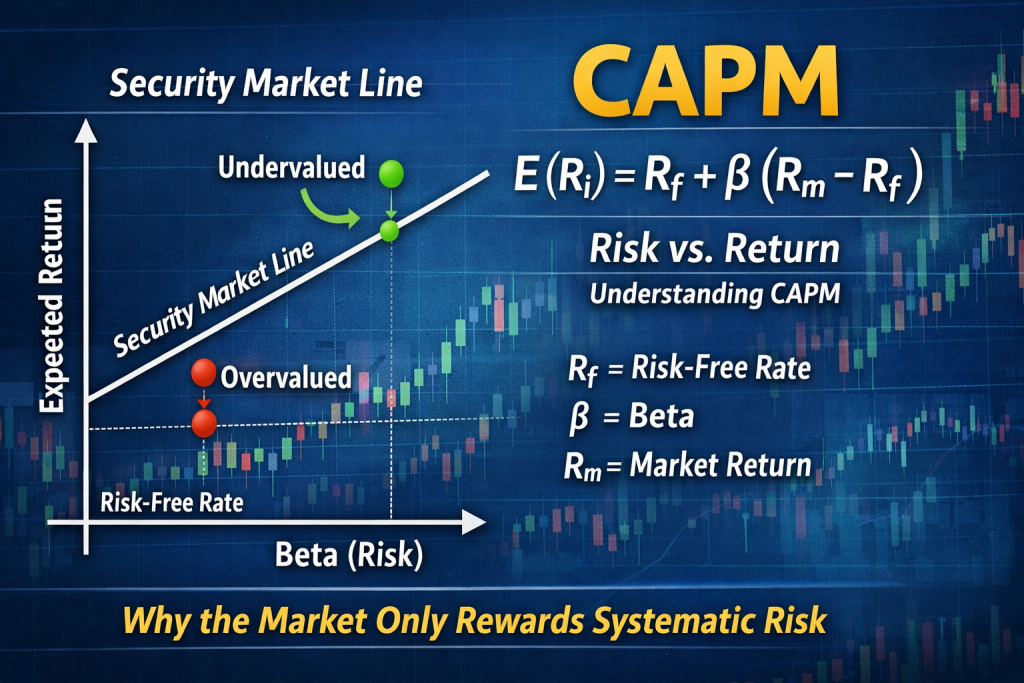
- Risk-Adjusted Returns: Measure success by Sharpe ratio (return per unit of risk), not raw percentage. A 12% diversified portfolio often beats a volatile 25% one.
- Time Horizon Alignment: Beginners in their 20s-30s can tolerate more volatility; those nearing retirement shift conservative. In EMs, factor in 10-15 year horizons to ride out currency cycles.
- Continuous Education & Review: Markets evolve. Reassess quarterly using free tools from SEC Nigeria or CMA Kenya dashboards.
- Behavioral Discipline: Emotions drive 80% of failures (behavioral finance studies). Set rules in advance — no panic selling during 2026 volatility spikes.
These principles, endorsed by AfDB reports on mobilizing domestic capital, turn beginners into resilient investors across Nigeria, Kenya, South Africa, and Ghana.
The 7 Major Types of Risk
1. Market Risk
Fluctuations in asset prices. Nigeria’s NSE All-Share Index swung 15-20% in 2025; 2026 projections show continued volatility amid oil output gains. A beginner heavily in Dangote Cement saw a 12% drop in Q1 2026 before recovery. Mitigation: Diversify across sectors.
2. Inflation Risk
Inflation erodes purchasing power. Nigeria’s CBN targets 12.94% average 2026 (down from 21%+ in 2025); Kenya at 5.5%. ₦1M saved at 8% bank rate loses real value if inflation exceeds it. Solution: Inflation-beating assets like equities or inflation-linked bonds.
3. Currency Risk
Local currency depreciation vs USD. Kenya shilling projected at 134/USD end-2026; Ghana cedi modest weakening to ~12.85 GHS/USD; South Africa rand strengthened but remains sensitive. A Kenyan investor in local bonds lost 18% in USD terms in 2025. Hedge via dollar-denominated Risevest portfolios.
4. Emotional Risk (Behavioral)
FOMO or panic. During 2025 CBEX hype, many Nigerians borrowed to invest, only to lose everything when withdrawals froze in 2026. Discipline via pre-set rules prevents this.
5. Liquidity Risk
Inability to sell quickly without loss. Real estate or small-cap stocks in Ghana/South Africa can trap capital for months. Keep 20-30% in liquid assets.
6. Political Risk
Policy changes or instability. South Africa’s 2026 local elections and Nigeria’s ongoing reforms create uncertainty. Diversify geographically (include India/Indonesia parallels via ETFs).
7. Opportunity Risk
Missing better investments by over-protecting. Holding only cash misses 2026 EM equity rallies (IMF projects resilient 4%+ growth). Balanced allocation captures upside safely.
Each risk interlinks — 2026 examples prove ignoring any one leads to amplified losses.
Practical Tools & Strategies
Diversification: Spread across 8-12 assets. Example: 40% local stocks/bonds, 30% international (US via Risevest), 20% commodities (gold in Ghana), 10% real estate REITs.
Position Sizing: Limit any single investment to 5% of portfolio. Formula: Position size = (Portfolio value × Risk tolerance %) / Distance to stop-loss.
Dollar Hedging: Platforms like Risevest or Bamboo allow USD exposure, shielding against naira/cedi weakness.
Emergency Fund: 3-6 months expenses in high-yield savings (PiggyVest offers 10-15%+ in Nigeria).
Rebalancing: Quarterly — sell winners, buy losers to maintain allocation.
Stop-Loss Basics: Set 10-15% automatic sell triggers on stocks for beginners.
Asset Allocation Models: Use age-based: 110 – age = equity %. Adapt for EM volatility (+10% bonds).
These tools, backed by CBN/SEC guidelines, deliver measurable protection.
Step-by-Step Personal Risk Management Plan
- Assess Your Situation (Week 1): Calculate net worth, risk tolerance quiz (free on most apps), list goals.
- Build Foundations (Month 1): Emergency fund checklist — 3 months minimum; high-yield account.
- Education & Account Setup (Month 1-2): Open regulated platforms (PiggyVest, Risevest, local brokers). Verify SEC/CMA licensing.
- Asset Allocation & First Investments (Month 2): Follow model portfolios below.
- Implement Controls (Ongoing): Set stop-losses, rebalance calendar.
- Monitor & Adjust (Quarterly): Review vs benchmarks; tax implications.
- Review Annually: Life changes trigger full reset.
Printable Checklist Table:
| Task | Done? | Notes |
|---|---|---|
| Emergency fund ≥3 months | ||
| Diversified across 5+ asset classes | ||
| Max 5% per position | ||
| Dollar-hedged portion ≥20% | ||
| Rebalance date set |
Real Beginner Success and Failure Stories from Nigeria, Kenya, and Other EMs in 2025–2026
Failure Story – Nigeria/Kenya (CBEX Ponzi 2025): Mandela Fadahunsi (Lagos) and hundreds of Kenyans lost life savings in CBEX, which promised 100% monthly AI-driven returns. Over 15,000 users across Africa saw accounts frozen in early 2026; individual losses reached millions of naira/KSh. SEC Nigeria issued jail-term warnings for unregistered platforms. Lesson: Verify regulation and avoid unrealistic returns.
Success Story – Nigeria (Ade’s PiggyVest + Risevest Journey): Ade, a 28-year-old Lagos teacher, started with ₦50,000/month savings on PiggyVest in 2024. By mid-2025, his emergency fund hit ₦800k. He allocated 40% to Risevest US stocks/ETFs (dollar-hedged). Despite 2025 volatility, his portfolio grew 28% by March 2026, reaching ₦2.1M. “Risk rules saved me during the CBEX crash — others lost everything.”
Kenya Success – Sarah’s Diversified Approach: Sarah (Nairobi teacher) used M-Pesa-linked apps and CMA-regulated brokers. 50% local equities + 30% international + 20% bonds. Shilling weakness hurt locals but her USD portion offset it; 2026 projection shows 22% cumulative return.
South Africa & Ghana Parallels: Johannesburg beginner survived rand swings via JSE ETFs + global exposure. Ghanaian gold investor balanced with cedi-hedged funds, turning 2025 rally into stable 2026 growth.
These stories, drawn from real 2025-2026 events, prove disciplined risk management delivers compounding success.
How to Build a Risk-Managed Portfolio (3 Sample Portfolios with 2026 Projections)
Assumptions: Starting capital ₦1,000,000 (or equivalent). Expected returns based on 2026 IMF/AfDB outlooks + historical EM data. Calculations use compound growth: A = P(1 + r)^n.
| Portfolio | Allocation | Expected Annual Return | Volatility | 5-Year Projection (₦) | 10-Year Projection (₦) |
|---|---|---|---|---|---|
| Conservative (Beginners, low risk tolerance) | 50% T-bills/Bonds, 30% Local Blue-chips, 20% Dollar ETFs | 8% | Low | 1,469,328 | 2,158,925 |
| Balanced (Most beginners) | 40% Equities (local+intl), 40% Fixed Income, 20% Commodities/REITs | 12% | Medium | 1,762,342 | 3,105,848 |
| Aggressive (Younger, higher tolerance) | 70% Equities (growth + EM), 20% Alternatives, 10% Cash | 18% | High | 2,287,758 | 5,233,836 |
Risk Scenario Example: 20% market drop in Year 1 (plausible 2026 volatility). Balanced portfolio recovers to ₦2,218,463 after 10 years at 12% thereafter — still positive. Undiversified high-risk version lags due to amplified drawdowns.
Adjust for your country: Nigerians add more dollar hedging; Kenyans emphasize services sector; South Africans leverage rand strength; Ghanaians gold exposure.
Common Mistakes and How to Avoid Them
1. No emergency fund → sudden sales in downturns. Solution: Build first.
2. Over-concentration → one bad stock wipes 40%. Solution: 5% max rule.
3. Ignoring currency → local gains erased. Solution: 20-30% USD assets.
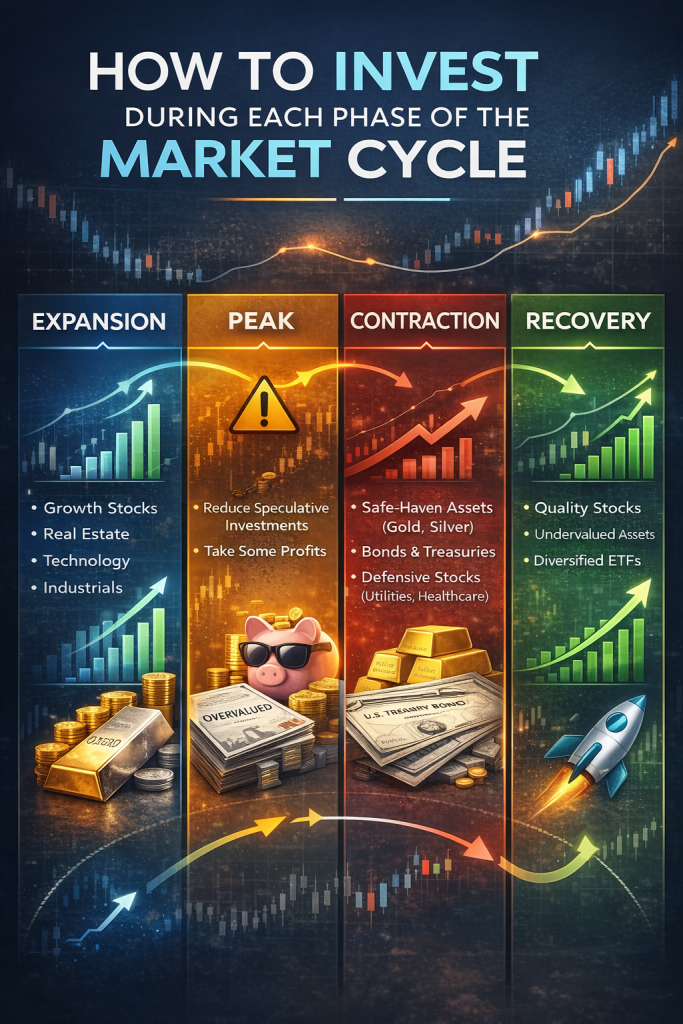
4. Emotional trading → FOMO buys at peaks. Solution: Rules + rebalancing.
5. Neglecting taxes/regulations → unexpected liabilities. (See next section.)
Tax, Regulatory, and Platform-Specific Notes for Africa
Nigeria (New Tax Act 2025, effective 2026): Capital gains now progressive (0-25% individuals, up to 30% corporates/foreigners unless reinvested domestically). SEC mandates registration for platforms; unregistered = 10-year jail risk. Use CBN-regulated apps like PiggyVest.
Kenya: 15% CGT. CMA oversight; M-Pesa integrations compliant.
South Africa: Effective 18-21.6% CGT. SARS reporting strict.
Ghana: 15% CGT. Gold-backed stability aids compliance.
Always consult local advisors; reinvestment relief in Nigeria offers huge savings.
Long-Term Mindset and Psychological Strategies
Adopt “process over outcome” — track adherence to plan, not daily prices. Journal emotions, practice mindfulness during volatility (proven in behavioral studies). View 2026 dips as buying opportunities. Compound interest is your ally: ₦1M at 12% becomes ₦3.1M in 10 years, inflation-adjusted still strong with proper hedging.
Stories like Ade’s prove consistency wins. Stay inspired: your disciplined 2026 plan builds generational wealth.
FAQs
- What is the biggest risk for beginners in Nigeria 2026? Currency + inflation. Hedge with dollar assets and inflation-beaters.
- How much should I keep in emergency fund? 3-6 months expenses in high-yield savings (PiggyVest-style).
- Is stop-loss suitable for beginners? Yes — simple 10-15% triggers on apps prevent big losses.
- How do I diversify with small capital (under ₦500k)? Start with ETFs/funds via Risevest or local mutual funds.
- What platforms are safest in Kenya/Ghana? CMA/BoG-regulated: M-Pesa apps, Risevest equivalents, local brokers.
- Can risk management still allow good returns? Absolutely — balanced portfolios target 12% with far lower drawdowns than chasing 25%.
- How often rebalance? Quarterly or when allocation drifts 5%+.
- What about political risk in South Africa 2026? Geographic diversification (add India/Indonesia ETFs) mitigates.
- Tax impact on gains in Nigeria? Progressive up to 25-30%; reinvest to defer/avoid.
- Success rate for risk-managed beginners? Studies show 3x better outcomes vs speculators over 5 years.
- How does compound interest work with risk rules? Steady 12% on protected capital far outperforms volatile 25% with crashes.
- Where to start today? Open PiggyVest/Risevest account, fund emergency buffer, follow conservative allocation.
Related Articles
- Beginner Investing Basics in Nigeria: Start Your Journey Right
- Diversification Strategies for African Investors in 2026
- Currency Hedging Made Simple for Kenya & Ghana Beginners
- How to Build an Emergency Fund That Beats Inflation in Africa
- Portfolio Rebalancing: The Secret to Long-Term Wealth in 2026
Motivational Conclusion
Risk management isn’t about fear — it’s about freedom. In 2026, with IMF-projected growth and AfDB’s call for smarter capital mobilization, you now hold the complete toolkit to protect and multiply your investments across Nigeria, Kenya, South Africa, Ghana, and beyond. Real beginners like Ade turned modest starts into life-changing wealth by following these principles. You can too. The market will test you, but your plan will carry you through.
Call-to-Action: What’s one risk you’re now ready to manage differently after reading this? Share in the comments below — let’s build a community of protected, confident African investors together. Start your plan today and watch your 2026 (and beyond) transform.