Retirement & Long-Term Planning for Beginners in Emerging Markets 2026: A Step-by-Step Guide
Retirement might feel far away when you’re just starting out in Lagos, Nairobi, Accra, Johannesburg, or any emerging market city. But the truth is: the earlier you begin planning, the less you need to save each month to reach the same goal. In 2026, beginners in Africa and similar high-growth regions have powerful tools—local pension schemes, global ETFs via fintech apps, compound interest, and dollar-hedged assets—to build a comfortable future even with modest incomes.
This comprehensive guide is written for absolute beginners in Nigeria, Kenya, South Africa, Ghana, India, Indonesia, and beyond. We’ll explain why long-term planning matters now, how compound interest works like magic, local retirement options, global alternatives, step-by-step strategies, realistic examples, and the mindset to stay consistent. You don’t need to be rich to retire well—you just need to start. Your future self will thank you for reading this today.
Why Retirement Planning Is Urgent for Beginners in Emerging Markets 2026
Life expectancy is rising across Africa and emerging markets, while traditional family support systems and government pensions are often limited or under pressure. At the same time:
- Inflation erodes savings faster in many EMs (15–30%+ in some years).
- Currency volatility reduces purchasing power over decades.
- Global access via apps now lets you invest in dollar assets from anywhere.
- Compound interest is most powerful when you have 20–40 years ahead.
Simple fact: Starting at age 25 vs age 35 can double or triple your retirement nest egg with the same monthly contribution—thanks to time. In 2026, fintech makes this easier than ever for beginners in emerging markets.
The Power of Compound Interest: Your Secret Weapon
Compound interest is money earning money on itself. Think of it like a snowball rolling downhill—it starts small but grows bigger the longer it rolls.
Example (realistic 2026 assumptions):
– You invest ₦20,000/month (~$12–15) starting age 25
– Average return 9–12% (mix of local funds + US ETFs)
– After 35 years (age 60): ~₦80–120 million (or more in dollar terms)
The same ₦20,000/month starting at age 35 yields only ~₦25–40 million by age 60.
Time is the biggest lever—start now, even small.
Retirement Options in Emerging Markets Africa 2026
Nigeria
- Contributory Pension Scheme (CPS): Mandatory for formal employees (8% employee + 10% employer). Voluntary for self-employed via RSA (Retirement Savings Account) with PenCom-regulated providers (Stanbic IBTC, ARM, Leadway).
- Voluntary contributions: Add extra to RSA for tax benefits.
- Global access: Use Bamboo/Trove/Risevest to invest in US ETFs inside or alongside pension.
Kenya
- National Social Security Fund (NSSF): Mandatory tier + voluntary tier.
- Individual Retirement Plans: Offered by insurers/banks (CIC, ICEA Lion, Britam).
- Global ETFs: Via apps for dollar growth.
South Africa
- Retirement Annuities (RA): Tax-deductible, flexible.
- Pension/Provident Funds: Employer-based + voluntary top-ups.
- Tax-Free Savings Accounts: Annual limit, long-term growth.
Ghana
- Tier 1–3 Pensions: Mandatory + voluntary private schemes (Databank, Stanlib).
- Global access: Fintech for US ETFs/dollar assets.
Broader EM Parallels (India, Indonesia)
- EPF/NPS (India), BPJS/DPLK (Indonesia)—similar mix of mandatory + voluntary + global options.
Global & Dollar-Based Long-Term Strategies for EM Beginners
Local pensions are great foundations—add global diversification:
- US Index ETFs: VOO (S&P 500), VTI (total market)—via Bamboo/Trove/Risevest.
- Target-date funds (if available via apps): Auto-adjust risk as you age.
- Dollar stable assets: For inflation/currency protection—see our dollar hedging guide.
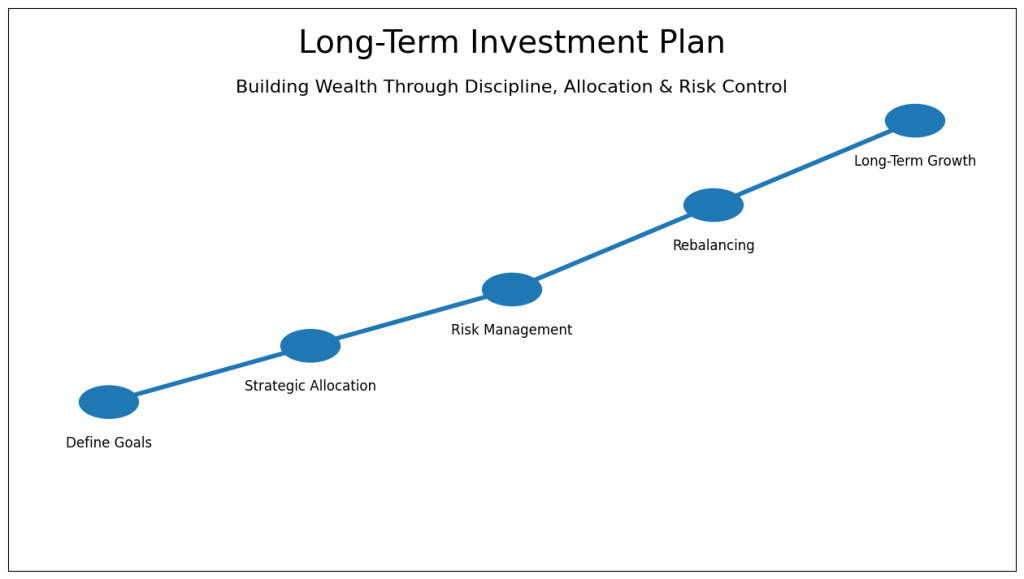
Step-by-Step Long-Term Plan for Beginners
- Calculate your number: Estimate retirement needs (25–30× annual expenses in today’s money).
- Maximize local pension: Contribute fully (employer match is free money).
- Open a voluntary/investment account: Use regulated apps/platforms.
- Automate monthly investments: 10–20% of income (even ₦10,000/month adds up).
- Diversify: 60–80% global ETFs + 20–40% local safe assets when young.
- Rebalance yearly: Adjust as you age (more bonds later).
- Review every 1–2 years: Life changes → adjust contributions.
Realistic Examples for EM Beginners
Nigeria example: ₦30,000/month from age 28 at 10% average return → ~₦150–200 million by age 60 (significant in dollar terms too).
Kenya example: KSh 10,000/month from age 25 at 9–11% → tens of millions KSh by retirement.
Small amounts + time + compounding = powerful results.
Risks & Common Mistakes to Avoid
- Inflation outpacing returns → include dollar assets.
- Stopping contributions during tough times → automate & stay invested.
- Putting everything in one place → diversify local + global.
- Ignoring fees → choose low-cost platforms.
FAQs: Retirement & Long-Term Planning 2026
How early should beginners in Nigeria/Kenya start retirement planning?
As soon as you have income—even age 20–25. Time is your biggest advantage.
What if I’m self-employed or informal sector?
Use voluntary RSA/Pension schemes or investment apps—many allow flexible contributions.
Can I combine local pension with US ETFs?
Yes—many do via separate accounts for hedging and growth.
How much should I save monthly?
10–20% of income is ideal; start with 5–10% if tight—consistency matters more than amount.
Is compound interest really that powerful?
Yes—money grows exponentially. Starting early can multiply your outcome 3–5× vs starting late.
What about taxes on retirement savings in Africa?
Many pension contributions are tax-deductible or tax-deferred; withdrawals often taxed lightly or tax-free—check local rules.
Related Articles
- Dollar Hedging & Inflation Protection
- Best Beginner Investment Apps & Platforms
- How to Start Investing in Emerging Markets 2026
- Understanding Risk and Return
Final Thoughts: Your Retirement Future Begins in 2026
Retirement planning isn’t about being perfect—it’s about being consistent. In emerging markets, you have unique advantages: time, growing economies, and accessible tools. Start today—even with ₦10,000 or equivalent—and let time, discipline, and compounding do the heavy lifting. Imagine retiring with financial freedom, security, and the ability to give back. That future is closer than you think. Take the first step now—you’ve already started by reading this.
What’s your first retirement action going to be? Share below—we’re here to support you!