Introduction
Many people believe trading success depends mainly on finding the perfect strategy. New traders spend months searching for the best indicators, the most accurate chart patterns, or the most profitable entry signals.
However, experienced traders quickly discover a surprising truth: strategy is rarely the main problem.
Two traders can use the exact same strategy and produce completely different results. One trader may generate consistent profits, while the other repeatedly loses money.
Why does this happen?
The answer lies in trading psychology.
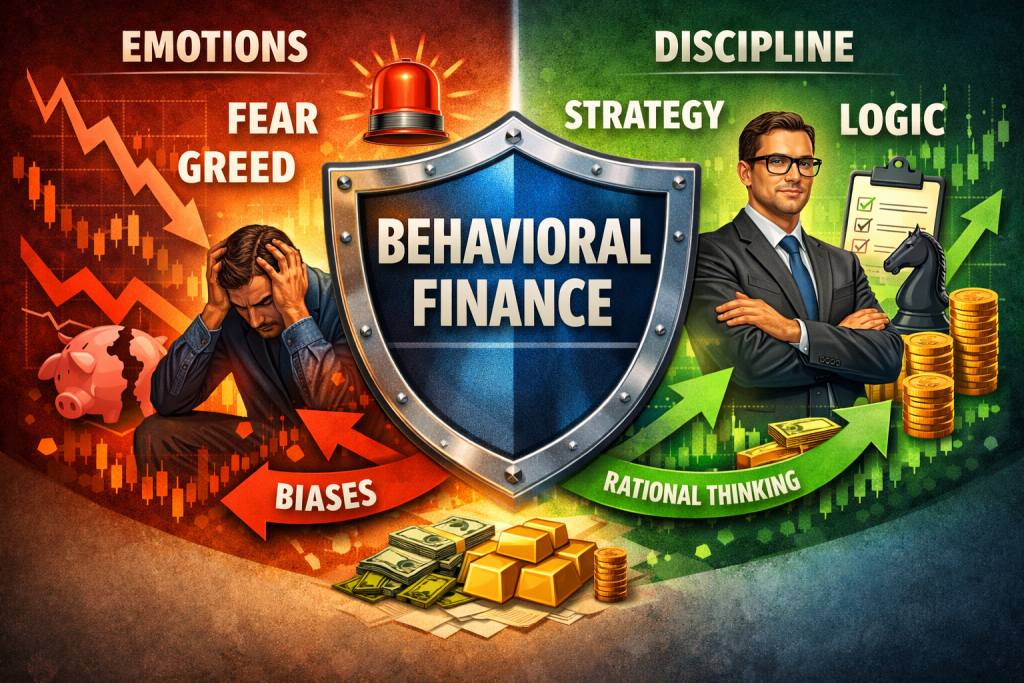
Trading is not just a technical or analytical activity. It is a psychological battle between logic and emotion. Fear, greed, impatience, and overconfidence constantly influence trading decisions.
In fact, many professional traders believe that psychology accounts for more than 70–80% of trading success, while strategy and analysis make up the remaining portion.
This article explores the psychology behind trading performance, the emotional traps that destroy traders, and the mental frameworks that successful traders use to stay disciplined in uncertain markets.
Trading Is a Psychological Game
Financial markets operate in an environment of uncertainty.
Unlike most professions where effort leads to predictable results, trading often produces random short-term outcomes. A perfectly executed trade may still lose money, while a poorly planned trade might accidentally generate profit.
This unpredictability creates emotional pressure.
The human brain naturally seeks certainty and control, but trading offers neither. As a result, traders frequently react emotionally instead of rationally.
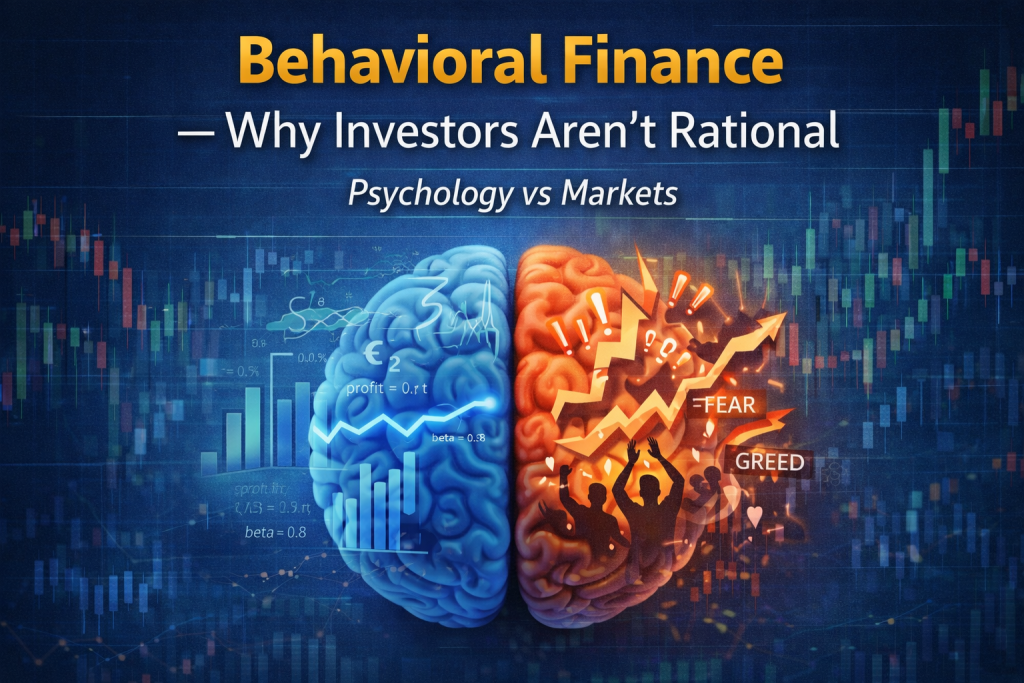
Behavioral finance shows that investors are not perfectly rational decision makers. Instead, they are influenced by psychological biases such as:
-
- Loss aversion
-
- Overconfidence
-
- Herd behavior
-
- Confirmation bias
-
- Anchoring
These biases affect both long-term investors and short-term traders.
Understanding these psychological forces is the first step toward improving trading performance.
The Two Dominant Emotions in Trading: Fear and Greed
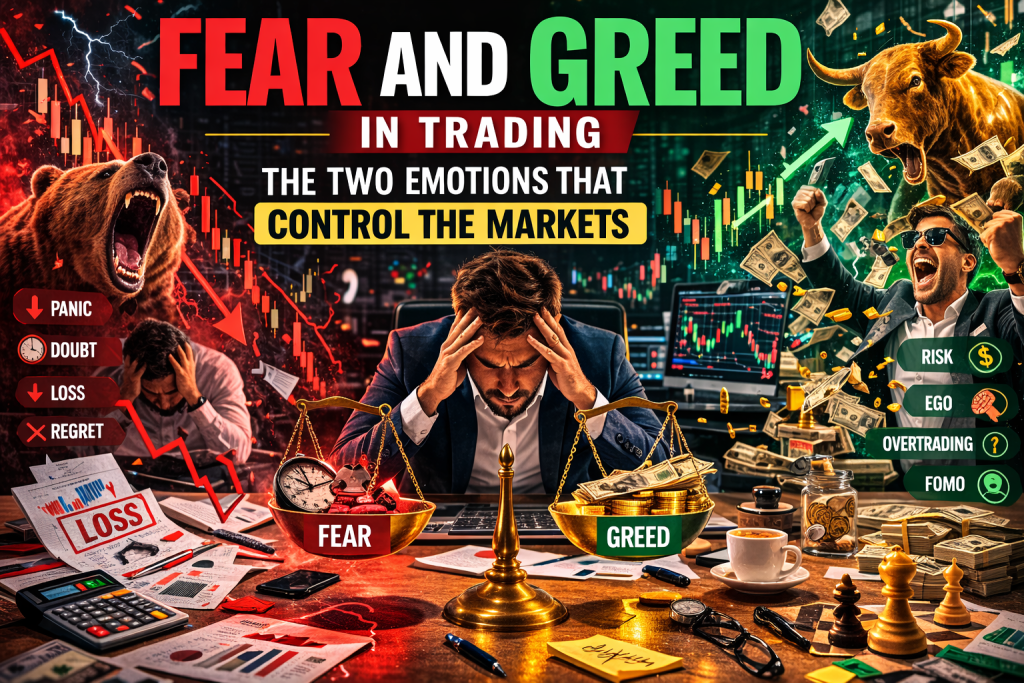
Although many emotions influence traders, two emotions dominate nearly every market decision:
Fear
Greed
These two forces constantly push traders in opposite directions.
Fear
Fear typically appears after losses or during market volatility.
Common fear-driven behaviors include:
-
- Closing winning trades too early
-
- Avoiding valid trading opportunities
-
- Panic selling during drawdowns
-
- Hesitating to follow trading rules
Fear is particularly dangerous because it prevents traders from executing their strategies consistently.
Greed
Greed appears when traders experience winning streaks or see large potential profits.
Greed can lead to:
-
- Oversized positions
-
- Ignoring risk management
-
- Holding trades longer than planned
-
- Chasing fast-moving markets
Both fear and greed cause traders to abandon their trading plans.
Professional traders do not eliminate these emotions entirely. Instead, they design systems that prevent emotions from controlling decisions.
Why Most Traders Struggle With Emotional Control
Human psychology evolved for survival, not financial markets.
Thousands of years ago, quick emotional reactions helped humans survive dangerous environments. Fear triggered rapid escape responses, while reward signals encouraged beneficial behavior.
However, these instincts create problems in financial markets.
For example:
When prices fall quickly, the brain interprets the movement as danger. This triggers panic selling, even when the long-term outlook remains unchanged.
When prices rise rapidly, traders feel excitement and urgency. This leads to fear of missing out, causing traders to buy at the worst possible moments.
Because of these natural instincts, emotional trading is extremely common.
Even experienced professionals must constantly manage these psychological pressures.
Loss Aversion: Why Losing Hurts More Than Winning Feels Good
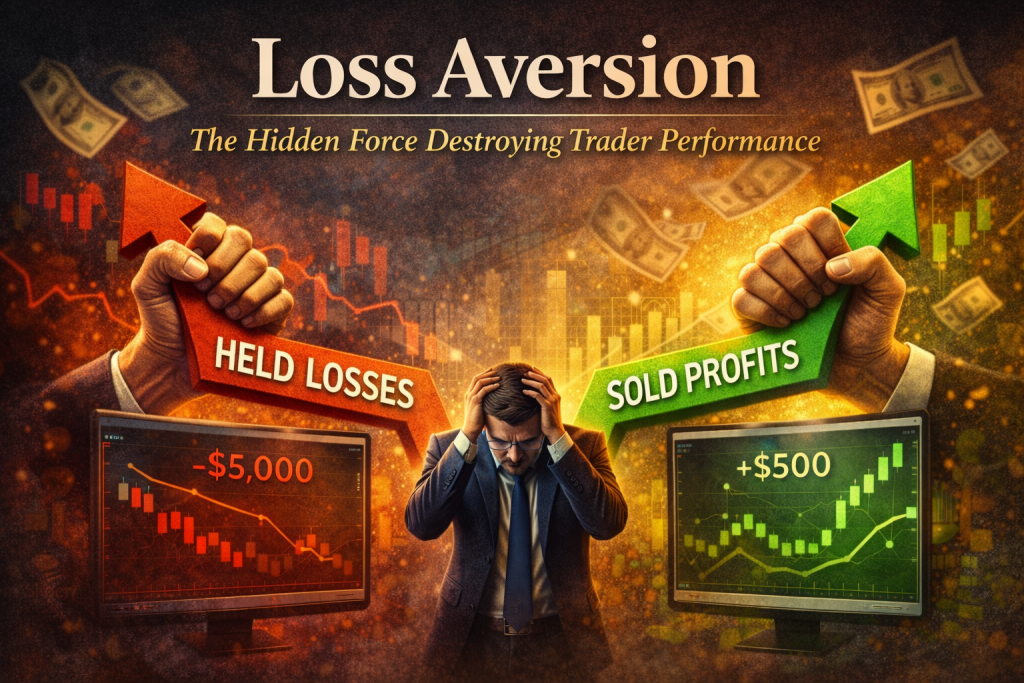
One of the most powerful psychological biases affecting traders is loss aversion.
Research in behavioral finance shows that people experience the pain of losses much more strongly than the pleasure of gains.
Research demonstrated that a loss is psychologically about twice as powerful as an equivalent gain.
For example:
Losing $100 feels roughly as painful as the pleasure gained from winning $200.
This psychological imbalance causes traders to behave irrationally.
Common loss-aversion behaviors include:
-
- Refusing to close losing trades
-
- Moving stop losses further away
-
- Hoping losing positions will recover
-
- Closing profitable trades too early
Ironically, these behaviors create the classic trading mistake:
Small profits and large losses.
Successful traders reverse this pattern by accepting losses quickly and allowing profitable trades to grow.
The Overconfidence Trap
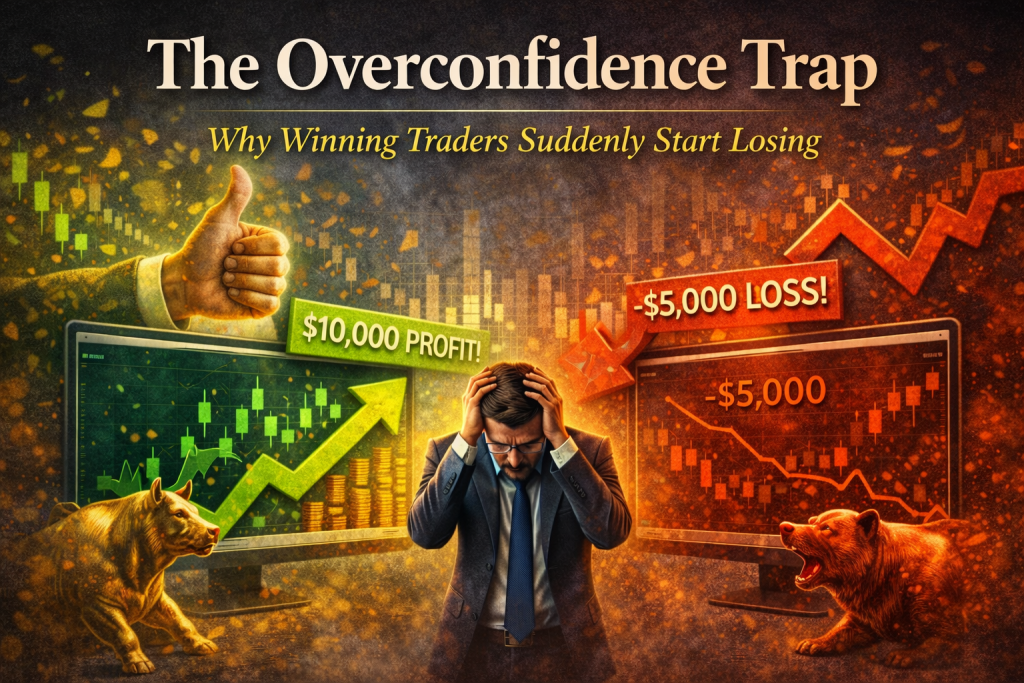
Another common psychological problem in trading is overconfidence.
Overconfidence often appears after traders experience early success.
A few winning trades can create the illusion that a trader has mastered the market.
This belief leads to dangerous behaviors such as:
-
- Increasing position size too quickly
-
- Ignoring risk management rules
-
- Trading more frequently
-
- Believing losses are temporary mistakes
Overconfidence can be especially damaging because markets constantly change. Strategies that worked last month may stop working tomorrow.
The best traders remain humble and understand that every trade contains uncertainty.
The Psychological Impact of Winning and Losing Streaks
Trading performance rarely follows a smooth path.
Instead, traders experience streaks of wins and losses.
Winning streaks can produce overconfidence, while losing streaks can create self-doubt.
Both emotional reactions are dangerous.
During winning streaks, traders may:
-
- Increase risk beyond their plan
-
- Trade impulsively
-
- Ignore warning signals
During losing streaks, traders may:
-
- Abandon their strategy
-
- Stop trading entirely
-
- Attempt revenge trading
Professional traders understand that streaks are a normal statistical feature of trading systems.
They focus on long-term consistency rather than short-term outcomes.
Revenge Trading: A Dangerous Emotional Spiral
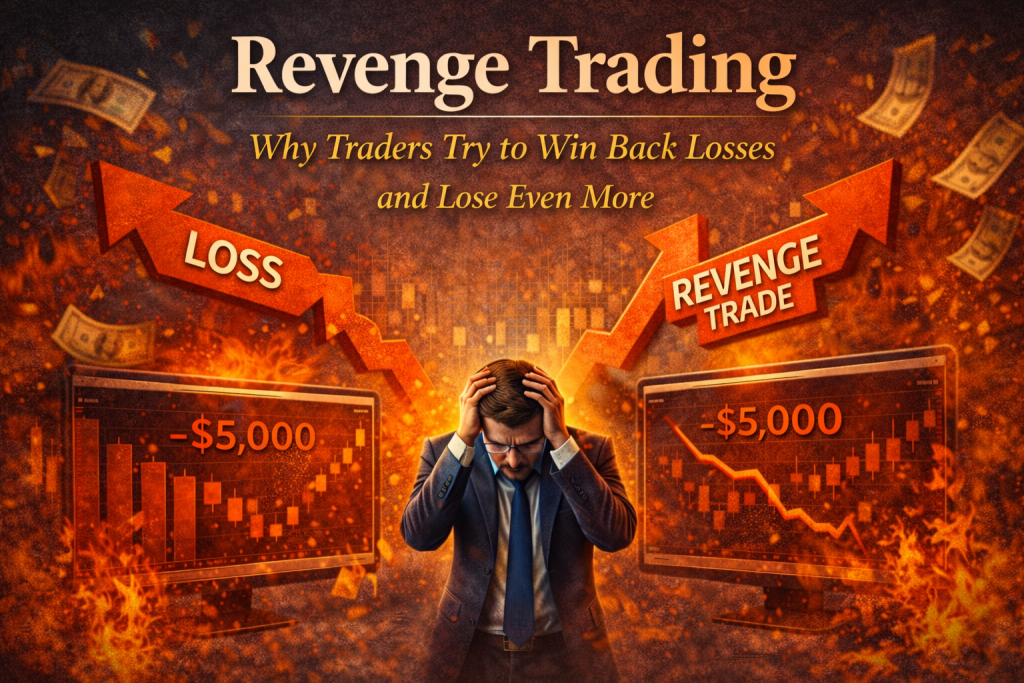
One of the most destructive psychological behaviors in trading is revenge trading.
Revenge trading occurs when traders attempt to immediately recover a loss by placing another trade.
This behavior is driven by frustration and emotional discomfort.
Instead of analyzing the market objectively, traders focus on recovering their lost money as quickly as possible.
Revenge trading often leads to:
-
- Larger position sizes
-
- Poor trade selection
-
- Ignoring risk limits
As a result, one loss can quickly turn into multiple losses.
Professional traders avoid revenge trading by establishing strict rules about when and how they can enter new trades after losses.
The Professional Trader Mindset
Successful traders think differently about markets.
Instead of focusing on individual trades, they think in terms of probabilities and long-term outcomes.
This mindset was popularized by trading psychologist, Mark Douglas, author of the influential book Trading in the Zone.
According to Douglas, successful traders accept five fundamental truths:
-
- Anything can happen in the market.
-
- You do not need to know what will happen next to make money.
-
- There is a random distribution between wins and losses.
-
- An edge simply means higher probability.
-
- Every moment in the market is unique.
These principles help traders detach emotionally from individual outcomes.
Process Over Outcome
Another key psychological principle in trading is focusing on process rather than outcome.
Many traders judge their performance based on whether a trade wins or loses.
However, this approach is misleading.
A trader may follow their strategy perfectly and still lose money on a single trade.
Instead of evaluating individual results, professional traders evaluate whether they followed their trading process correctly.
If the process is sound, profits will eventually follow.
Building Emotional Discipline
Emotional discipline is not something traders are born with. It is developed through practice and structured habits.
Successful traders use several techniques to improve psychological control.
Trading Plans
A detailed trading plan defines:
-
- Entry rules
-
- Exit rules
-
- Position size
-
- Risk limits
By making decisions in advance, traders reduce emotional influence during live trading.
Trading Journals
Many professionals maintain detailed trading journals.
These journals record:
-
- Trade setups
-
- Emotional state
-
- Risk decisions
-
- Post-trade analysis
Over time, journals reveal psychological patterns that affect performance.
Risk Management
Strict risk management reduces emotional pressure.
For example, many professional traders risk 1–2% of capital per trade.
This prevents any single loss from causing significant psychological damage.
The Role of Patience in Trading
Patience is one of the most valuable psychological traits in trading.
Markets present thousands of price movements every day, but only a small percentage of them represent high-quality trading opportunities.
Impatient traders enter the market too frequently.
Professional traders wait patiently for setups that match their strategy perfectly.
This discipline dramatically improves long-term performance.
How Professional Traders Train Their Minds
Many successful traders treat mental training as seriously as athletes treat physical training.
Techniques used by professional traders include:
-
- Meditation
-
- Visualization
-
- Performance review
-
- Psychological coaching
These methods improve focus, emotional control, and decision-making under pressure.
The Long-Term Psychological Advantage
Trading success rarely happens overnight.
Most profitable traders spend years developing their skills and psychological discipline.
Those who succeed eventually gain a powerful advantage: emotional stability during market volatility.
While inexperienced traders panic during market swings, disciplined traders remain calm and focused.
This emotional stability allows them to consistently execute their strategies.
Conclusion
Trading success is not determined solely by strategy or technical analysis.
In reality, psychology plays a far larger role than most traders expect.
Fear, greed, loss aversion, and overconfidence constantly influence trading decisions. Without psychological discipline, even the best strategies can fail.
Successful traders recognize this challenge and focus on developing the mental frameworks necessary to operate in uncertain markets.
By understanding trading psychology, managing emotions, and following structured processes, traders dramatically increase their chances of long-term success.
Ultimately, the market does not reward intelligence alone.
It rewards discipline, emotional control, and consistent execution.
Frequently Asked Questions
Why is psychology important in trading?
Psychology influences how traders react to wins, losses, and market uncertainty. Emotional reactions often cause traders to abandon their strategies, leading to inconsistent performance.
What emotions affect traders the most?
Fear and greed are the two dominant emotions in trading. Fear causes traders to exit trades too early, while greed leads to excessive risk-taking.
Can trading psychology be improved?
Yes. Traders can improve psychological discipline through structured trading plans, journaling, risk management, and mental training techniques.
Do professional traders feel emotions?
Yes. Professional traders still experience emotions, but they develop systems and habits that prevent emotions from controlling their decisions.
Why do many beginner traders lose money?
Beginners often struggle with emotional reactions to market movements. Without experience and discipline, they frequently make impulsive decisions that damage long-term performance.
Related Articles
If you enjoyed this article, you may also find these helpful:
- Behavioral Finance: Why Investors Aren’t Rational
Modern Portfolio Theory Explained
Momentum Investing: Why Market Trends Persist
Market Anomalies: When Financial Markets Behave Irrationally