
Overconfidence Bias in Trading: Why Too Much Confidence Destroys Profits
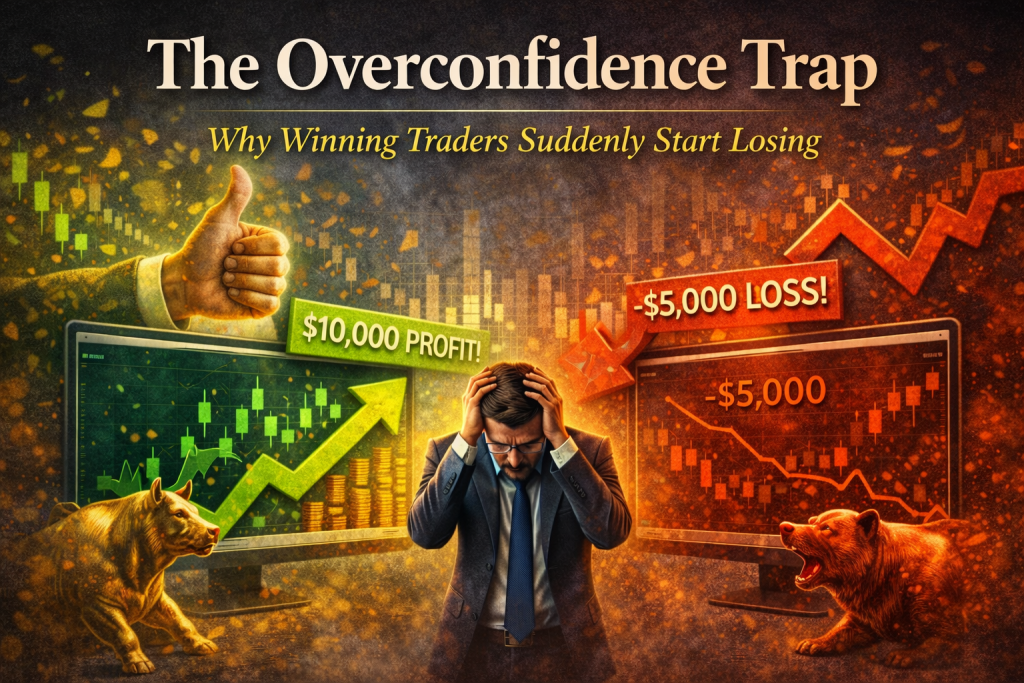
Confidence is essential for success in financial markets. Without confidence, traders hesitate, miss opportunities, and struggle to execute their strategies. However, there is a fine line between healthy confidence and dangerous overconfidence.
When traders cross that line, they fall victim to overconfidence bias, one of the most destructive psychological traps in trading.
Overconfidence causes traders to believe they understand the market better than they actually do. It leads them to underestimate risk, ignore warning signs, and take trades that fall outside their strategy.
While this bias may produce short-term gains during favorable market conditions, it almost always leads to significant losses in the long run.
Understanding how overconfidence develops—and learning how to control it—is essential for long-term trading success.
What Is Overconfidence Bias?
Overconfidence bias is a cognitive error where individuals overestimate their knowledge, skills, or ability to predict outcomes.
In trading, this bias causes traders to believe they have superior insight into market movements.
As a result, they often:
- Take larger positions than their risk management allows
- Trade more frequently than their strategy recommends
- Ignore market signals that contradict their views
- Hold losing trades longer than they should
- Stop following their trading plan
These behaviors increase risk dramatically.
Why Traders Become Overconfident
Early Success
Many traders experience a few winning trades early in their trading journey.
This early success can create the illusion that trading is easy. Traders begin to believe their profits are the result of skill rather than favorable market conditions.
Confirmation Bias
Once traders develop a strong belief about a market direction, they begin searching for information that confirms their view.
This selective perception strengthens overconfidence and causes traders to ignore opposing evidence.
Recency Bias
Humans tend to give greater importance to recent events.
If traders experience a series of profitable trades, they may assume their strategy will continue working indefinitely.
Social Media Influence
In today’s trading environment, social media often showcases only winning trades.
This distorted view of trading success can reinforce overconfidence and unrealistic expectations.
The Dangers of Overconfidence in Trading
Excessive Risk-Taking
Overconfident traders frequently increase position sizes beyond safe levels.
When markets move against them, losses become significantly larger.
Overtrading
Believing they can predict every market movement, overconfident traders take too many trades.
This increases transaction costs and exposes the account to unnecessary risk.
Ignoring Risk Management
Risk management rules are often abandoned when traders believe they are “certain” about a trade.
This can lead to catastrophic losses.
Emotional Reactions to Losses
Ironically, overconfident traders often react more emotionally to losses because those losses challenge their belief in their own abilities.
This can lead to destructive behaviors like:
- Moving stop losses
- Averaging down on losing trades
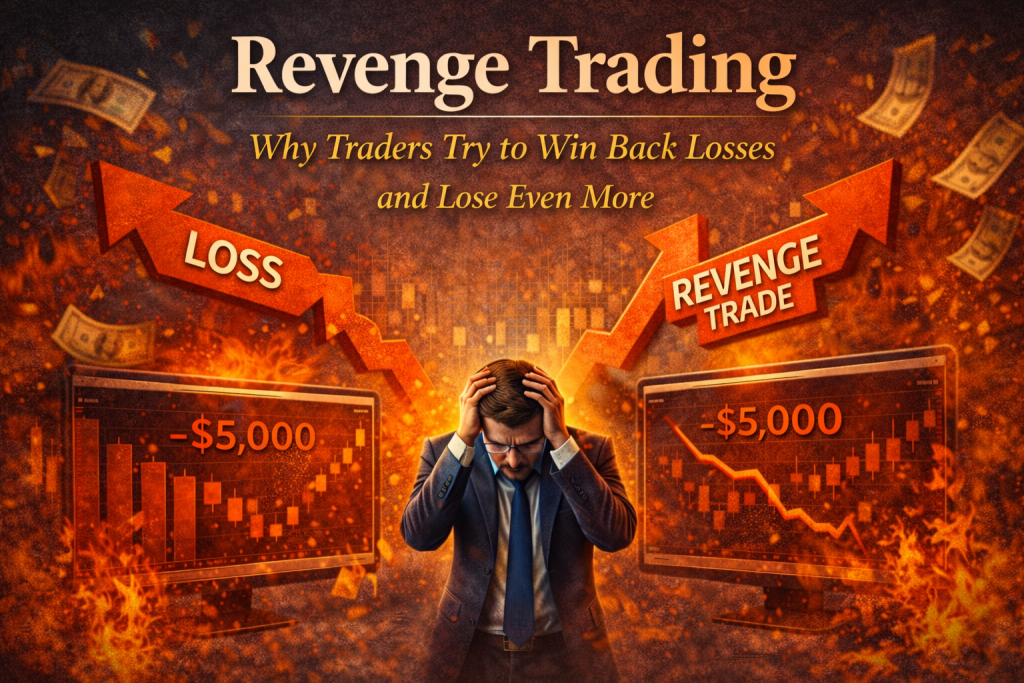
- Revenge trading
If you haven’t already explored this behavior, you may find this article helpful:
Revenge Trading: Why Traders Destroy Their Accounts After a Loss
How Professional Traders Control Overconfidence
Professional traders understand that markets are unpredictable.
Even the most experienced traders cannot control market outcomes.
Instead of relying on confidence alone, professionals focus on:
- statistical probabilities
- strict risk management
- consistent trading processes
- long-term performance
This mindset prevents emotional decision-making.
The Role of a Trading Plan
A well-defined trading plan is one of the most effective tools for controlling overconfidence.
A trading plan defines:
- entry conditions
- exit rules
- position size
- maximum daily risk
- maximum account exposure
When traders follow structured rules, they are far less likely to take impulsive trades.
If you haven’t developed a structured trading approach, this guide may help:
Trading Discipline: Why Most Traders Fail Without a Structured Plan
Practical Strategies to Avoid Overconfidence
Track Your Trading Results
Maintaining a trading journal provides objective feedback about performance.
When traders see the actual statistics of their trades, it becomes harder to maintain unrealistic beliefs about their abilities.
Focus on Risk Per Trade
Limiting risk on each trade ensures that no single mistake can destroy an account.
Many professional traders risk only 1–2% of their capital on a single trade.
Accept Uncertainty
The market is inherently uncertain.
Successful traders focus on managing risk rather than predicting outcomes with certainty.
Take Breaks After Winning Streaks
Winning streaks can create emotional excitement and overconfidence.
Taking a short break helps maintain discipline.
Related Articles
Revenge Trading: Why Traders Destroy Their Accounts After a Loss
The Sunk Cost Fallacy in Trading: Why Traders Hold Losing Positions Too Long
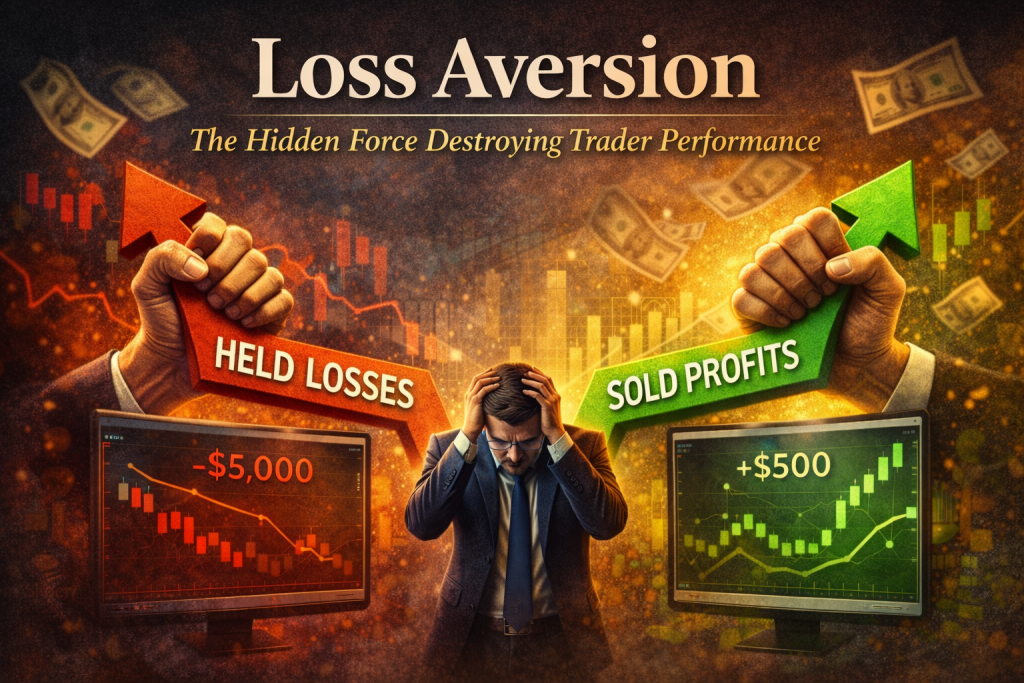
Loss Aversion in Trading: Why the Fear of Losing Destroys Trader Performance
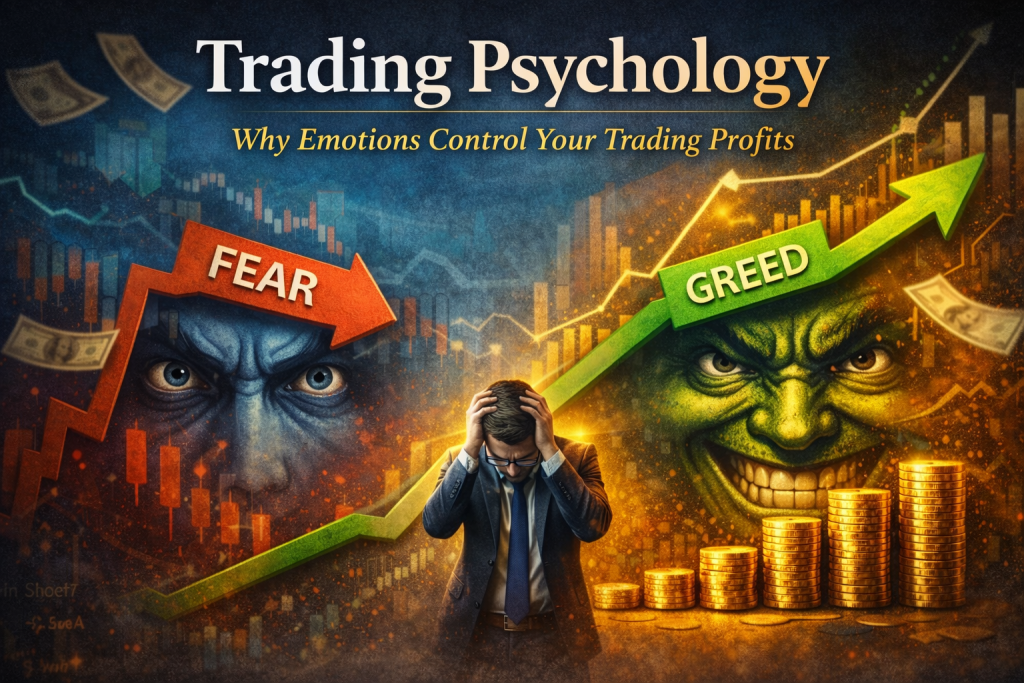
The Psychology of Trading: Why Emotions Control Market Decisions
Frequently Asked Questions
What is overconfidence bias in trading?
Overconfidence bias occurs when traders overestimate their ability to predict market movements, leading to excessive risk-taking and poor decision-making.
Why is overconfidence dangerous for traders?
Overconfidence can cause traders to ignore risk management rules, overtrade, and take larger positions than their strategy allows.
How can traders avoid overconfidence?
Maintaining a trading journal, following a structured trading plan, and limiting risk per trade can help control overconfidence.
Do professional traders experience overconfidence?
Yes, but experienced traders rely on disciplined systems and risk management rules that prevent overconfidence from influencing their decisions.
Pingback: Trading Decision Making: How Professionals Think In Uncertain Markets — The Capital Process