
Trading Decision Making: How Professionals Think in Uncertain Markets
Every trade begins with a decision.
It may look like a simple action—buy or sell, enter or stay out—but behind that action is a complex process of interpretation, judgment, and expectation.
Most traders believe their results are determined by strategy.
In reality, their results are determined by decisions.
Because a strategy only works when it is executed correctly.
And execution is nothing more than a series of decisions made under uncertainty.
This is where most traders struggle.
Not because they lack knowledge.
But because they do not understand how to think in a probabilistic environment.
The market does not reward certainty.
It rewards correct decisions made without certainty.
This is the foundation of professional trading.
—
The Nature of Uncertainty in Trading
In most areas of life, decisions are made with a reasonable level of predictability.
If you study, you expect to pass an exam. If you work, you expect to earn income.
Trading is different.
In trading:
- You can make the right decision and still lose money
- You can make the wrong decision and still make money
This creates confusion.
Because outcomes do not always reflect decision quality.
This is why many traders develop bad habits.
They judge decisions based on results instead of process.
This leads to inconsistency—something we explored in trading consistency.
—
The Shift from Certainty to Probability
Most beginner traders think in terms of certainty.
They ask questions like:
- “Will this trade win?”
- “Is this setup correct?”
- “Is the market going up or down?”
These questions assume that the market can be predicted with certainty.
It cannot.
Professional traders think differently.
They think in probabilities.
They ask:
- “What is the probability of this setup working?”
- “Is this trade aligned with my edge?”
- “Does this trade offer a favorable risk-reward profile?”
This shift changes everything.
It removes emotional pressure.
It improves decision quality.
And it allows consistency to develop.
—
What Makes a Good Trading Decision?
A good trading decision is not defined by profit.
It is defined by process.
A decision is good if:
- It follows your trading plan
- It aligns with your strategy
- It respects your risk management rules
- It is made without emotional interference
This means you can take a losing trade and still make a good decision.
And you can take a winning trade and still make a bad decision.
This distinction is critical.
Because without it, traders reinforce bad behavior.
—
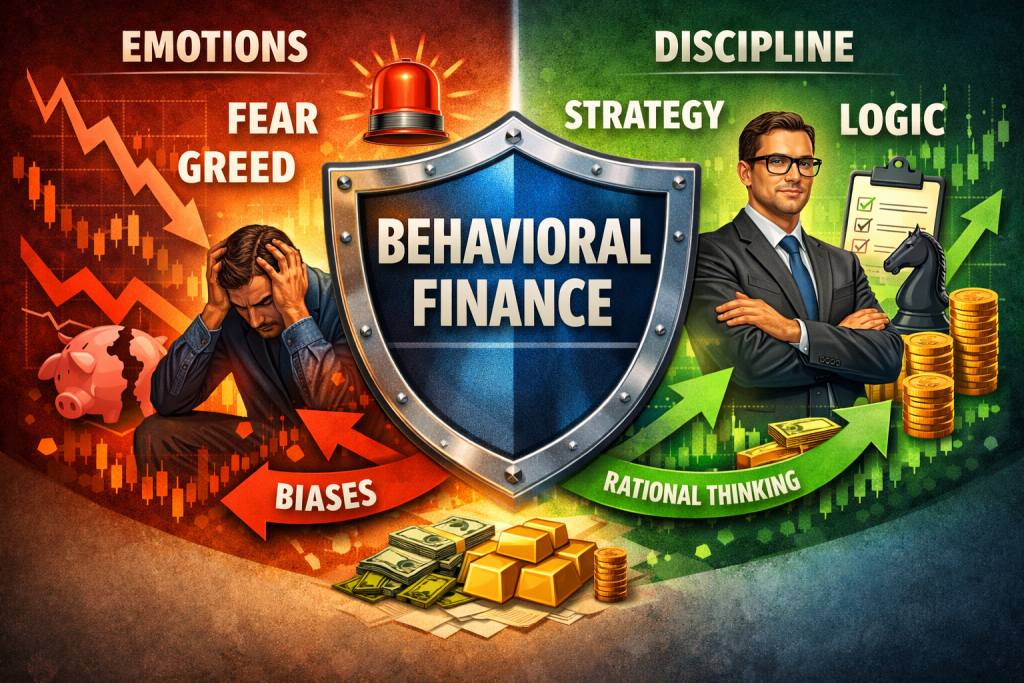
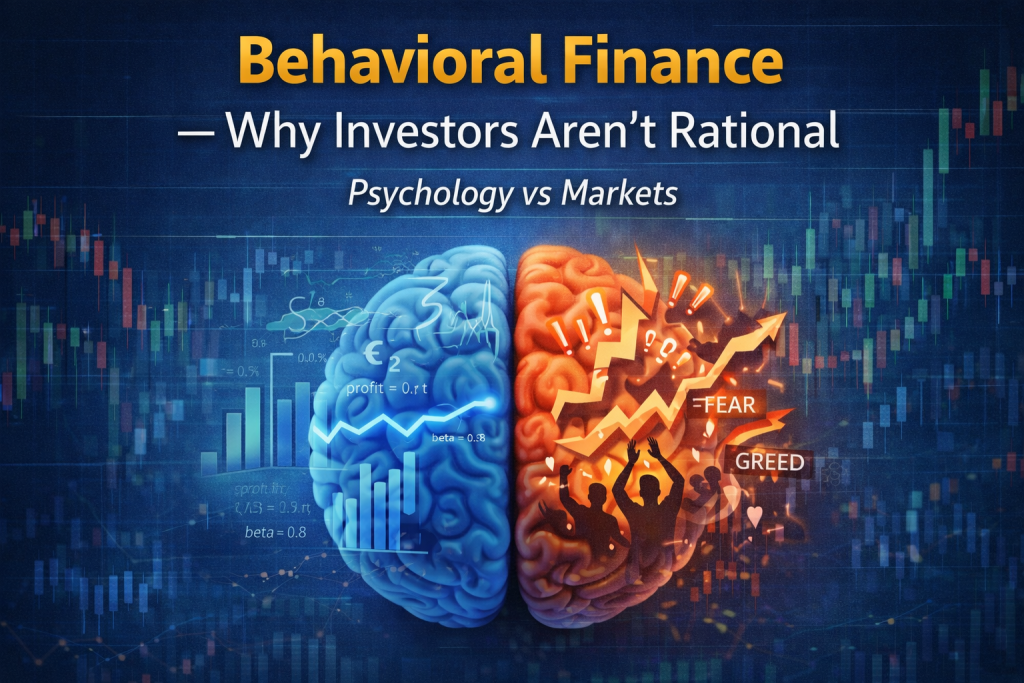
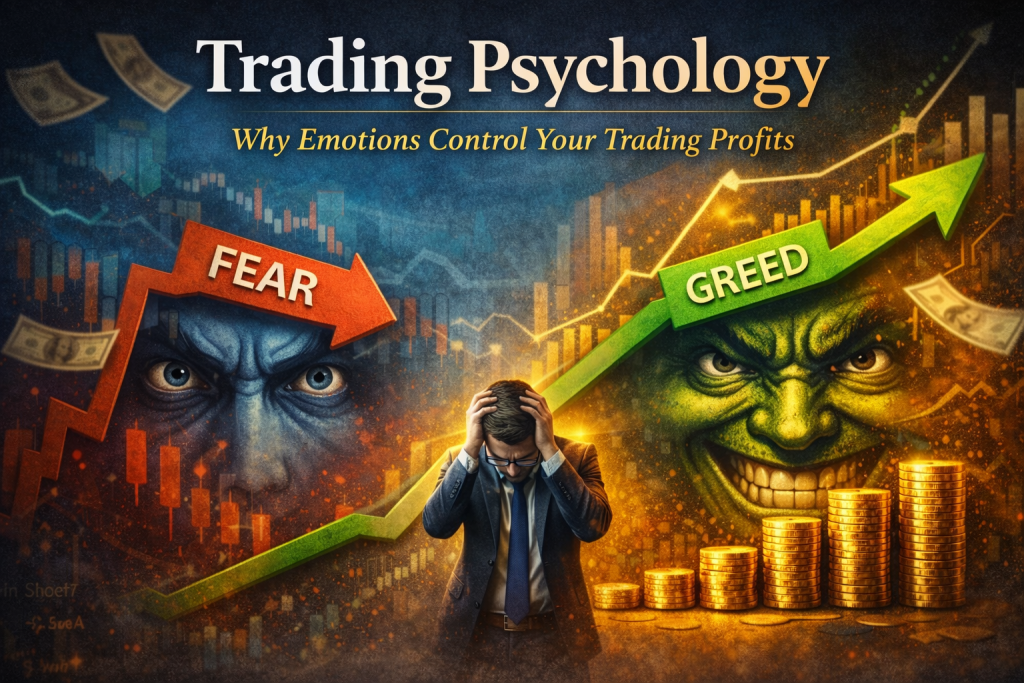
Common Decision-Making Errors in Trading
Most traders are not aware of how their thinking patterns affect their decisions.
Below are the most common errors.
—
1. Outcome Bias
This occurs when traders judge decisions based on results.
Example:
- A trader takes a random trade → It wins → They believe it was a good decision
This reinforces poor habits.
—
2. Recency Bias
Recent events influence current decisions.
Example:
- After a series of losses → Trader avoids valid setups
- After a series of wins → Trader becomes overconfident
This is closely linked to overconfidence bias.
—
3. Confirmation Bias
Traders seek information that supports their existing belief.
Example:
- Looking only for reasons why a trade will work
- Ignoring signals that contradict the setup
—
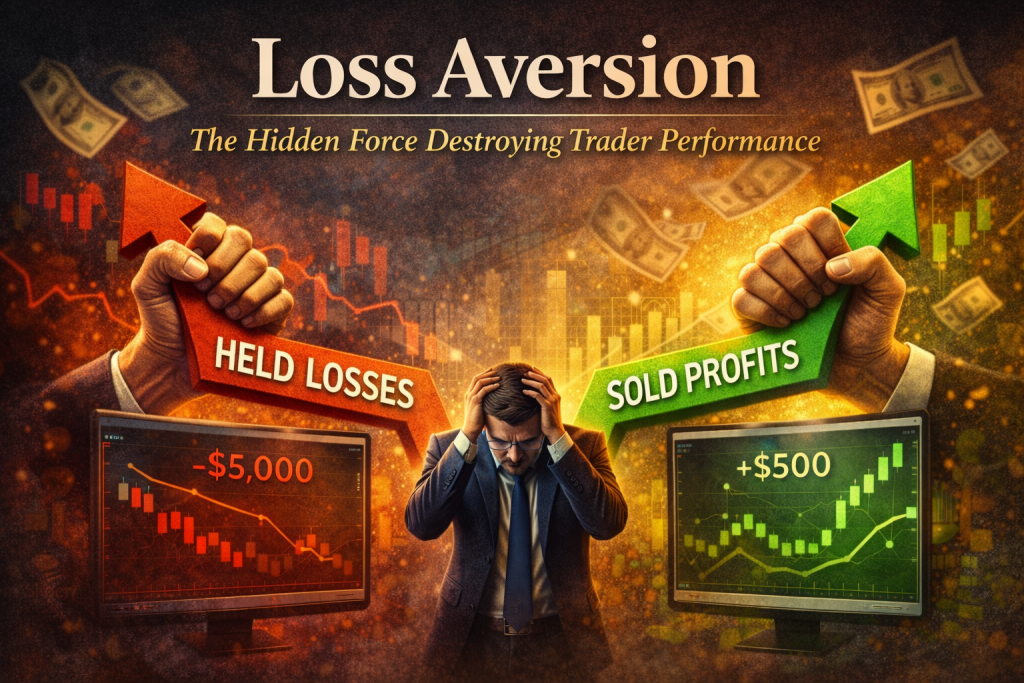
4. Loss Aversion
Traders fear losses more than they value gains.
This leads to:
- Holding losing trades too long
- Closing winning trades too early
This behavior is explored in loss aversion in trading.
—
5. Decision Paralysis
Too much analysis leads to inaction.
This is common among traders who overanalyze charts without clear rules.
—
The Role of Structure in Decision Making
Good decision-making does not come from intelligence alone.
It comes from structure.
This is why professional traders rely on systems.
As explained in mechanical trading systems, structured rules reduce decision variability.
Instead of asking “What should I do?”, the system answers the question.
This reduces emotional influence.
—
The Professional Decision Framework
Professional traders follow a structured decision process:
- Identify setup
- Confirm criteria
- Define risk
- Execute without hesitation
- Accept outcome
This process is repeated consistently.
That repetition creates stability.
—
Why Most Traders Make Poor Decisions
The issue is not lack of knowledge.
The issue is lack of control.
Without structure:
- Emotions influence decisions
- Biases distort judgment
- Outcomes affect future behavior
This leads to inconsistency.
And inconsistency leads to poor performance.
—
The Turning Point
There is a moment when a trader realizes:
“I don’t need better predictions. I need better decisions.”
This is the turning point.
Because it shifts focus from trying to control the market…
To controlling your behavior.
Advanced Decision-Making Models for Traders
To improve decision quality, traders must move beyond intuition and adopt structured thinking models.
These models help you operate effectively in uncertainty.
—
1. Probabilistic Thinking Model
Professional traders do not think in terms of certainty.
They think in terms of probabilities.
Every trade is viewed as one outcome within a larger sample size.
For example:
- Your strategy has a 55% win rate
- Over 100 trades, you expect approximately 55 wins and 45 losses
This means any single trade is irrelevant.
What matters is execution over a series of trades.
This mindset reduces emotional pressure.
Because the goal is not to win this trade.
The goal is to execute correctly across many trades.
—
2. Expected Value Thinking
Expected value helps you evaluate whether a decision is profitable over time.
Example:
- Win rate: 50%
- Reward: 2R
- Risk: 1R
Even with a 50% win rate, this system is profitable.
Because the average gain exceeds the average loss.
This is why traders must evaluate trades based on long-term expectation, not short-term results.
—
3. Process-Oriented Thinking
Most traders focus on results.
Professionals focus on process.
This means asking:
- Did I follow my rules?
- Was my execution correct?
- Did I respect my risk?
This approach aligns with what we explored in trading consistency.
Because consistency is built through process, not outcomes.
—
Real Trading Scenarios (Decision-Making in Action)
To fully understand decision-making, we must look at real scenarios.
—
Scenario 1: Taking a Valid Loss
A trader identifies a valid setup.
The trade meets all criteria.
The trader enters.
The trade hits stop loss.
Most traders react emotionally:
- “Maybe the setup was wrong”
- “I should have waited”
But a professional evaluates differently:
“Did I follow my system?”
If the answer is yes, then the decision was correct.
The loss is simply part of the distribution.
—
Scenario 2: Skipping a Valid Trade
After a loss, a trader hesitates.
A valid setup appears, but the trader avoids it.
The trade wins.
This creates frustration.
But the real issue is not the missed profit.
It is the broken process.
Because consistency requires taking every valid setup.
—
Scenario 3: Taking an Invalid Trade
The market is unclear.
No valid setup exists.
The trader feels bored and enters anyway.
The trade wins.
This is dangerous.
Because it reinforces bad behavior.
This is an example of outcome bias.
—
Scenario 4: Managing a Winning Trade Emotionally
A trade moves into profit.
The trader fears losing gains.
They close early.
The trade continues to the original target.
This is driven by loss aversion.
And it reduces long-term profitability.
—
How to Eliminate Bias in Trading Decisions
Bias cannot be completely removed.
But it can be controlled.
—
1. Use Rule-Based Systems
Rules reduce subjective thinking.
This is why mechanical systems are essential.
As discussed in mechanical trading systems, predefined rules eliminate decision variability.
—
2. Implement Checklists
Checklists force structured thinking.
Before every trade, confirm:
- Does this meet my setup criteria?
- Is the risk defined?
- Am I emotionally stable?
—
3. Limit Information Overload
Too much information creates confusion.
Focus only on what your system requires.
—
4. Separate Analysis from Execution
Do not analyze while executing.
Analysis should be done before the trade.
Execution should follow predefined rules.
—
5. Accept Uncertainty
Uncertainty cannot be removed.
It must be accepted.
This reduces emotional resistance.
—
The Decision-Making Routine of Professional Traders
Professionals follow structured routines.
Before the Trade:
- Analyze market structure
- Identify valid setups
- Define risk
During the Trade:
- Execute without hesitation
- Avoid interference
- Follow rules
After the Trade:
- Review execution
- Identify mistakes
- Improve process
This routine creates consistency.
—
The Long-Term Advantage of Better Decisions
Over time, improved decision-making leads to:
- Stable performance
- Reduced emotional stress
- Better risk control
- Higher confidence
This creates a compounding effect.
Because small improvements in decision quality produce large improvements in performance.
—
The Final Shift
The biggest transformation in trading comes from one shift:
From prediction to decision-making.
Most traders try to predict the market.
Professionals focus on making high-quality decisions.
This is the difference.
—
Conclusion
Trading is not about being right.
It is about making correct decisions under uncertainty.
By adopting probabilistic thinking, eliminating bias, and following structured processes, traders can improve both consistency and performance.
Because in the end, trading success is not determined by what the market does.
It is determined by how you respond to it.
And that response is your decision.

Pingback: Trading Loss Psychology: Why Fear Of Losing Makes You Lose More — The Capital Process
Pingback: — The Capital Process