In the world of investing, one timeless principle continues to guide some of the most successful investors in history:
Buy assets for less than they are truly worth.
This philosophy is known as value investing.
Value investing focuses on identifying stocks that the market has temporarily undervalued. These stocks often trade below their intrinsic value due to market pessimism, short-term problems, or investor overreaction.
Over time, as the market corrects these mispricings, value investors aim to profit.
This strategy has been practiced and refined by legendary investors such as Benjamin Graham and Warren Buffett.
In this deep dive, we’ll explore:
- What value investing is
- The origins of the strategy
- The concept of intrinsic value
- The margin of safety principle
- Key financial metrics used by value investors
- The difference between value and growth investing
- Risks such as value traps
- Practical strategies for modern investors
Let’s begin.
1. What Is Value Investing?
Value investing is an investment strategy that involves buying stocks that appear to be trading for less than their intrinsic value.
Intrinsic value represents the true worth of a company based on fundamentals such as:
- Earnings
- Assets
- Cash flow
- Growth potential
However, markets are not always perfectly rational. Temporary fear, uncertainty, or pessimism can cause stock prices to fall below their fair value.
Value investors look for these opportunities.
Their goal is simple:
Buy undervalued companies and hold them until the market recognizes their true value.
2. The Origins of Value Investing
The foundations of value investing were laid by Benjamin Graham in the early 20th century.
Graham, often called the father of value investing, taught that investors should focus on:
- Financial analysis
- Intrinsic value
- Risk management
His famous book The Intelligent Investor remains one of the most influential investment books ever written.
Graham’s student, Warren Buffett, later evolved the strategy by focusing on high-quality businesses rather than just statistically cheap stocks.
Today, value investing remains one of the most respected investment philosophies in the world.
3. Understanding Intrinsic Value
Intrinsic value is the estimated true worth of a company.
It represents what a business should logically be worth based on its:
- Earnings power
- Assets
- Cash flow
- Competitive advantages
- Growth prospects
However, the stock market frequently prices companies differently from their intrinsic value.
For example:
A company may be worth $100 per share based on its fundamentals, but if investor sentiment is negative, it may trade at $70.
Value investors see this $30 difference as an opportunity.
Estimating intrinsic value is both an art and a science.
Common methods include:
- Discounted Cash Flow (DCF)
- Asset-based valuation
- Earnings multiples
4. The Margin of Safety
One of the most important principles in value investing is the margin of safety.
This concept was introduced by Benjamin Graham.
It means buying stocks significantly below their intrinsic value to protect against errors in analysis.
For example:
If a company’s intrinsic value is estimated at $100 per share, a value investor may only buy it at $70 or less.
This margin provides protection if:
- The analysis is slightly wrong
- Market conditions change
- The company faces temporary setbacks
The margin of safety reduces risk and increases the probability of long-term success.
5. Key Metrics Used by Value Investors
Value investors rely heavily on financial analysis.
Some of the most common valuation metrics include:
Price-to-Earnings Ratio (P/E)
The P/E ratio compares a company’s stock price to its earnings.
Lower P/E ratios may indicate undervaluation.
Price-to-Book Ratio (P/B)
This measures a company’s price relative to its net asset value.
Stocks trading below book value may be considered cheap.
Dividend Yield
High dividend yields may signal undervaluation, especially if the company’s earnings remain strong.
Free Cash Flow
Free cash flow shows how much cash a company generates after expenses and investments.
Companies with strong cash flow are often attractive value candidates.
6. Why Value Stocks Outperform Long-Term
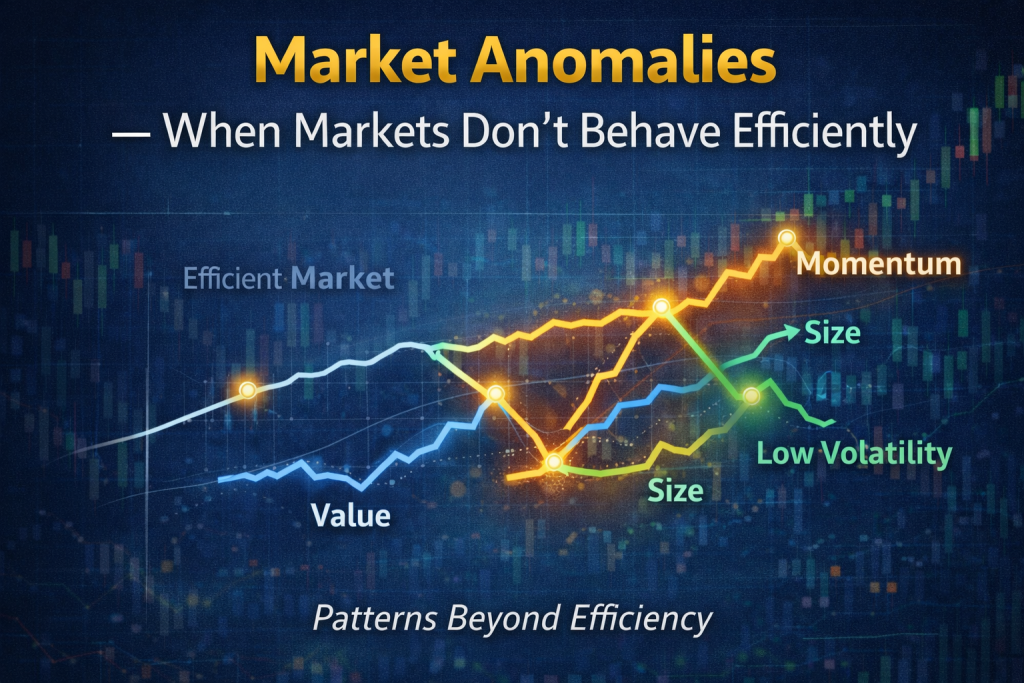
Historically, value stocks have outperformed growth stocks over long periods.
This phenomenon is known as the value premium.
Possible explanations include:
Risk-Based Explanation
Value stocks may be riskier due to financial distress or economic sensitivity.
Investors demand higher returns to compensate for this risk.
Behavioral Explanation
Investors often overreact to negative news.
They become too pessimistic about struggling companies, pushing prices too low.
When the pessimism fades, prices recover.
Value investors benefit from this correction.
7. Value vs Growth Investing
Value and growth investing represent two different approaches.
Value Investing
- Focuses on undervalued companies
- Lower price relative to fundamentals
- Often mature businesses
- Higher dividend yields
Growth Investing
- Focuses on rapidly expanding companies
- High expected future earnings
- Often higher valuations
- Lower dividends
Growth investors pay for future potential.
Value investors seek mispriced assets today.
Both strategies can succeed, but they perform differently across economic cycles.
8. Famous Value Investors
Several legendary investors have built extraordinary fortunes using value investing principles.
Warren Buffett
Buffett transformed value investing by focusing on high-quality companies with strong competitive advantages.
His company, Berkshire Hathaway, has delivered exceptional long-term returns.
Charlie Munger
Munger emphasized investing in great businesses at fair prices rather than mediocre businesses at extremely cheap prices.
Seth Klarman
Klarman is known for disciplined value investing and his influential book Margin of Safety.
9. The Danger of Value Traps
Not every cheap stock is a good investment.
A value trap occurs when a stock appears cheap but continues to decline.
This may happen when:
- The company’s business model is deteriorating
- Industry conditions are worsening
- Management is ineffective
- Debt levels are unsustainable
Successful value investors avoid value traps by focusing on business quality, not just low prices.
10. Modern Value Investing
Value investing has evolved significantly since Graham’s era.
Modern investors now consider additional factors such as:
- Competitive advantages (economic moats)
- Industry disruption
- Corporate governance
- Technological change
This broader approach helps investors avoid outdated businesses.
11. Combining Value with Momentum
Interestingly, value and momentum strategies often complement each other.
Value identifies undervalued stocks.
Momentum identifies stocks already gaining strength.
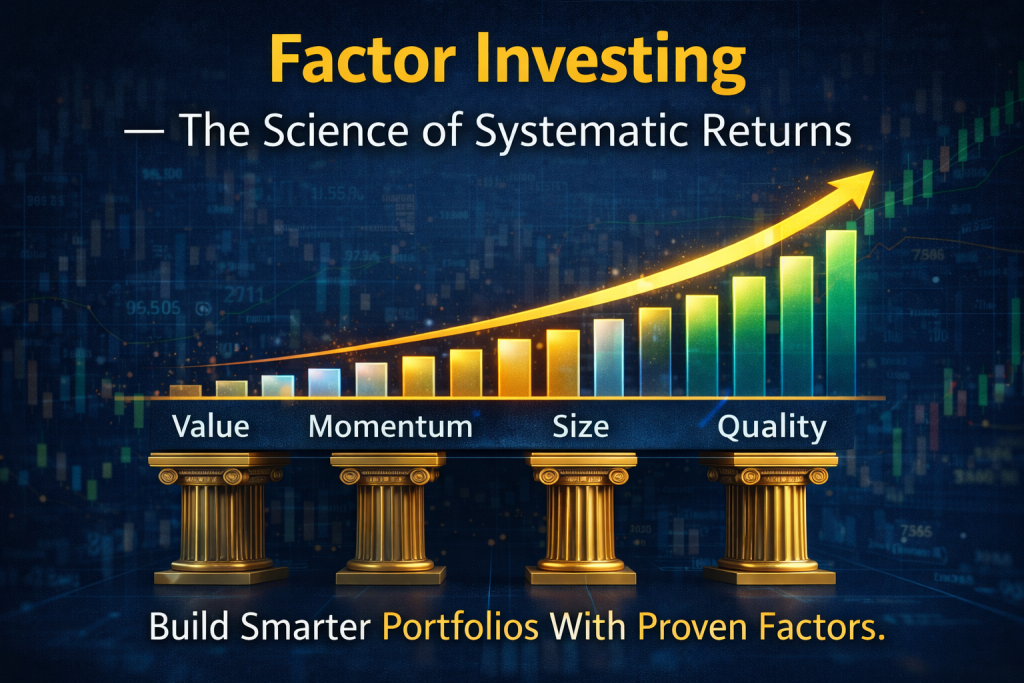
Some investors combine both strategies to create multi-factor portfolios that balance risk and return.
12. Value ETFs and Factor Funds
Investors can gain exposure to value strategies through:
- Value-focused mutual funds
- Factor ETFs
- Multi-factor portfolios
These funds systematically select stocks with:
- Low valuation ratios
- Strong fundamentals
- Attractive risk characteristics
Factor-based investing has become increasingly popular among institutional investors.
13. Practical Value Investing Strategy
A simple value investing framework may include:
- Screen for low P/E or low P/B stocks
- Analyze financial statements
- Evaluate the company’s competitive position
- Estimate intrinsic value
- Buy with a margin of safety
- Hold patiently until value is realized
Patience is critical.
Markets can take years to recognize undervaluation.
14. Limitations of Value Investing
Value investing is not a guaranteed path to success.
Challenges include:
- Difficulty estimating intrinsic value
- Value traps
- Long waiting periods for price corrections
- Structural changes in industries
Investors must combine careful analysis with long-term discipline.
15. Final Thoughts
Value investing remains one of the most enduring strategies in finance.
It is built on simple but powerful principles:
- Understand what a business is truly worth
- Buy it for less than that value
- Protect yourself with a margin of safety
- Be patient while the market corrects its mistakes
As demonstrated by investors like Warren Buffett, disciplined value investing can generate extraordinary long-term results.
While markets may fluctuate in the short term, the fundamental value of strong businesses tends to prevail over time.
For investors willing to think independently and remain patient, value investing offers a powerful path toward long-term wealth creation.