Introduction
Financial markets are often described as complex systems driven by data, economic indicators, and institutional strategies. While these factors certainly influence market behavior, one powerful force often dominates them all: human emotion.
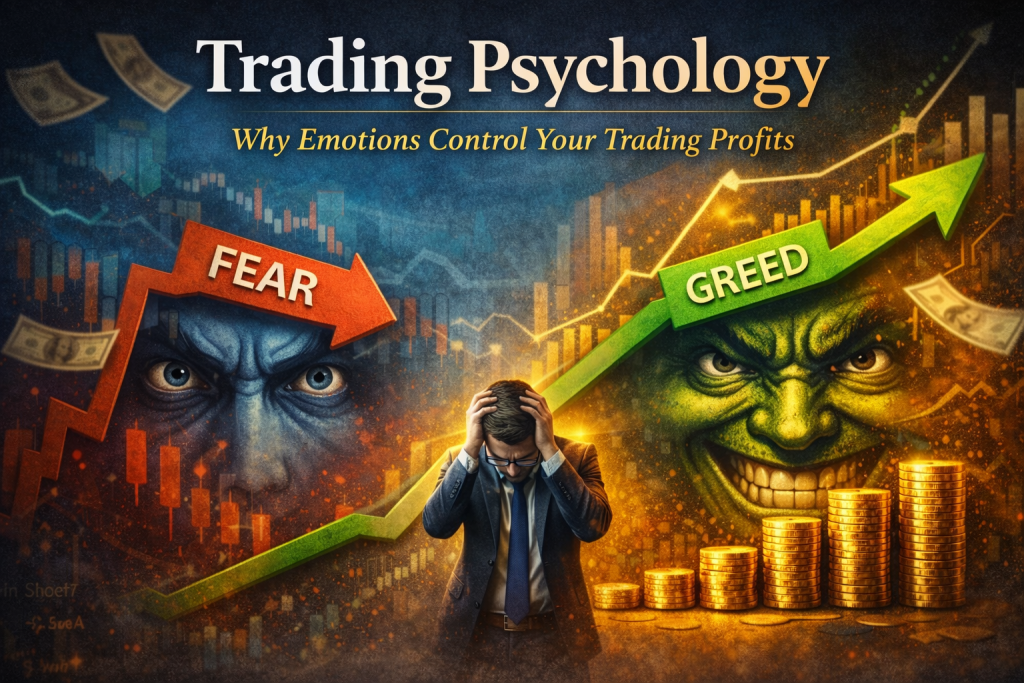
Two emotions in particular play a central role in shaping market movements—fear and greed.
Fear and greed influence how traders react to price changes, news events, and market uncertainty. When markets rise rapidly, greed encourages investors to buy aggressively, often pushing prices even higher. When markets fall, fear drives traders to sell quickly, sometimes creating sharp crashes.
Understanding how these emotions influence trading decisions is essential for anyone who wants to succeed in the financial markets.
Behavioral economists such as Daniel Kahneman have demonstrated that human decision-making often deviates from rational expectations. Instead of making purely logical decisions, traders frequently respond to emotional impulses.
For traders, recognizing and controlling these emotional influences can make the difference between consistent success and repeated losses.
What Are Fear and Greed in Trading?
Fear and greed represent two opposite emotional forces that strongly influence investor behavior.
Greed drives traders to pursue profits aggressively, often causing them to take excessive risks in pursuit of higher returns.
Fear, on the other hand, causes traders to avoid losses by exiting positions too quickly or avoiding opportunities entirely.
These emotions are not inherently bad. In fact, they are natural human responses that evolved to help people survive.
However, in financial markets, unchecked emotions can lead to poor decision-making and inconsistent performance.
How Greed Affects Trading Decisions
Greed typically appears during strong market rallies or after a series of profitable trades.
When traders see prices rising rapidly, they often feel compelled to enter the market quickly in order to avoid missing potential profits.
This phenomenon is commonly known as FOMO (Fear of Missing Out).
Common signs of greed in trading include:
- Entering trades without proper analysis
- Increasing position sizes during winning streaks
- Ignoring risk management rules
- Holding winning trades longer than planned
- Chasing rapidly rising assets
While greed can sometimes produce short-term gains, it often leads traders to take risks that eventually result in losses.
How Fear Influences Trading Behavior
Fear usually appears during market declines or periods of uncertainty.
When traders see prices falling quickly, they may begin to panic and exit their positions prematurely.
Fear can also prevent traders from entering profitable opportunities because they worry about potential losses.
Common fear-driven behaviors include:
- Closing trades too early
- Avoiding trades despite valid setups
- Moving stop losses unnecessarily
- Selling during market panic
- Hesitating to follow trading strategies
Ironically, fear often causes traders to sell at the worst possible time—near market bottoms.
The Fear and Greed Cycle in Financial Markets
Financial markets often move through predictable emotional cycles.
These cycles reflect the collective behavior of millions of investors reacting to price movements.
A typical emotional cycle may include:
- Optimism – Investors begin buying as markets improve.
- Excitement – Rising prices attract more traders.
- Euphoria – Greed dominates as investors expect endless gains.
- Anxiety – Early signs of decline appear.
- Panic – Fear triggers mass selling.
- Despair – Markets reach extreme pessimism.
- Hope – Prices stabilize and recovery begins.
Understanding this cycle can help traders avoid making emotional decisions during extreme market conditions.
Behavioral Finance and Emotional Trading
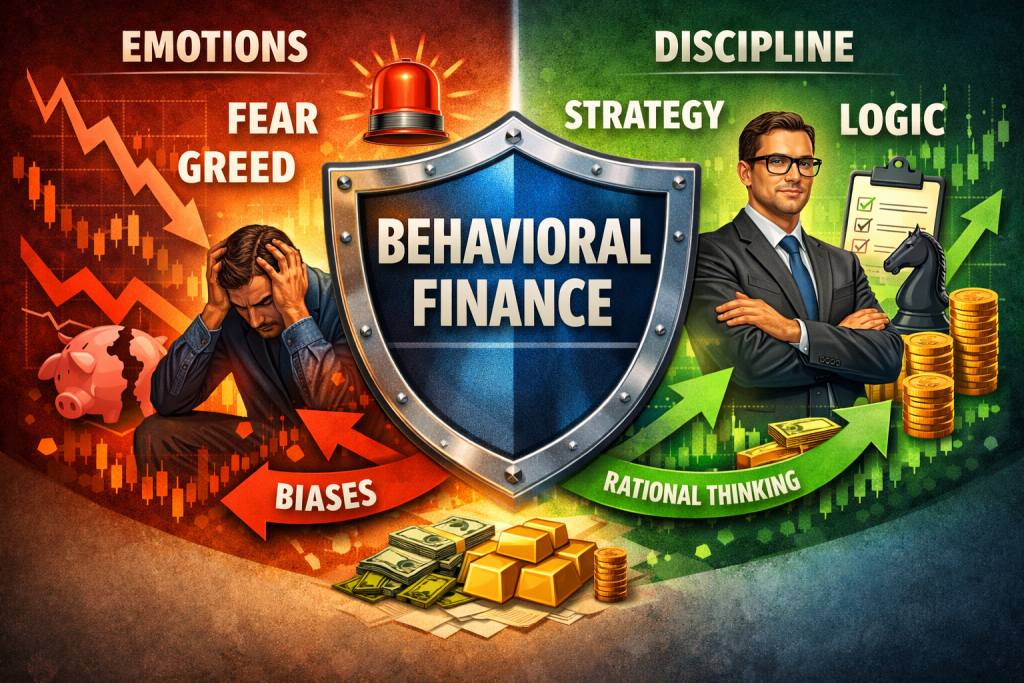
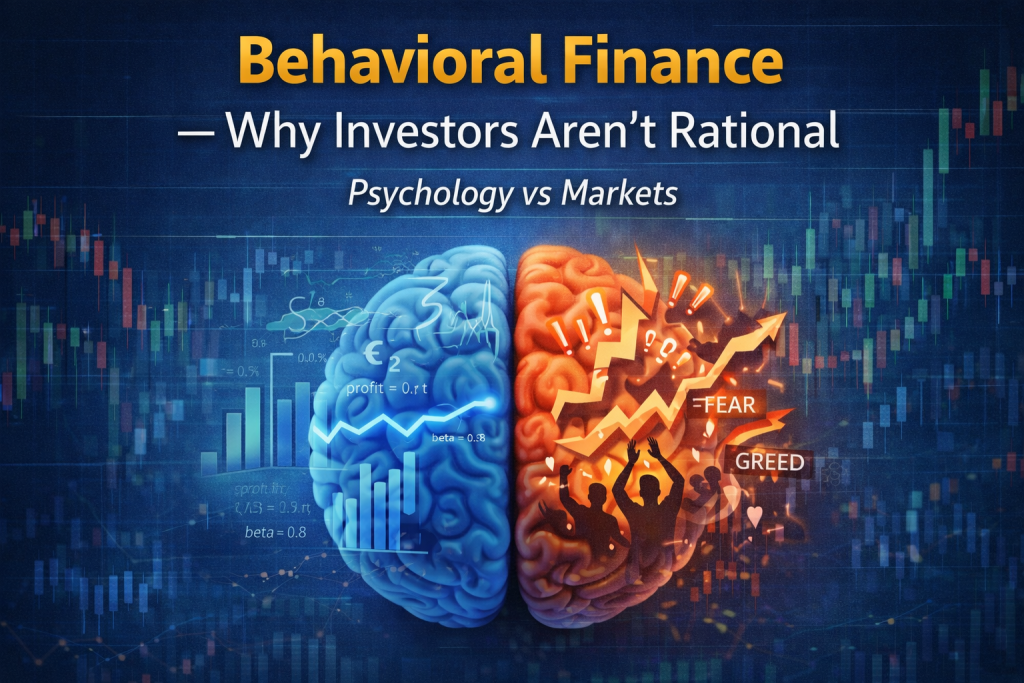
The study of emotional behavior in financial markets is known as behavioral finance.
Behavioral finance examines how psychological biases influence financial decision-making.
You can learn more about this concept in our related article:\ Behavioral Finance: Why Investors Aren’t Always Rational.
Researchers in behavioral finance have identified many emotional biases that affect traders, including:
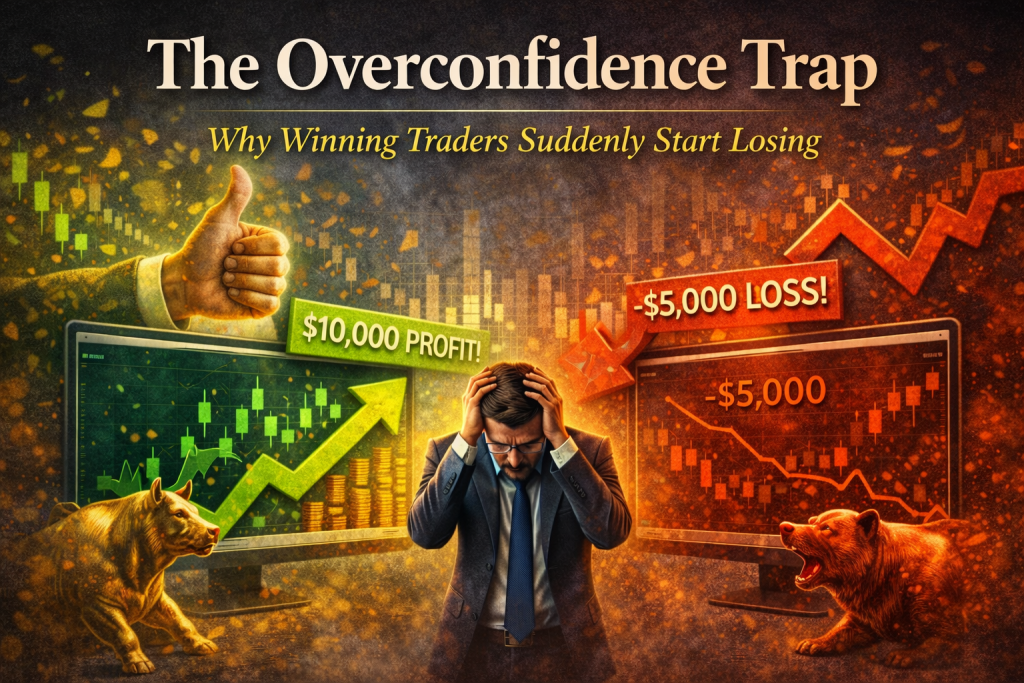
- Overconfidence
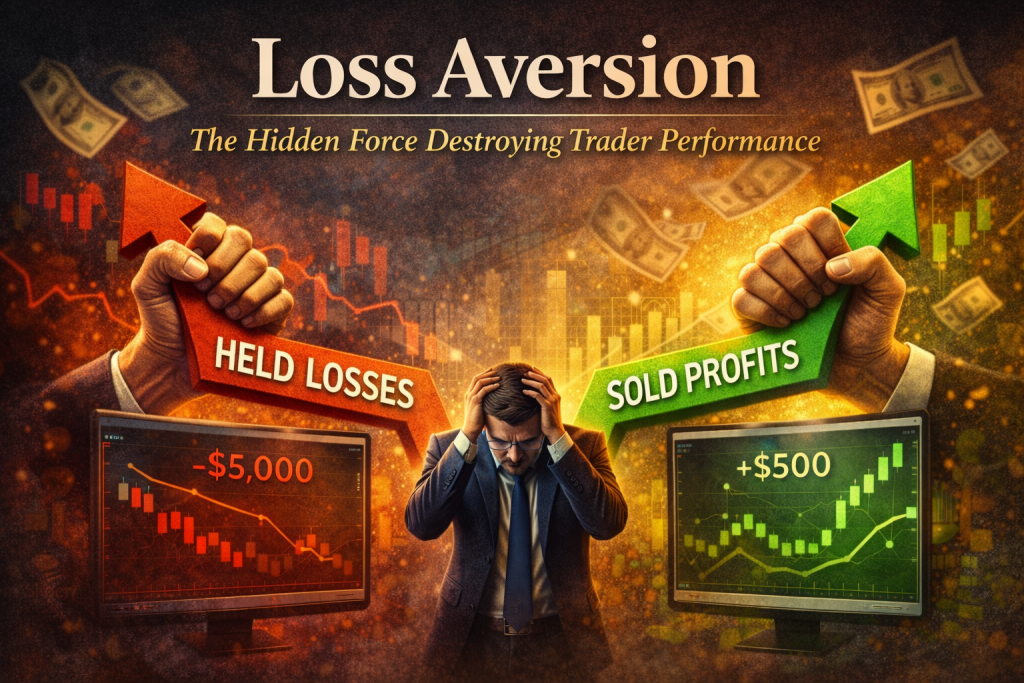
- Loss aversion
- Herd behavior
- Confirmation bias
- Anchoring bias
These psychological tendencies often lead traders to behave irrationally.
Why Emotional Trading Leads to Losses
Emotional trading tends to produce inconsistent results because it replaces structured strategy with impulsive reactions.
Successful trading requires:
- Clear entry rules
- Defined exit strategies
- Consistent position sizing
- Effective risk management
When fear or greed overrides these rules, traders abandon their strategy and begin making unpredictable decisions.
Over time, this lack of discipline leads to poor performance.
How Professional Traders Control Emotions
Professional traders understand that emotional control is just as important as technical analysis.
Instead of reacting emotionally to market movements, they rely on structured processes.
Professional trading practices often include:
- Predefined trading plans
- Strict risk management rules
- Consistent position sizing
- Performance reviews
- Trading journals
These practices create a structured environment that reduces the influence of emotions.
Practical Strategies to Manage Fear and Greed
Traders can reduce the impact of fear and greed by implementing several practical techniques.
Follow a Structured Trading Plan
A trading plan defines clear rules for entering and exiting trades.
Following a predefined plan helps traders remain disciplined even during volatile market conditions.
Maintain Consistent Risk Management
Risk management rules should remain consistent regardless of market conditions.
Limiting risk on each trade protects the trading account from emotional decisions.
Use a Trading Journal
A trading journal helps traders analyze their behavior objectively.
By reviewing past trades, traders can identify patterns of emotional decision-making and improve their discipline.
Focus on Long-Term Performance
Individual trades are unpredictable.
Successful traders focus on long-term performance rather than short-term outcomes.
This mindset reduces emotional reactions to temporary losses or gains.
The Role of Discipline in Trading Success
Ultimately, trading success depends on discipline rather than emotional reactions.
Disciplined traders accept that markets are uncertain and that losses are part of the process.
Instead of reacting emotionally, they focus on executing their strategy consistently.
Over time, this disciplined approach leads to more stable and predictable trading results.
Conclusion
Fear and greed are powerful emotional forces that influence financial markets and trading behavior.
While these emotions are natural human responses, they can become dangerous when they override structured decision-making.
Greed encourages excessive risk-taking, while fear leads to premature exits and missed opportunities.
Traders who learn to recognize and control these emotional impulses gain a significant advantage in the markets.
By following structured trading plans, maintaining strict risk management, and focusing on long-term performance, traders can reduce emotional decision-making and improve their chances of long-term success.
Frequently Asked Questions
What are fear and greed in trading?
Fear and greed are emotional forces that influence trading decisions. Greed drives traders to pursue profits aggressively, while fear causes traders to avoid losses or exit positions prematurely.
Why do emotions affect traders?
Human decision-making is influenced by psychological biases. In uncertain environments like financial markets, emotions can easily override logical thinking.
How can traders control fear and greed?
Traders can control emotional trading by following structured trading plans, maintaining consistent risk management, and keeping detailed trading journals.
Do professional traders experience fear and greed?
Yes. Even experienced traders feel emotions, but they rely on disciplined systems and rules to prevent emotional decisions.
Is emotional control important in trading?
Yes. Emotional discipline is one of the most important factors for long-term trading success.