
Trading Loss Psychology: Why Fear of Losing Makes You Lose More
Every trader says they understand losses.
Very few actually accept them.
This is one of the most dangerous gaps in trading psychology.
Because trading is a game of probabilities.
Losses are not just possible.
They are guaranteed.
And yet, most traders behave as if losses should not happen.
This creates emotional resistance.
And that resistance leads to poor decisions.
Ironically, the more a trader tries to avoid losses…
The more losses they create.
—The Reality of Losses in Trading
No trading system has a 100% win rate.
Even the best strategies experience losses.
This means:
- Losing trades are part of the system
- Losses are not failures
- Losses are expected outcomes
Understanding this intellectually is easy.
Accepting it emotionally is difficult.
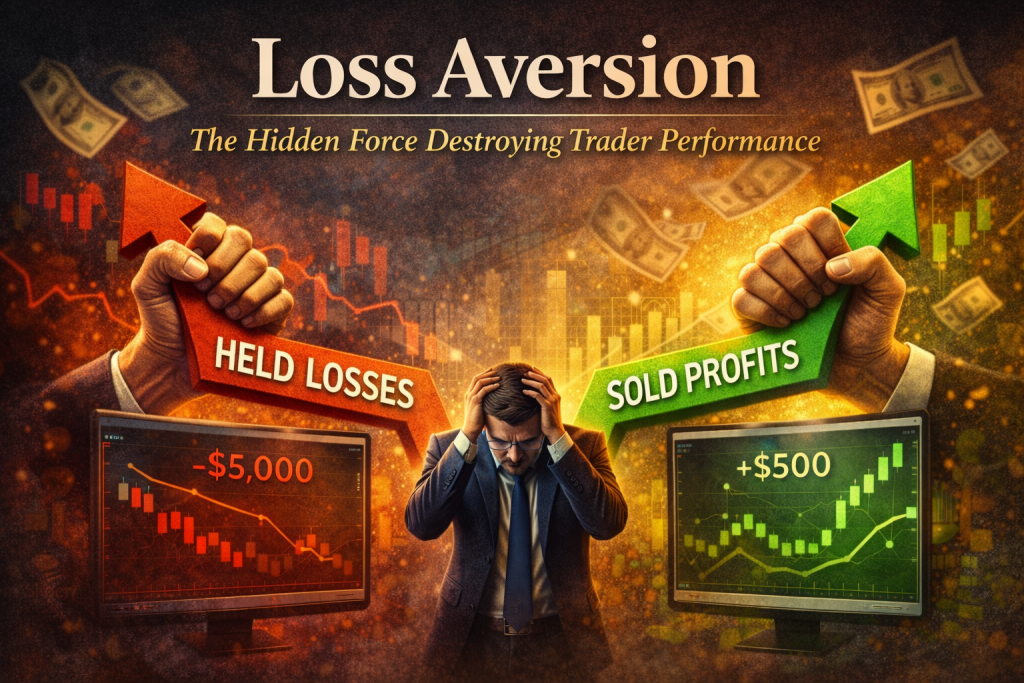
—What Loss Aversion Means
Loss aversion is a psychological bias.
It means that losses feel more painful than gains feel rewarding.
This bias affects decision-making.
And it leads to irrational behavior.
This connects to decision-making under uncertainty.
—How Fear of Loss Affects Trading Behavior
Fear of loss influences multiple aspects of trading.
—1. Hesitation on Valid Setups
Traders avoid entering trades.
They fear being wrong.
This leads to missed opportunities.
—2. Moving Stop Loss
Instead of accepting a loss, traders adjust stop loss levels.
This increases risk.
This behavior is closely related to execution discipline.
—3. Cutting Profits Early
Traders exit winning trades too soon.
They fear losing unrealized gains.
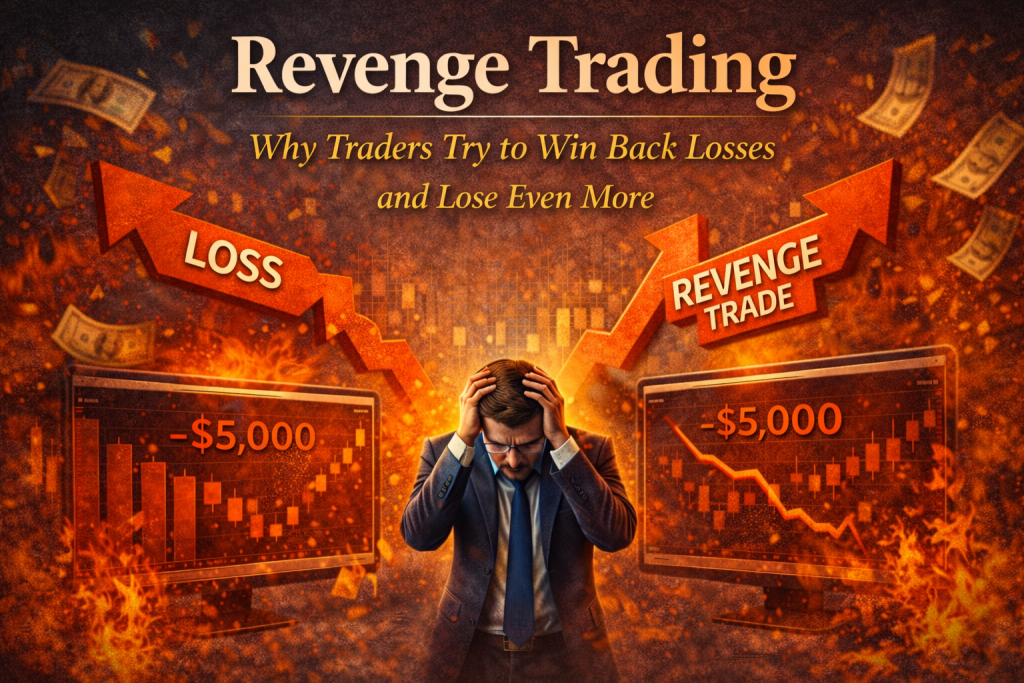
—4. Revenge Trading
After a loss, traders attempt to recover quickly.
This leads to impulsive trades.
This behavior is explained in revenge trading.
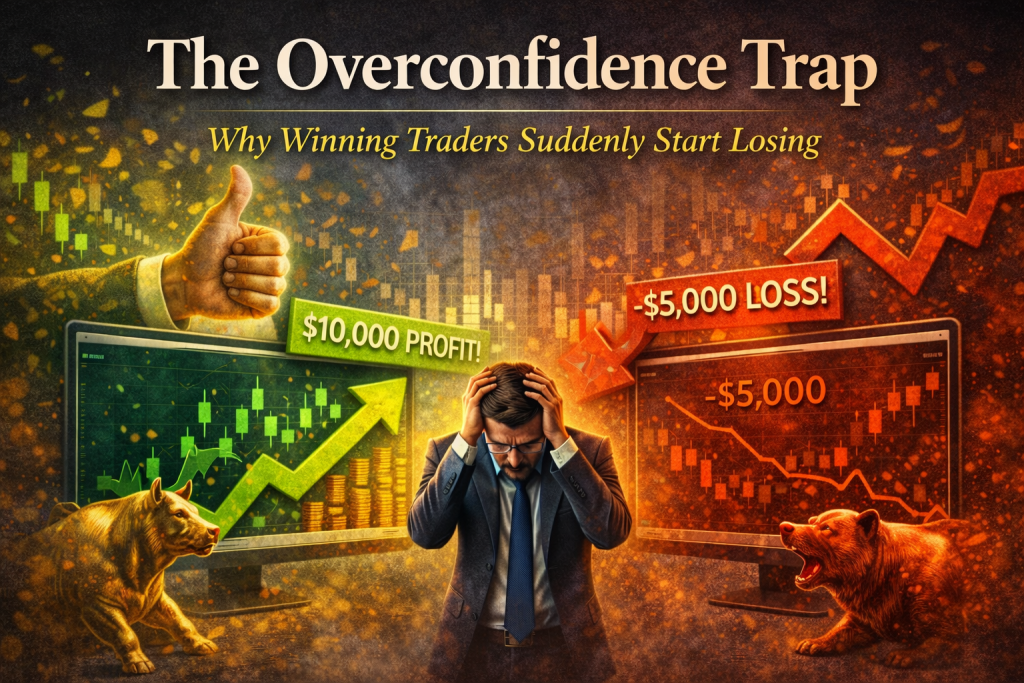
—The Illusion of Control
Many traders believe they can avoid losses through better analysis.
This is an illusion.
No amount of analysis eliminates uncertainty.
The market is unpredictable.
This means losses cannot be avoided.
They can only be managed.
—Why Traders Struggle to Accept Losses
Loss acceptance is difficult because of:
—1. Ego
Being wrong feels uncomfortable.
Traders attach their identity to outcomes.
—2. Financial Pressure
Losses feel more significant when capital is limited.
—3. Lack of Risk Structure
Without proper risk management, losses feel overwhelming.
This aligns with risk management.
—4. Unrealistic Expectations
Traders expect consistent wins.
This creates disappointment when losses occur.
—The Cost of Not Accepting Losses
Failure to accept losses leads to:
- Larger drawdowns
- Emotional stress
- Inconsistent performance
- Poor decision-making
Over time, this destroys accounts.
—Real Trading Scenarios
To understand loss psychology, consider these examples.
—Scenario 1: Moving Stop Loss
A trader enters a trade.
The market moves against them.
Instead of accepting the loss, they move the stop loss.
The loss increases.
—Scenario 2: Avoiding Trades
After a series of losses, the trader avoids valid setups.
Opportunities are missed.
—Scenario 3: Accepting Losses Properly
A disciplined trader accepts losses as part of the system.
They follow their plan consistently.
Over time, they remain profitable.
—The Turning Point
The moment a trader truly accepts losses is the moment they gain control.
Because they stop reacting emotionally.
And start acting systematically.
How to Accept Losses in Trading (A Practical System)
Accepting losses is not about mindset alone.
It requires structure.
If you do not build systems around loss management, emotions will take over.
Below is a practical framework to help you accept losses effectively.
—1. Define Risk Before Every Trade
Loss acceptance begins before you enter a trade.
You must define exactly how much you are willing to lose.
Example:
- Risk 1% of account per trade
This ensures that every loss is controlled.
This aligns with risk management strategies.
—2. Accept the Loss Before Entry
Before placing a trade, mentally accept the outcome.
Ask yourself:
“Am I comfortable losing this amount?”
If the answer is no, do not take the trade.
This reduces emotional resistance during the trade.
—3. Use Fixed Stop Loss (No Adjustment)
Your stop loss must be respected.
Do not move it.
Do not adjust it to avoid being wrong.
This enforces discipline.
This connects directly to execution discipline.
—4. Standardize Risk Across Trades
Variable risk creates emotional instability.
Consistent risk creates control.
Example:
- Always risk 1% per trade
This stabilizes performance.
—5. Track Loss Behavior
Use your journal to identify patterns.
Ask:
- Do I move stop losses?
- Do I hesitate after losses?
- Do I overtrade after losing?
This connects to trading journaling.
—The Risk Mindset Shift
Most traders see losses as negative.
Professionals see losses as part of the system.
This shift is critical.
—Amateur Mindset:
- Loss = failure
- Winning is everything
- Avoid losses at all costs
Professional Mindset:
- Loss = cost of doing business
- Focus on long-term performance
- Accept uncertainty
This mindset reduces emotional stress.
—The Probability Perspective
Trading is a probability game.
No single trade matters.
What matters is a series of trades.
This means:
- Individual losses are irrelevant
- Consistency is what matters
This aligns with trading consistency.
—How Professionals Handle Losses
Professional traders follow structured processes.
—1. They Expect Losses
Losses are part of their system.
They do not react emotionally.
—2. They Focus on Execution
They evaluate whether they followed their plan.
Not whether the trade won or lost.
—3. They Maintain Risk Discipline
They never increase risk to recover losses.
—4. They Review and Improve
Every loss is analyzed.
This connects to journaling.
—The Emotional Control Framework
Losses trigger emotional responses.
These must be controlled.
—1. Reduce Position Size
Lower risk reduces emotional intensity.
This makes it easier to accept losses.
—2. Use a Loss Limit
Set a maximum daily loss.
Stop trading when it is reached.
—3. Avoid Immediate Re-Entry
After a loss, take a break.
This prevents impulsive trades.
—4. Focus on Process
Evaluate execution, not outcome.
This reduces emotional impact.
—Common Mistakes Traders Make with Losses
Understanding mistakes helps prevent them.
- Moving stop losses
- Increasing risk after losses
- Overtrading to recover
- Avoiding trades due to fear
These behaviors destroy consistency.
—The Long-Term Advantage of Loss Acceptance
When losses are properly managed, traders gain:
- Emotional stability
- Consistent performance
- Better decision-making
- Reduced stress
This creates long-term profitability.
—The Final Shift
The most important realization in trading is this:
You cannot control outcomes.
You can only control risk.
This changes everything.
—Conclusion
Losses are an essential part of trading.
They cannot be avoided.
But they can be controlled.
By building structured risk systems, accepting losses before entry, and focusing on process over outcomes, traders can manage losses effectively.
Because in trading, success is not about avoiding losses.
It is about managing them.
And controlled losses lead to long-term profits.
Pingback: Trading Discipline Vs Motivation: Why Discipline Is The Real Edge In Trading — The Capital Process