Emotional Control in Trading: How to Master Fear, Greed, and Decision-Making Under Pressure
Every trader enters the market believing that success depends on strategy. Indicators, patterns, entry techniques, and market structure dominate the early phase of a trader’s journey. But over time, a deeper truth begins to emerge—one that separates professionals from amateurs.
Trading is not a strategy game. It is a psychological game.
And at the center of that psychological game lies one defining skill: emotional control.
The ability to manage fear, control greed, and execute decisions under pressure is what ultimately determines consistency in trading. Without it, even the most sophisticated strategies collapse. With it, even simple systems can produce extraordinary results.
This article explores emotional control in trading at a deep, institutional level—breaking down the behavioral forces that influence decision-making, and providing practical frameworks to help you operate with clarity, precision, and discipline in the markets.
Why Emotional Control Is the Foundation of Trading Success
Markets are uncertain by nature. No setup guarantees a win. No analysis is perfect. Every trade carries risk.
This uncertainty creates psychological pressure.
When money is involved, decisions become emotional. Fear of loss, desire for profit, and the stress of uncertainty begin to influence behavior.
This is why traders who lack emotional control:
- Exit trades too early
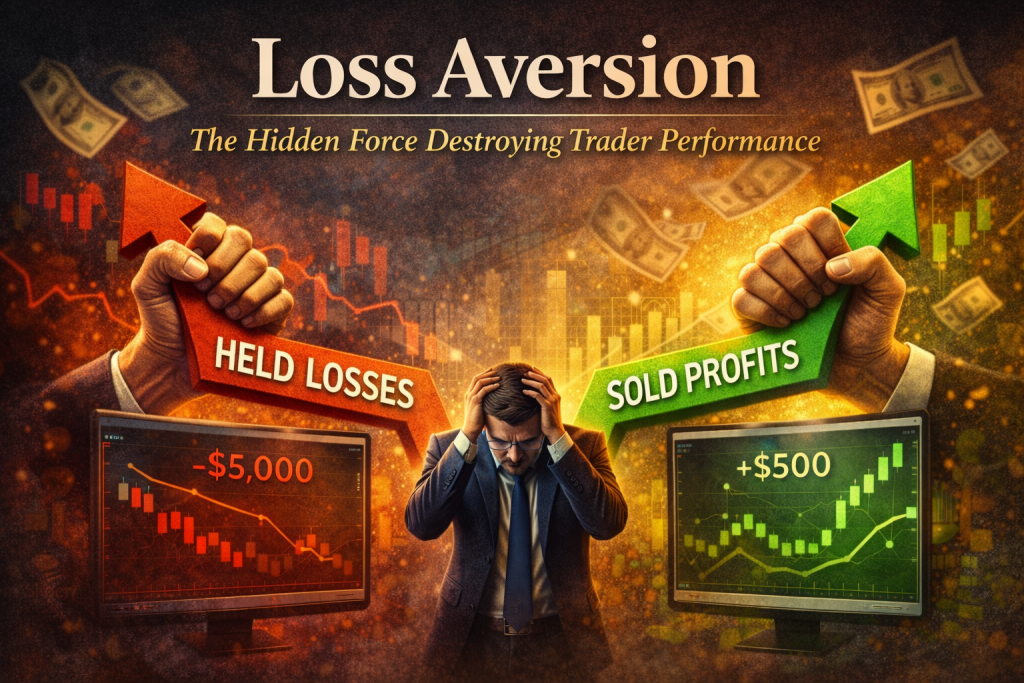
- Hold losing trades too long
- Increase risk impulsively
- Overtrade after losses
- Hesitate on valid setups
These behaviors are not strategic errors—they are psychological failures.
As explained in trading discipline vs motivation, consistency in trading is not driven by how motivated you are, but by how well you can control your behavior under pressure.
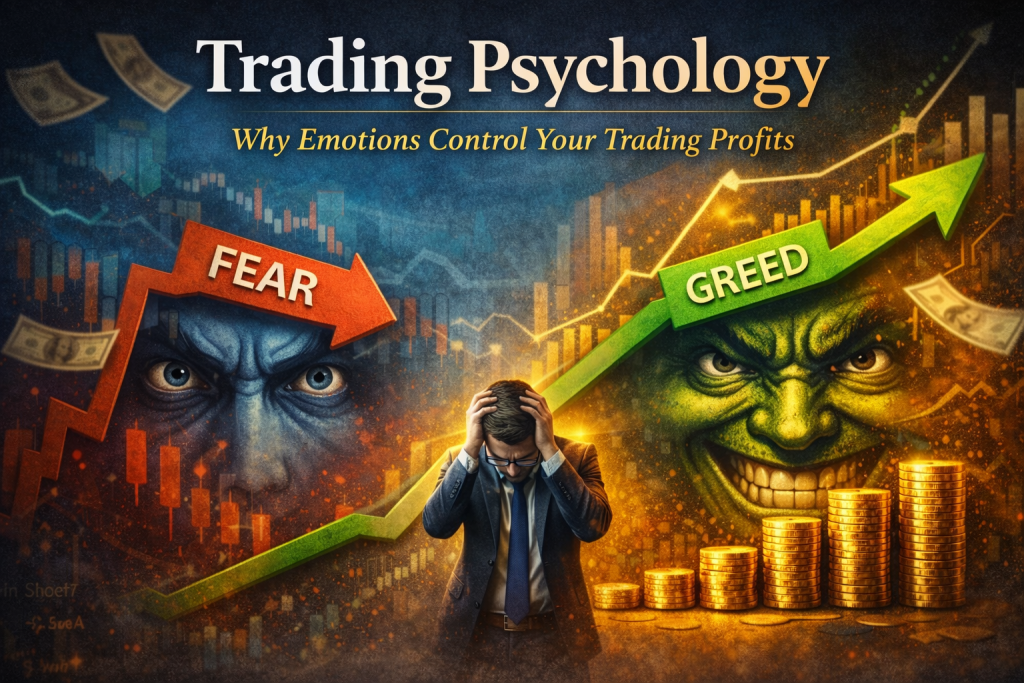
The Three Core Emotions That Drive Trading Behavior
1. Fear
Fear is the most dominant emotion in trading. It manifests in several ways:
- Fear of losing money
- Fear of missing out (FOMO)
- Fear of being wrong
Fear leads to hesitation, premature exits, and avoidance of valid opportunities.
A trader who exits early out of fear sacrifices the reward side of their risk-reward profile—destroying long-term profitability.
2. Greed
Greed is the desire to maximize profits beyond rational limits.
It leads to:
- Overleveraging
- Holding trades beyond targets
- Ignoring exit signals
Greed transforms controlled trading into gambling.
3. Hope
Hope is often overlooked, but it is one of the most dangerous emotions.
It appears when traders refuse to accept losses.
Instead of cutting a losing trade, they hope the market will reverse.
This behavior leads to large drawdowns and account destruction.
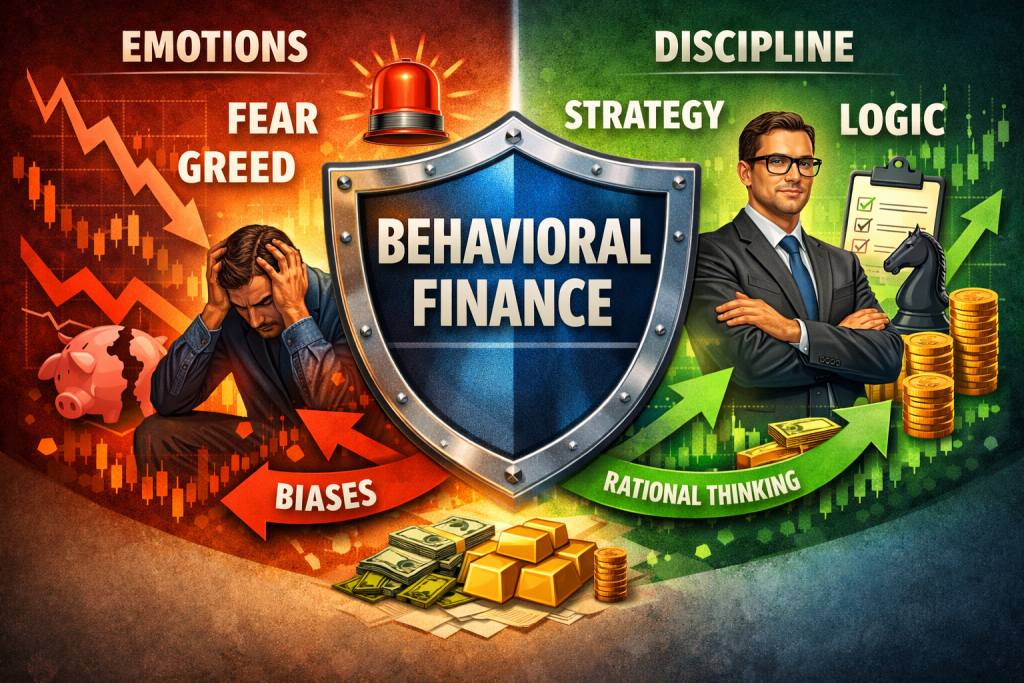
Emotional Decision-Making vs Rational Execution
| Behavior Type | Emotional Trader | Controlled Trader |
|---|---|---|
| Entry | Impulsive | Rule-based |
| Risk | Inconsistent | Fixed |
| Losses | Avoided or delayed | Accepted quickly |
| Profits | Cut early or overextended | Managed systematically |
| Consistency | Unstable | Structured |
The difference is not intelligence. It is emotional control.
Real Trading Scenario: Emotional Breakdown
A trader identifies a valid breakout setup.
He enters the trade correctly.
The market moves slightly in profit, then pulls back.
Fear kicks in.
He exits early to “protect profit.”
Minutes later, the market moves strongly in the original direction.
Frustration sets in.
He re-enters late—this time at a worse price.
The market retraces again.
Now he is in a losing position.
Instead of cutting the loss, hope takes over.
The loss increases.
Eventually, the trade is closed at a significant drawdown.
This entire sequence is driven by emotion—not strategy.
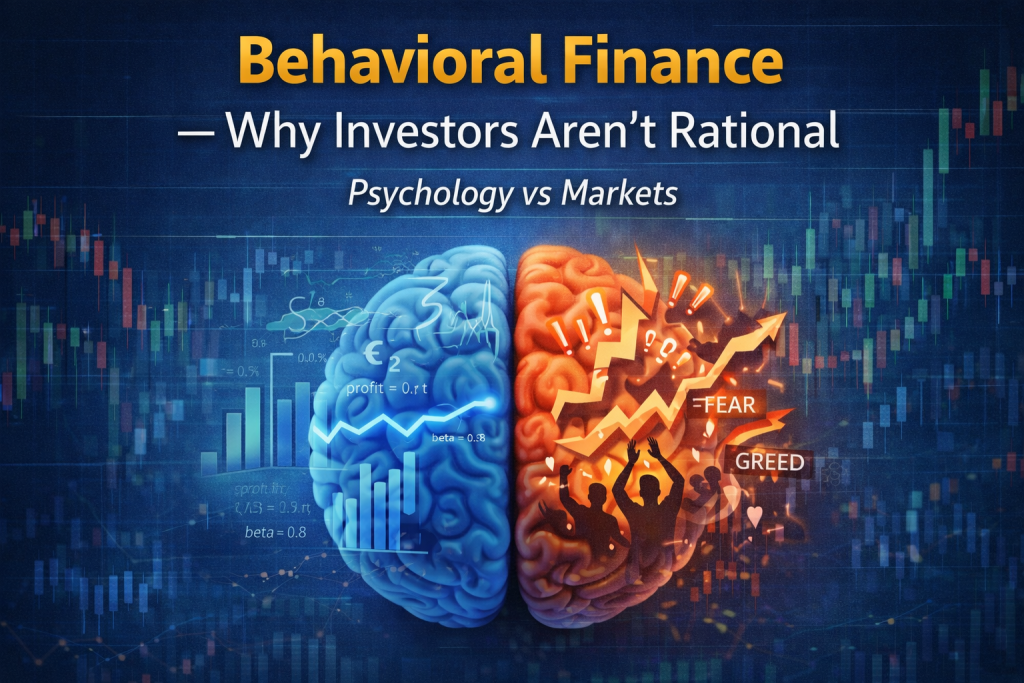
The Biological Reality of Trading Emotions
Emotional reactions in trading are not a weakness—they are biological responses.
When you risk money, your brain perceives it as a threat.
This activates the amygdala—the part of the brain responsible for fear and survival.
At the same time, potential profits trigger dopamine—the reward system.
This creates a constant tension between fear and greed.
Understanding this is critical.
You are not trying to eliminate emotions—you are trying to prevent them from controlling your decisions.
How Professional Traders Achieve Emotional Control
1. They Operate on Systems, Not Feelings
Professional traders define their actions in advance.
They do not decide in the moment.
This reduces emotional interference.
This concept aligns with why structure beats intelligence in trading, where predefined systems outperform reactive decision-making.
2. They Accept Losses as Part of the Game
Losses are not failures—they are operational costs.
Once this mindset is internalized, fear reduces significantly.
3. They Focus on Risk, Not Profit
Amateurs focus on how much they can make.
Professionals focus on how much they can lose.
This shift creates stability.
4. They Limit Exposure
By controlling position size, traders reduce emotional pressure.
Smaller risk = clearer thinking.
Practical Framework for Emotional Control
Step 1: Define Risk Per Trade
Never risk more than a fixed percentage of your account.
Step 2: Use Pre-Defined Entries and Exits
No improvisation.
Step 3: Implement a Daily Loss Limit
Stop trading after reaching your limit.
Step 4: Use a Trading Journal
Document emotions and decisions.
Step 5: Review Behavior Weekly
Identify emotional patterns.
Emotional Triggers Every Trader Must Recognize
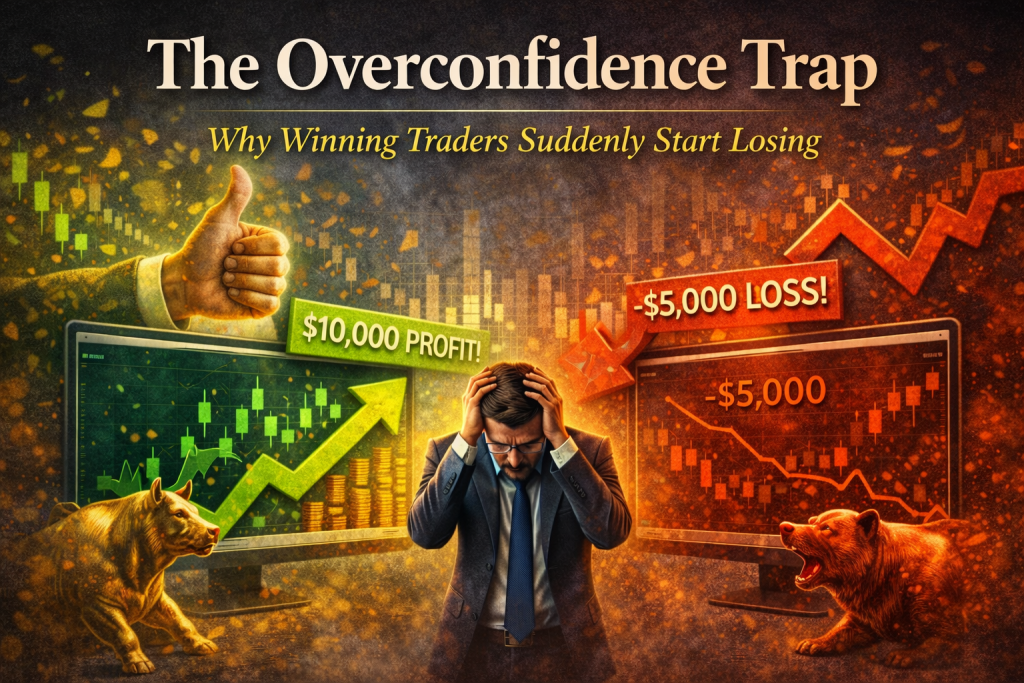
- After a winning streak (overconfidence)
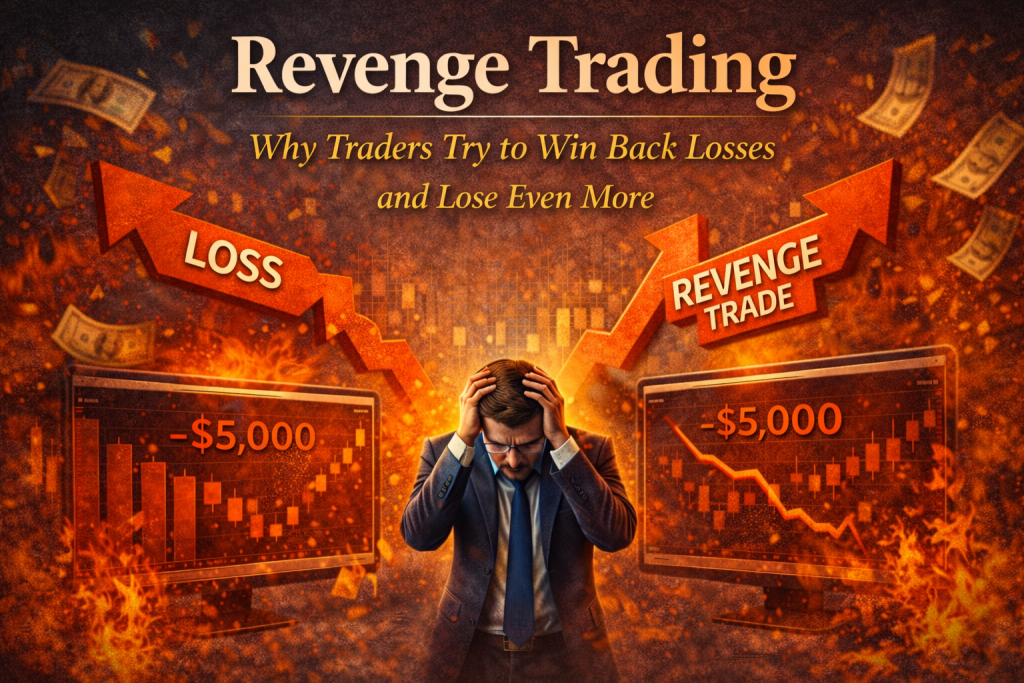
- After a losing streak (revenge trading)
- During high volatility (panic)
- When missing trades (FOMO)
Recognizing these triggers is the first step to controlling them.
The Link Between Emotional Control and Consistency
Consistency in trading does not come from strategy optimization.
It comes from behavioral stability.
A trader with emotional control can execute the same process repeatedly.
This leads to predictable outcomes over time.
This is the foundation of compounding.
Final Insight: Control Yourself, Control Your Results
You cannot control the market.
You cannot control outcomes.
You cannot control randomness.
But you can control your behavior.
And in trading, that is enough.
Conclusion
Emotional control is not optional in trading—it is essential.
Without it, every strategy fails.
With it, even simple systems can produce consistent results.
The goal is not to eliminate emotions, but to prevent them from influencing execution.
Master that, and you unlock the real edge in trading.