Author name: Nnoka Sunday Caleb

Hi, I’m Nnoka Sunday Caleb — the mind behind *The Capital Process*. I’m a statistics student, trader, and researcher of trading psychology. My interest in the markets goes beyond charts and indicators. I focus on the **human side of trading — the emotions, biases, and decision-making patterns that influence every trade**. Many traders spend years searching for the perfect strategy, but very few realize that **discipline, emotional control, and psychological awareness are what truly determine long-term success**. That realization is what inspired me to start this blog. At *The Capital Process*, I write about the following: • Trading psychology and behavioral biases • Emotional discipline and risk management • Common mistakes retail traders make • The mental frameworks that help traders stay consistent As a statistics student, I’m especially interested in **how probability, risk, and human behavior interact in financial markets**. My goal is to simplify complex psychological concepts and turn them into practical insights traders can actually use. This website is not about hype, signals, or “get rich quick” promises. Instead, it focuses on **developing the mindset and decision-making process required for sustainable trading performance**. When I’m not studying or writing, I spend time analyzing market behavior, improving my trading process, and researching how traders can overcome emotional pitfalls. # Disclaimer The content on this website is provided for **educational and informational purposes only** and should not be considered financial advice. Trading involves risk, and you should always do your own research or consult a qualified financial professional before making investment decisions.

how much money to start investing 2026
Guides

How Much Money Do You Need to Start Investing in 2026?

How Much Money Do You Need to Start Investing in 2026? The Myth of Needing Thousands to Begin One of the biggest barriers for new investors is the belief that you need a large sum—$5,000, $10,000, or more—to start. In 2026, that simply isn’t true. Thanks to zero-commission trading, fractional shares, micro-investing apps, and low-cost […]

How Much Money Do You Need to Start Investing in 2026? Read Post »

understanding risk and return for beginners 2026
Guides

Understanding Risk and Return: Investing Basics Every Beginner Needs

Understanding Risk and Return: Investing Basics Every Beginner Needs The Fundamental Tradeoff in Investing Every investment decision boils down to one core principle: higher potential returns come with higher risk. Understanding this risk-return tradeoff is essential for beginners—it’s the foundation of smart, sustainable investing. In 2026, with markets offering growth opportunities alongside volatility (from economic

Understanding Risk and Return: Investing Basics Every Beginner Needs Read Post »

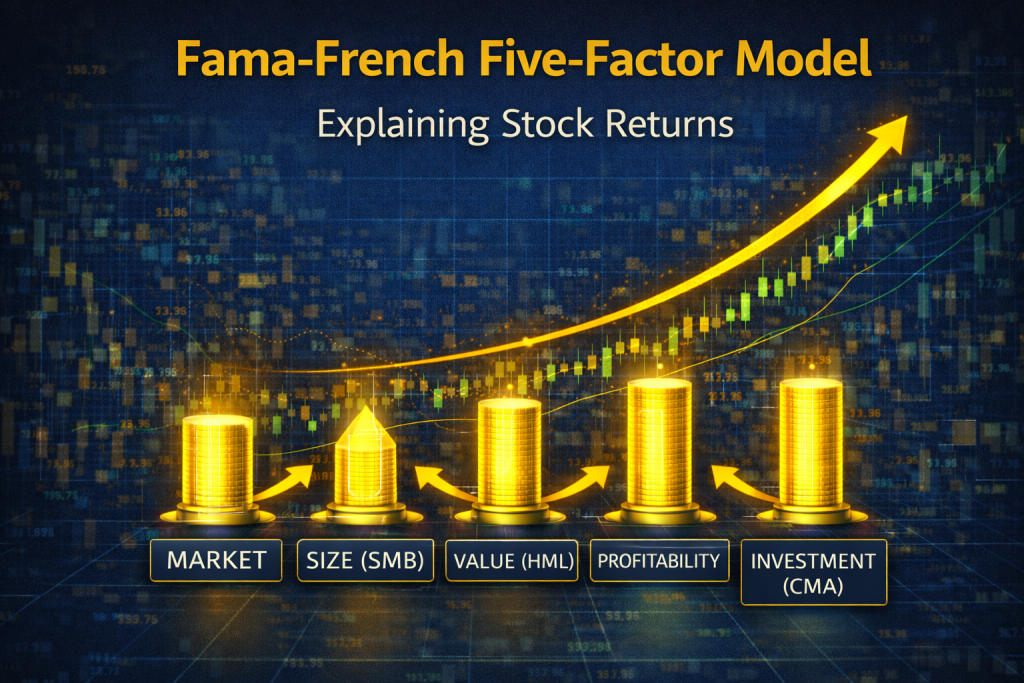
Fama French Five Factor Model
Insights

The Fama-French Five-Factor Model: A More Complete Explanation of Stock Market Returns

Introduction Financial markets are complex systems influenced by many forces. For decades, investors relied on simplified models to explain why stocks generate different returns. One of the most important breakthroughs in financial economics was the Fama-French Three-Factor Model, which expanded earlier theories by identifying company size and value characteristics as key drivers of performance. However,

The Fama-French Five-Factor Model: A More Complete Explanation of Stock Market Returns Read Post »

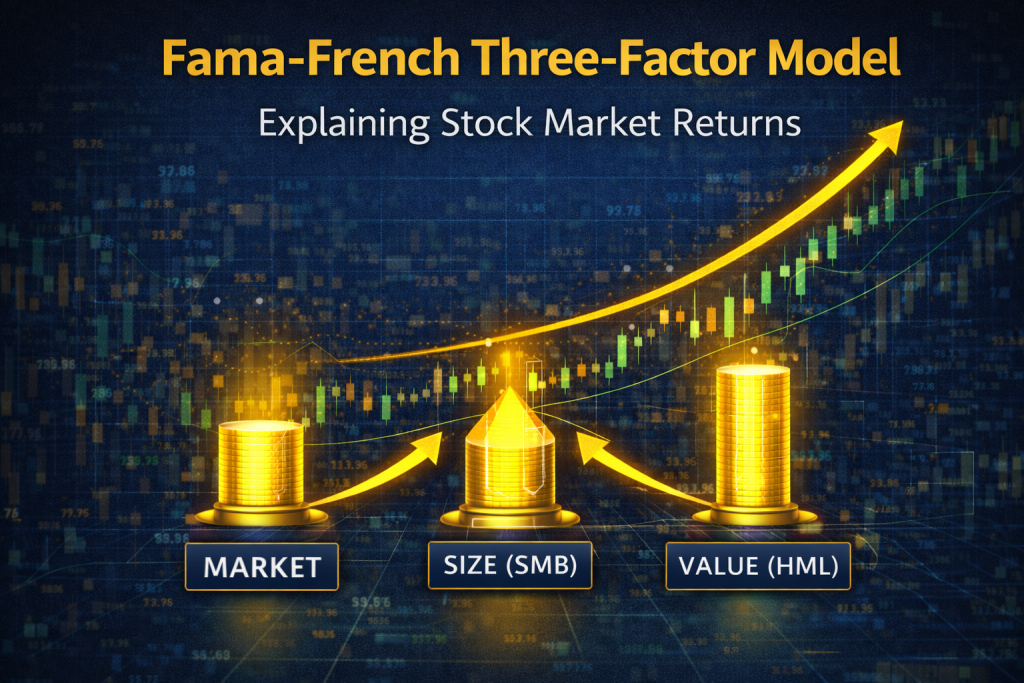
Fama French Three Factor Model
Insights

The Fama-French Three-Factor Model: A Deeper Explanation of Stock Market Returns

Introduction For many years, investors relied on a single framework to explain stock market returns: the Capital Asset Pricing Model (CAPM). According to this model, the expected return of an investment was determined primarily by its exposure to the overall market. However, financial researchers began to notice that real-world markets behaved differently. Certain groups of

The Fama-French Three-Factor Model: A Deeper Explanation of Stock Market Returns Read Post »

drivers of stock market returns
Insights

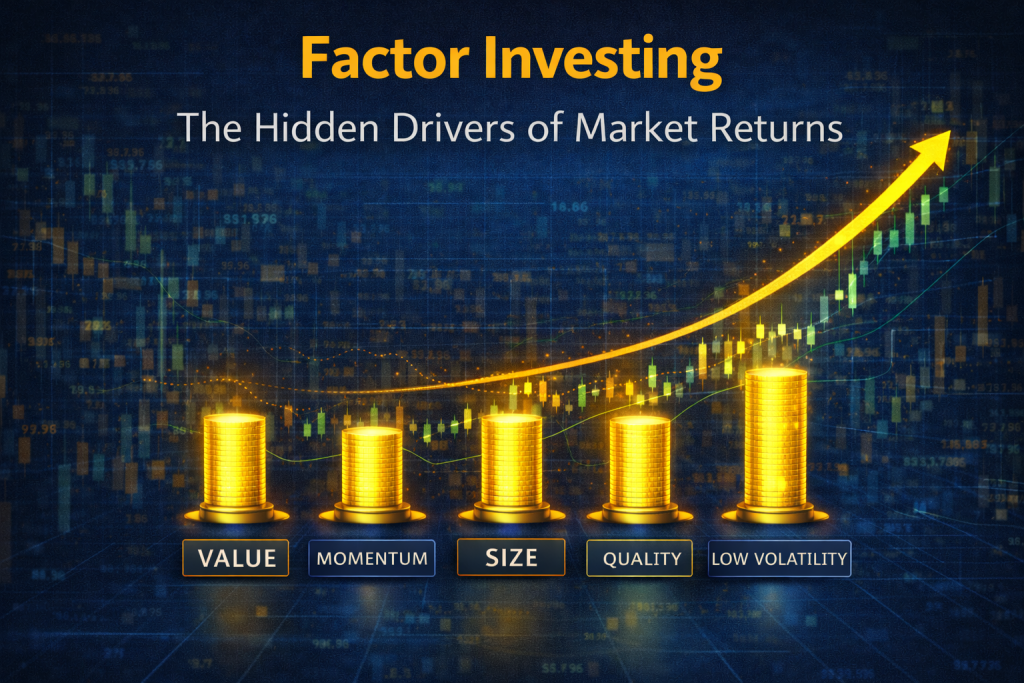
Factor Investing: The Hidden Drivers of Stock Market Returns

Factor Investing For decades, investors believed that stock market returns were mostly driven by broad market exposure. The idea was simple: buy a diversified portfolio, hold it long enough, and the market will reward you. However, financial researchers eventually discovered something surprising. Certain characteristics of stocks consistently generated higher returns over long periods of time.

Factor Investing: The Hidden Drivers of Stock Market Returns Read Post »

how to build diversified portfolio for beginners 2026
Precious Metals

How to Build Your First Diversified Portfolio as a Beginner

How to Build Your First Diversified Portfolio as a Beginner Why Diversification Is Your Best Friend as a New Investor Building your first investment portfolio can feel daunting—what should you buy? How much of each? The key concept that makes it simple and effective is diversification: spreading your money across different assets so that one

How to Build Your First Diversified Portfolio as a Beginner Read Post »

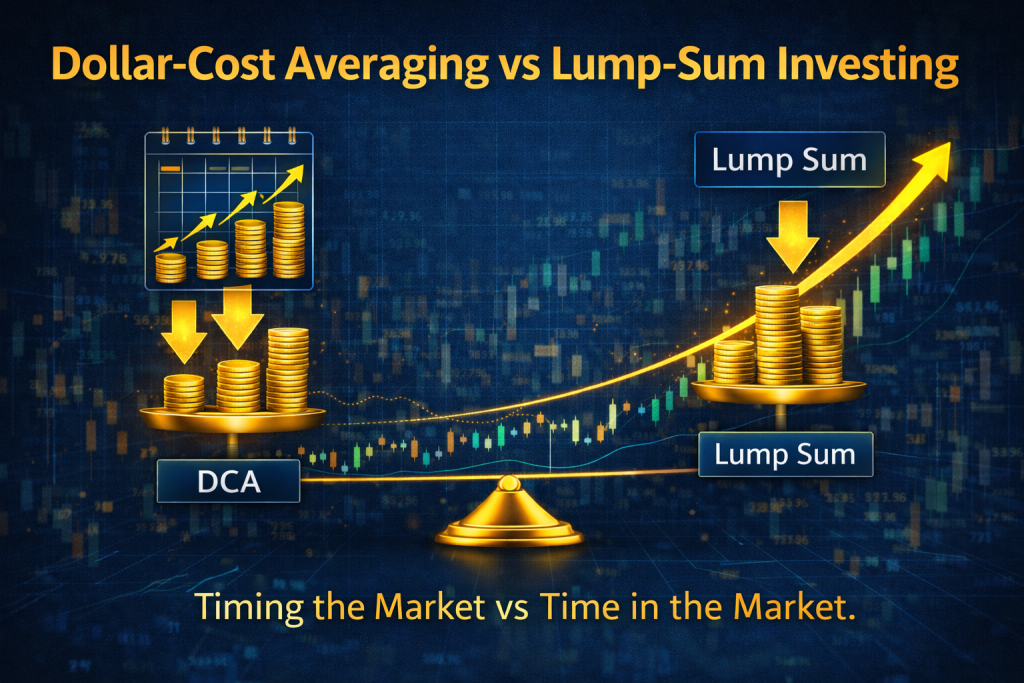
Dollar-Cost Averaging vs. Lump Sum
Guides

Dollar-Cost Averaging vs. Lump Sum: Which Is Better for Beginners?

Dollar-Cost Averaging vs. Lump Sum: Which Is Better for Beginners? Two Popular Ways to Invest a Sum of Money When you have cash ready to invest—whether from savings, a bonus, inheritance, or selling something—the big question is: Should you invest it all at once (lump sum) or spread it out over time (dollar-cost averaging, or

Dollar-Cost Averaging vs. Lump Sum: Which Is Better for Beginners? Read Post »
index funds and ETFs for beginners 2026
Guides

Index Funds and ETFs for Beginners: The Easiest Way to Start Investing

Index Funds and ETFs for Beginners: The Easiest Way to Start Investing Why Index Funds and ETFs Are Perfect for Beginners in 2026 If you’re new to investing, the idea of picking individual stocks can feel overwhelming. What if you choose wrong? What if the company fails? The simplest, most effective solution for most beginners

Index Funds and ETFs for Beginners: The Easiest Way to Start Investing Read Post »
best brokerage account for beginners 2026
Guides

How to Choose the Best Brokerage Account for Beginners in 2026

How to Choose the Best Brokerage Account for Beginners in 2026 Why Your Brokerage Choice Matters for Beginners Choosing the right brokerage account is one of the most important early decisions in your investing journey. Your broker is the platform where you’ll buy/sell investments, track your portfolio, learn resources, and often pay (or avoid) fees.

How to Choose the Best Brokerage Account for Beginners in 2026 Read Post »
What Is the Stock Market and How Does It Work?
Guides

Investing for Beginners: What Is the Stock Market and How Does It Work?

Investing for Beginners: What Is the Stock Market and How Does It Work? Demystifying the Stock Market for Beginners in 2026 If you’re new to investing, the stock market can seem intimidating—like a complex casino or a club for the wealthy. The good news? It’s neither. The stock market is simply a marketplace where people

Investing for Beginners: What Is the Stock Market and How Does It Work? Read Post »

how to start investing in 2026 for beginners
Guides

How to Start Investing in 2026: A Complete Beginner’s Guide

How to Start Investing in 2026: A Complete Beginner’s Guide Why Start Investing in 2026? In 2026, global markets continue to offer opportunities amid economic recovery, technological advancements, and evolving interest rates. Investing is a proven way to build long-term wealth, outpace inflation, and harness the power of compounding—regardless of your starting point. Many beginners

How to Start Investing in 2026: A Complete Beginner’s Guide Read Post »

dollar cost averaging strategy
Insights

Dollar Cost Averaging vs Lump Sum Investing: Which Strategy Is Better?

Dollar Cost Averaging vs Lump Sum Investing One of the most common questions new investors ask is how they should invest their money. Should they invest all their funds at once, or should they spread their investments over time? This debate has led to two popular investment strategies: dollar-cost averaging and lump-sum investing. Both strategies

Dollar Cost Averaging vs Lump Sum Investing: Which Strategy Is Better? Read Post »

Insights

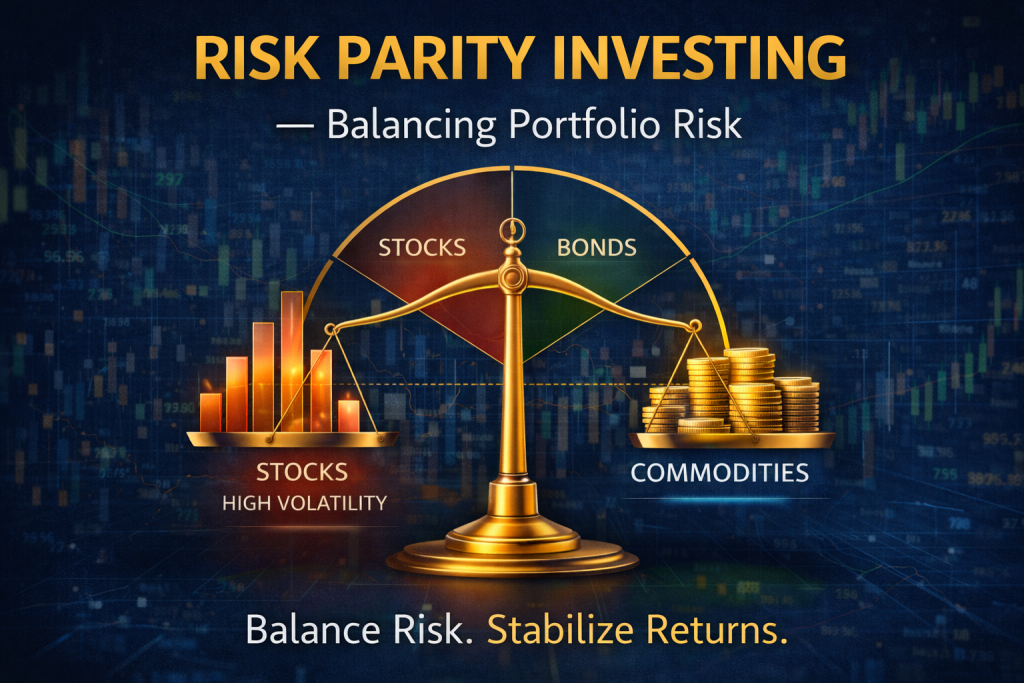
Risk Parity Investing: The Portfolio Strategy Used by Hedge Funds

Risk Parity Investing Traditional investing often follows a simple rule: allocate a percentage of your portfolio to stocks and the rest to bonds. A common example is the classic 60/40 portfolio — 60% stocks and 40% bonds. However, this approach hides an important problem. Even though bonds make up 40% of the portfolio, stocks usually

Risk Parity Investing: The Portfolio Strategy Used by Hedge Funds Read Post »

smart beta portfolio
Insights

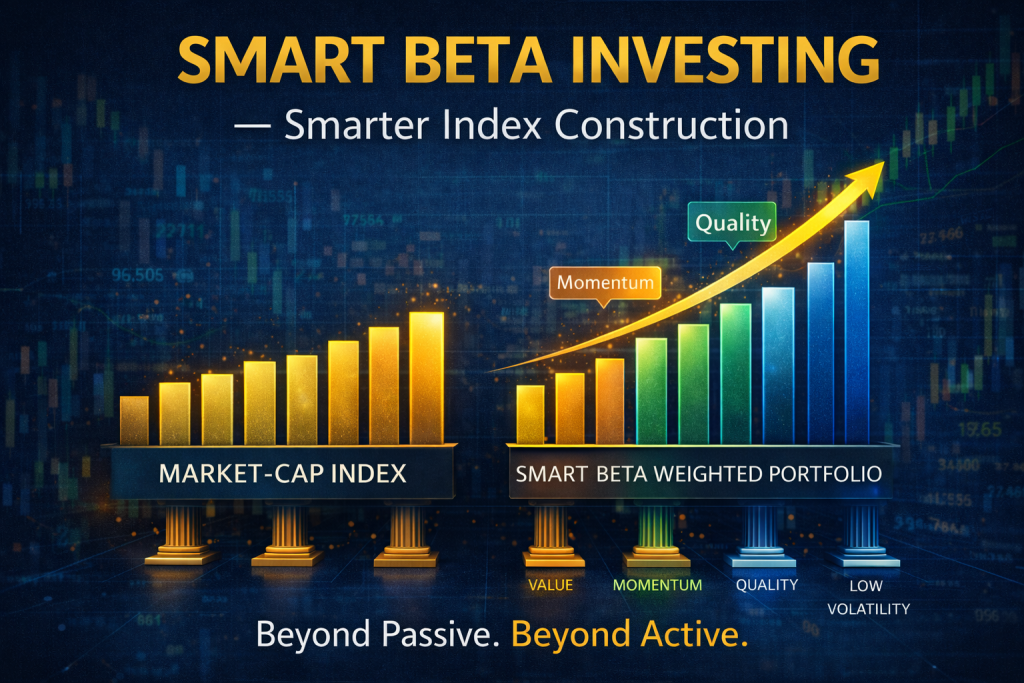
Smart Beta Investing: The Bridge Between Passive and Active Investing

Over the past few decades, the investment industry has experienced a major transformation. Investors once had only two main choices: actively managed funds run by professional stock pickers or passive index funds that simply tracked the market. Today, a third approach has emerged and gained enormous popularity among institutional and retail investors alike: smart beta

Smart Beta Investing: The Bridge Between Passive and Active Investing Read Post »

How factor investing works for beginners
Insights

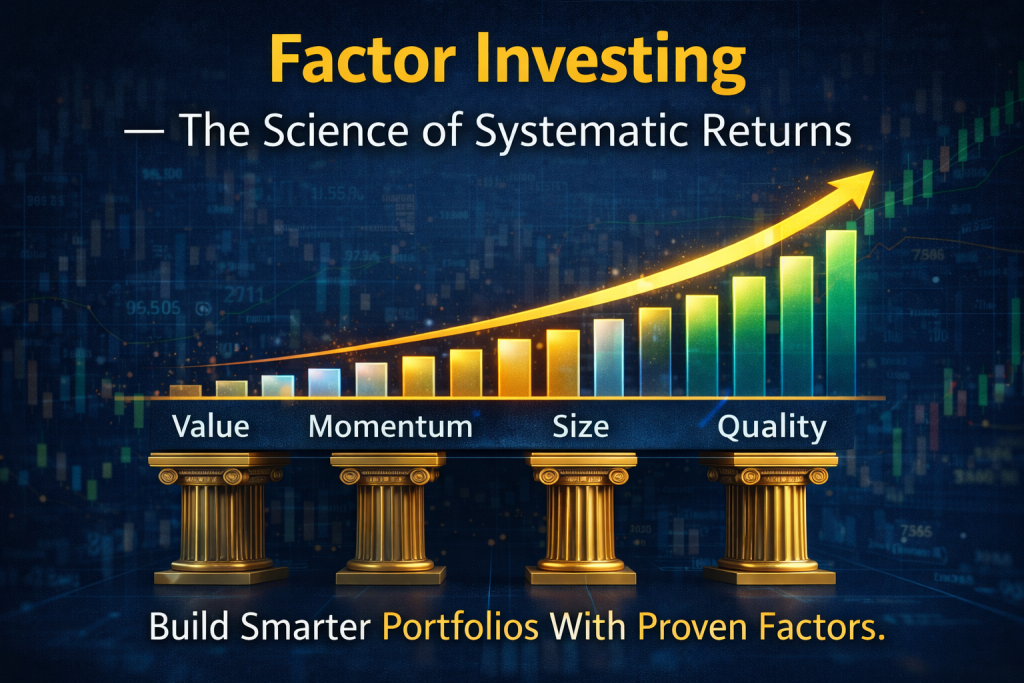
Factor Investing: The Science Behind Systematic Market Outperformance

For decades, investors searched for a simple question: Why do some stocks consistently outperform others? Traditional finance once suggested that markets were largely efficient and that consistent outperformance was nearly impossible. However, modern financial research has revealed that certain characteristics — known as factors — can help explain why some investments deliver higher returns over

Factor Investing: The Science Behind Systematic Market Outperformance Read Post »

How to find undervalued stocks
Insights

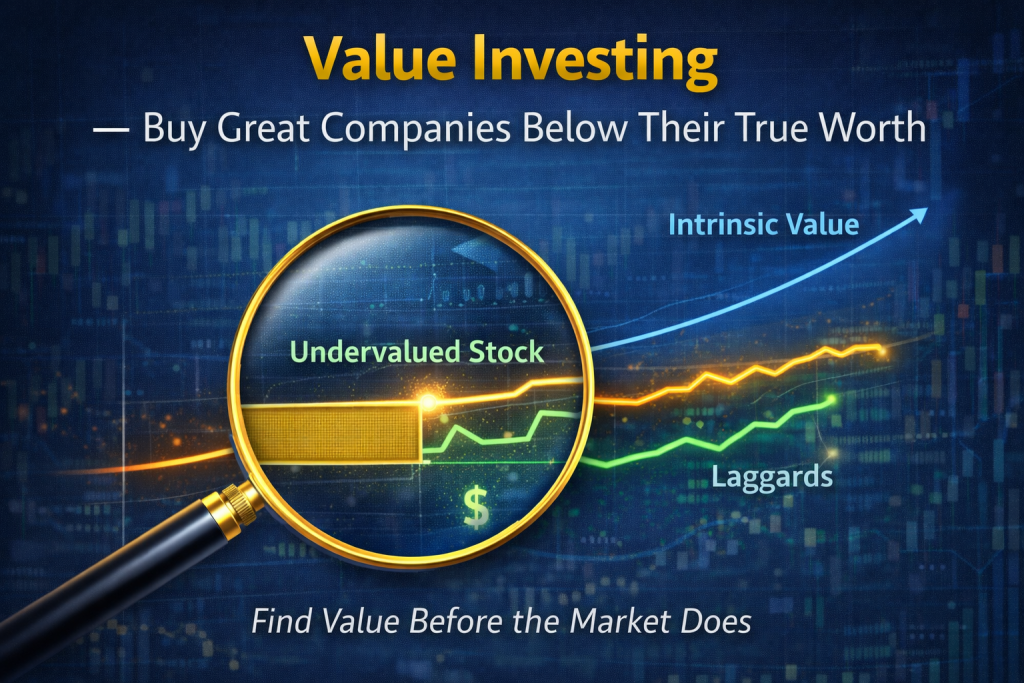
Value Investing: How Smart Investors Buy Undervalued Stocks

In the world of investing, one timeless principle continues to guide some of the most successful investors in history: Buy assets for less than they are truly worth. This philosophy is known as value investing. Value investing focuses on identifying stocks that the market has temporarily undervalued. These stocks often trade below their intrinsic value

Value Investing: How Smart Investors Buy Undervalued Stocks Read Post »

Momentum Investing
Insights

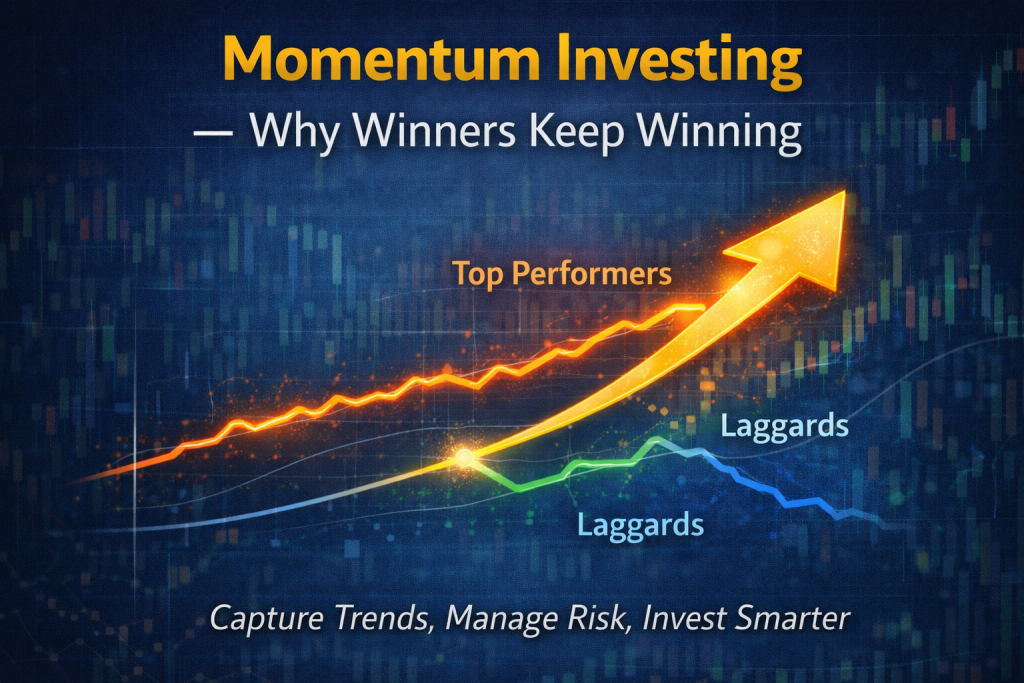
Momentum Investing: Why Winners Keep Winning (And How to Use It Wisely)

Momentum investing is one of the most widely documented and profitable strategies in finance. Simply put: Stocks that have performed well in the past tend to continue performing well in the near future.Stocks that have performed poorly tend to continue underperforming. This idea challenges traditional finance. The Efficient Market Hypothesis (EMH) claims that past prices

Momentum Investing: Why Winners Keep Winning (And How to Use It Wisely) Read Post »

Market Anomalies
Insights

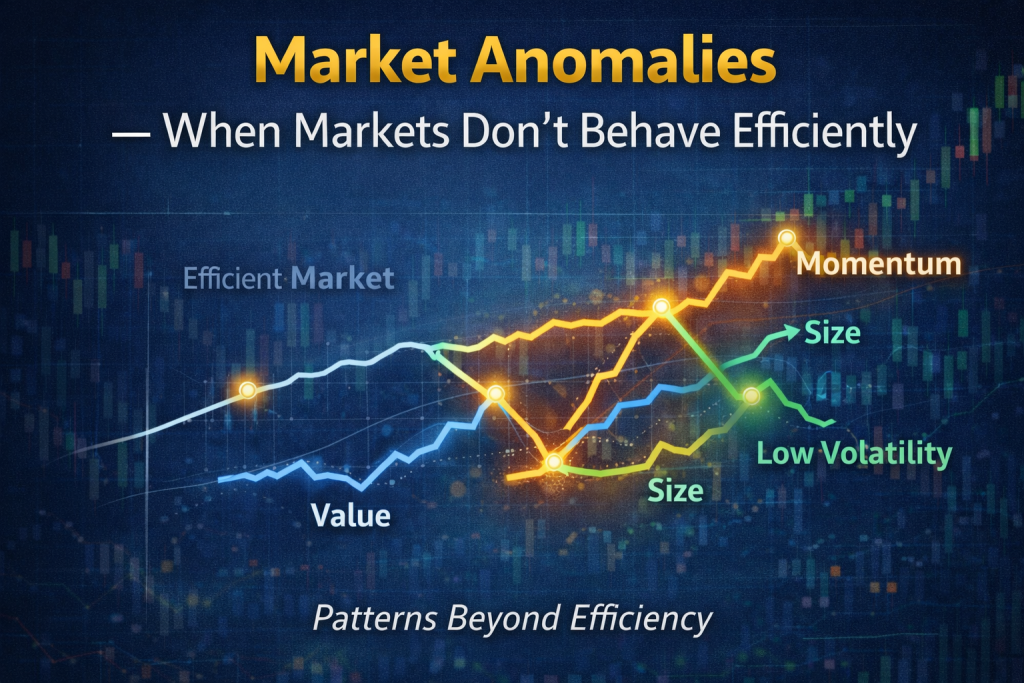
Market Anomalies: When Markets Don’t Behave Efficiently

Financial theory tells us that markets are efficient. Prices reflect all available information.Investors act rationally.Abnormal profits should not consistently exist. This idea is the foundation of the Efficient Market Hypothesis (EMH). But when researchers examined real-world data, they discovered something surprising: Markets sometimes behave in predictable, abnormal ways. Certain stocks outperform repeatedly.Some calendar months show

Market Anomalies: When Markets Don’t Behave Efficiently Read Post »

Why Investors Aren’t Rational
Trading Psychology

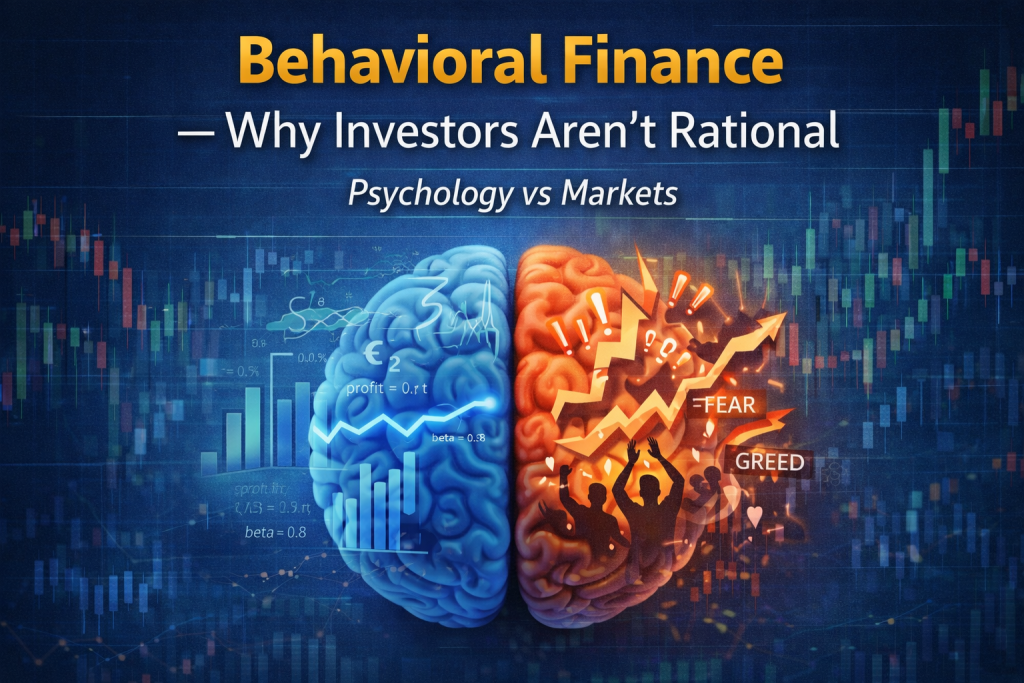
Behavioral Finance: Why Investors Aren’t Rational (And How It Affects Your Money)

For decades, traditional finance assumed something very simple: Investors are rational.Markets are efficient.Prices reflect all available information. This assumption shaped models like the Capital Asset Pricing Model (CAPM), Modern Portfolio Theory (MPT), and the Efficient Market Hypothesis (EMH). But real-world markets tell a different story. Investors panic during crashes.Bubbles inflate far beyond fundamentals.People hold losing

Behavioral Finance: Why Investors Aren’t Rational (And How It Affects Your Money) Read Post »

How to use Fama-French model
Risk Management

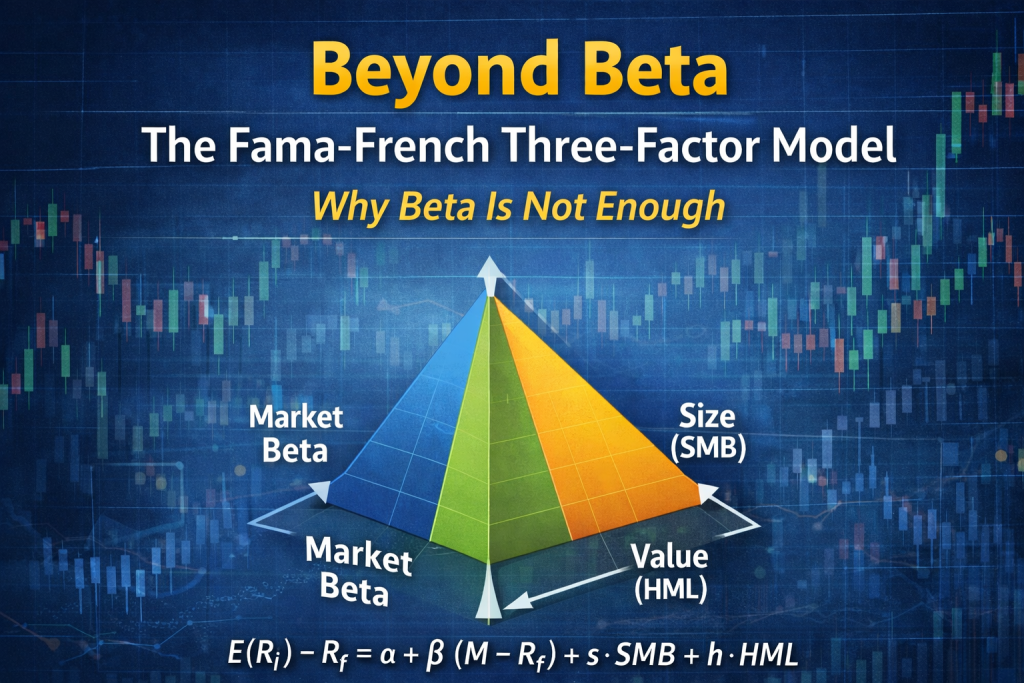
Fama-French Three-Factor Model — Why Beta Is Not Enough

Introduction: Beyond CAPM The Capital Asset Pricing Model (CAPM) taught investors an essential lesson: Yet real-world research showed a problem: This led to the Fama-French Three-Factor Model, developed by Eugene Fama and Kenneth French in the 1990s. This model adds two additional factors to Beta: These factors help explain returns that CAPM could not, giving

Fama-French Three-Factor Model — Why Beta Is Not Enough Read Post »

Efficient Market Hypothesis explained
Risk Management

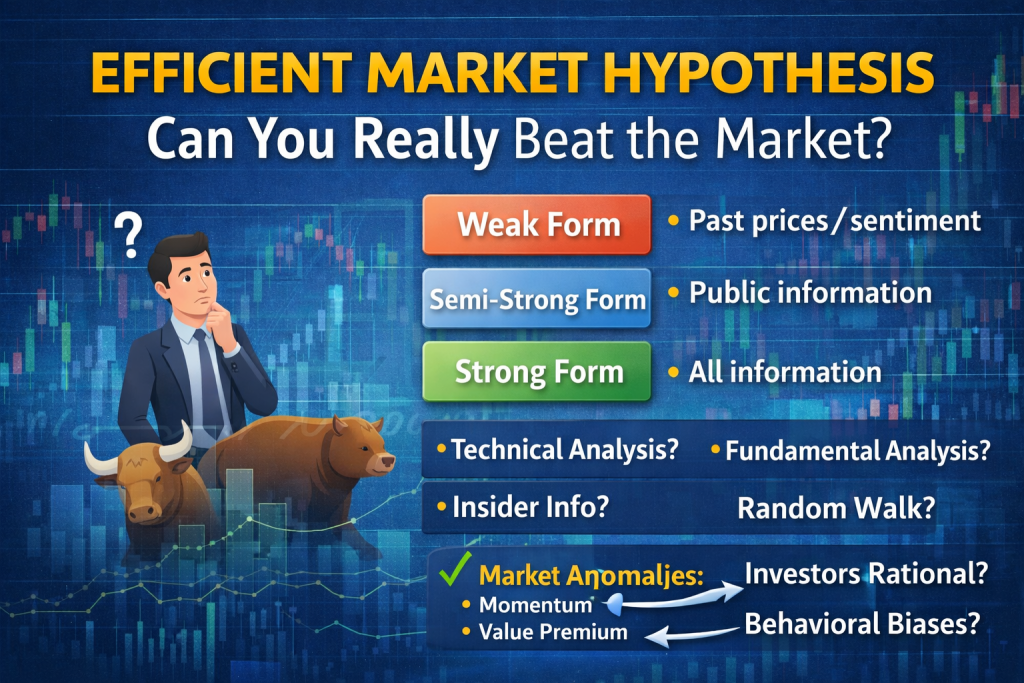
Efficient Market Hypothesis (EMH) — Can You Really Beat the Market?

Introduction: The Big Question in Investing Every investor eventually asks this question: Can I consistently beat the market? If markets are inefficient, then skilled investors can identify mispriced stocks and earn superior returns. But if markets are efficient, then consistently beating the market becomes nearly impossible. This debate lies at the heart of one of

Efficient Market Hypothesis (EMH) — Can You Really Beat the Market? Read Post »

Capital Asset Pricing Model explained
Risk Management

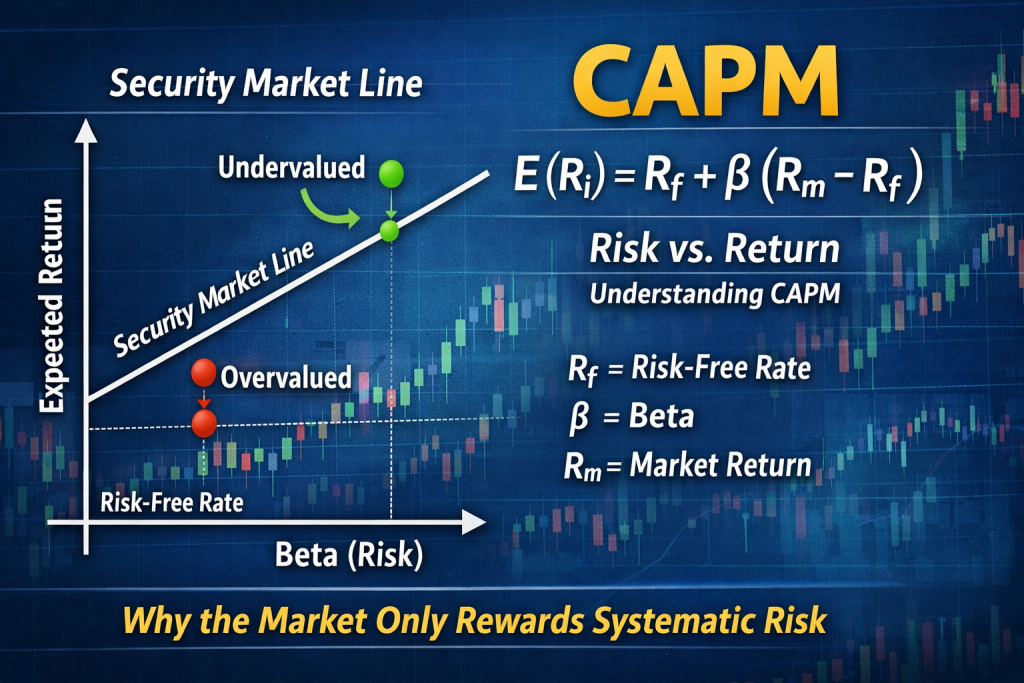
Capital Asset Pricing Model (CAPM) — A Complete Beginner Deep Dive Into Risk, Return & Beta

Introduction: Why CAPM Matters Imagine you’re evaluating two stocks: Which one is better? Most beginners immediately choose 12%. But finance doesn’t work that way. The real question is: How much risk are you taking to earn that return? This is where the Capital Asset Pricing Model (CAPM) becomes one of the most powerful tools in

Capital Asset Pricing Model (CAPM) — A Complete Beginner Deep Dive Into Risk, Return & Beta Read Post »

modern portfolio theory explained
Trading

Modern Portfolio Theory Explained: How to Optimize Risk and Return

Investing is often described as a balance between risk and reward. Take too little risk, and your returns may not outpace inflation. Take too much risk, and a market downturn could significantly damage your portfolio. But what if there were a structured, mathematical way to balance risk and return intelligently? That is exactly what Modern

Modern Portfolio Theory Explained: How to Optimize Risk and Return Read Post »

behavioral finance in investing
Trading Psychology

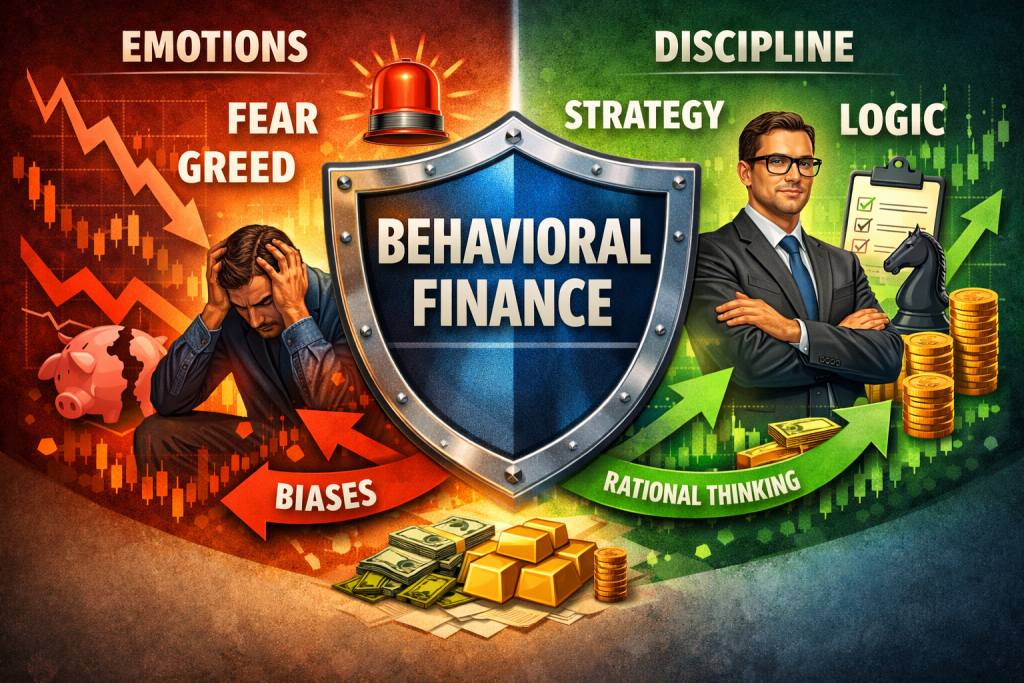
Behavioral Finance in Investing: Why Investors Make Emotional Mistakes (And How to Avoid Them)

Investing is often presented as a numbers game. Charts, economic data, earnings reports, and financial models appear to drive decisions. Yet beneath all the analysis lies something far more powerful: human psychology. Markets are not moved by spreadsheets alone — they are moved by people. And people are emotional. Behavioral finance studies how psychological biases

Behavioral Finance in Investing: Why Investors Make Emotional Mistakes (And How to Avoid Them) Read Post »

long-term investment plan
Guides

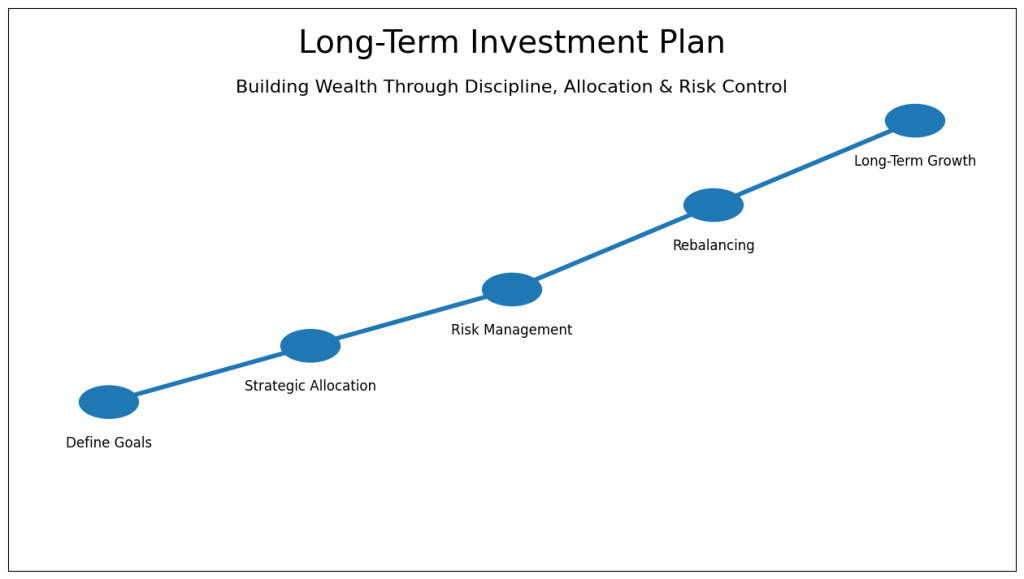
How to Build a Long-Term Investment Plan That Survives Market Volatility

Markets rise. Markets fall. Economies expand and contract. Headlines create fear, excitement, and uncertainty. Yet despite all this volatility, long-term investors continue to build wealth year after year. What separates successful investors from those who struggle is not luck. It is not perfect market timing. It is not predicting every recession. It is having a

How to Build a Long-Term Investment Plan That Survives Market Volatility Read Post »

risk management strategies for investors
Risk Management

Risk Management Strategies Every Smart Investor Should Know

Investing is often associated with profits, growth, and wealth building. Yet, the most successful investors in the world do not begin by asking, “How much can I make?” Instead, they ask, “How much could I lose, and how do I prevent it?” This mindset shift separates disciplined investors from gamblers. Markets rise and fall, economic

Risk Management Strategies Every Smart Investor Should Know Read Post »

asset allocation strategies
Risk Management

Asset Allocation Strategies for Different Market Conditions

Markets move in cycles. Economic expansion brings optimism and growth, while contractions introduce uncertainty and volatility. For investors, navigating these changing conditions is not about predicting the future with perfect accuracy — it is about positioning assets wisely to protect wealth and capture opportunities. This is where asset allocation becomes essential. Asset allocation is the

Asset Allocation Strategies for Different Market Conditions Read Post »

identify market tops and bottoms
Trading

How to Identify Market Tops and Bottoms Using Economic Indicators

Financial markets rise and fall in cycles, but the turning points between growth and decline often appear confusing to everyday investors. Market tops form when optimism is high and risk is overlooked, while market bottoms occur when fear dominates and assets are undervalued. Smart investors do not rely on guesswork to recognize these turning points.

How to Identify Market Tops and Bottoms Using Economic Indicators Read Post »

how to invest during market cycle
Trading

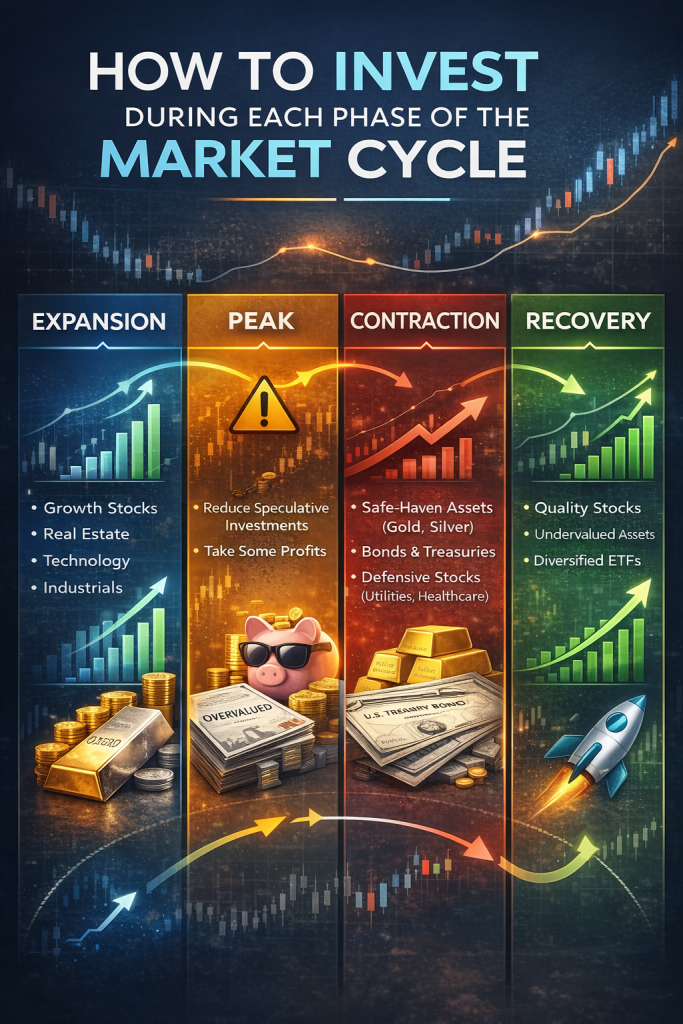
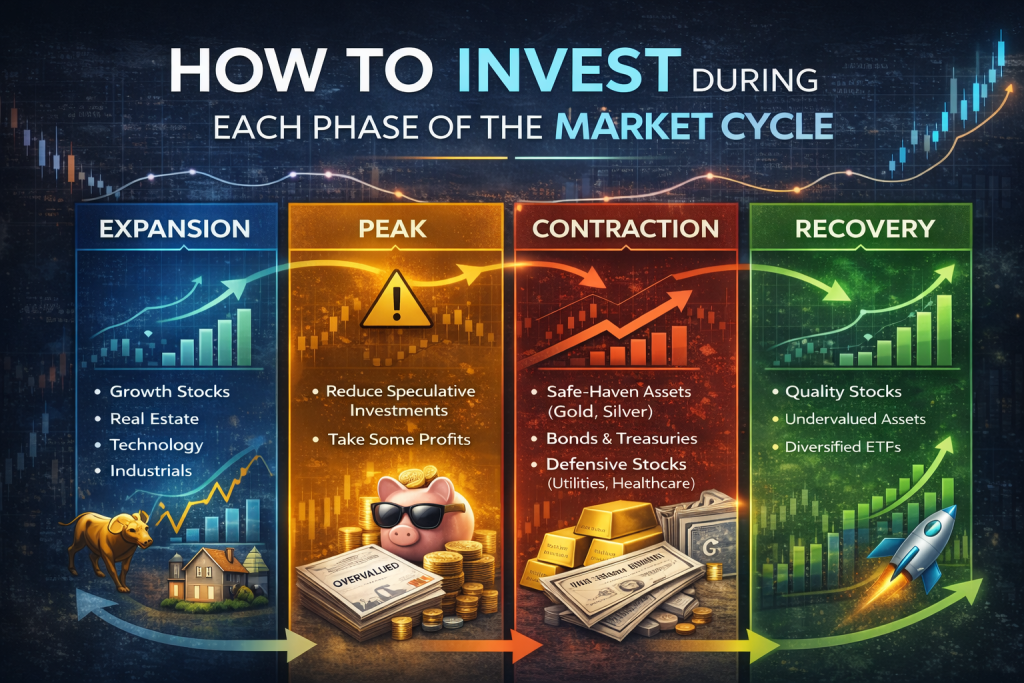
How to Invest During Each Phase of the Market Cycle

Financial markets are not random. They move in cycles shaped by economic growth, interest rates, inflation, investor psychology, and global events. Understanding these cycles allows smart investors to protect wealth, reduce risk, and maximize returns. Instead of reacting emotionally to market headlines, experienced investors recognize patterns. They know when to take risks, when to become

How to Invest During Each Phase of the Market Cycle Read Post »

Trading

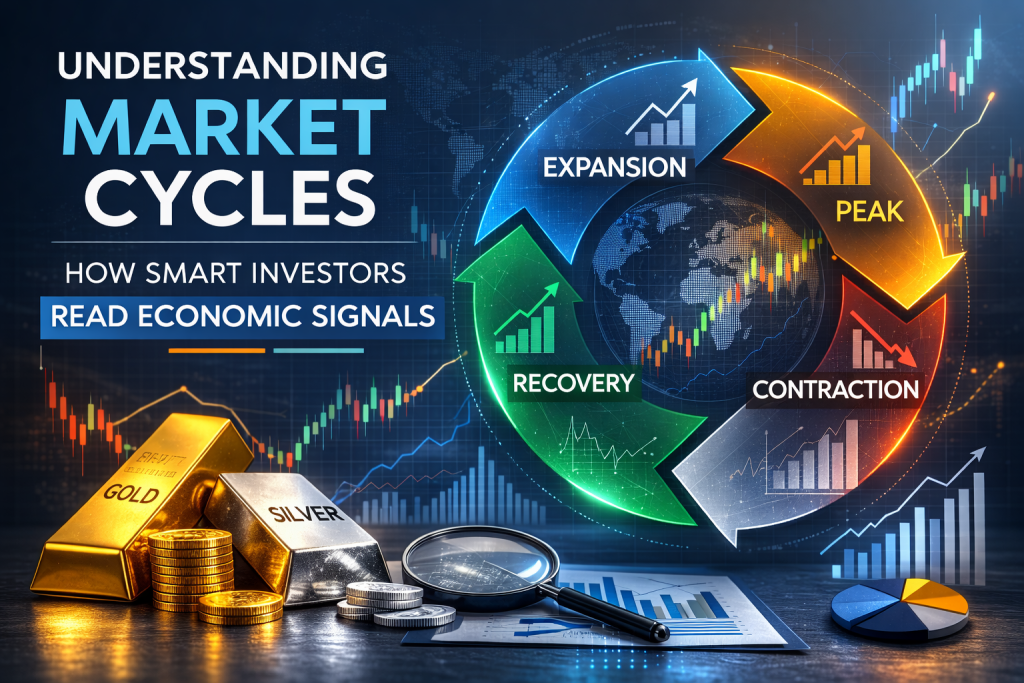
Understanding Market Cycles: How Smart Investors Read Economic Signals

Understanding Market Cycles: How Smart Investors Read Economic Signals Financial markets do not move randomly. Over time, they follow recognizable patterns influenced by economic growth, interest rates, inflation, business activity, and investor behavior. These patterns are known as market cycles. Understanding market cycles helps investors make better decisions about when to protect capital, when to

Understanding Market Cycles: How Smart Investors Read Economic Signals Read Post »

Scroll to Top